
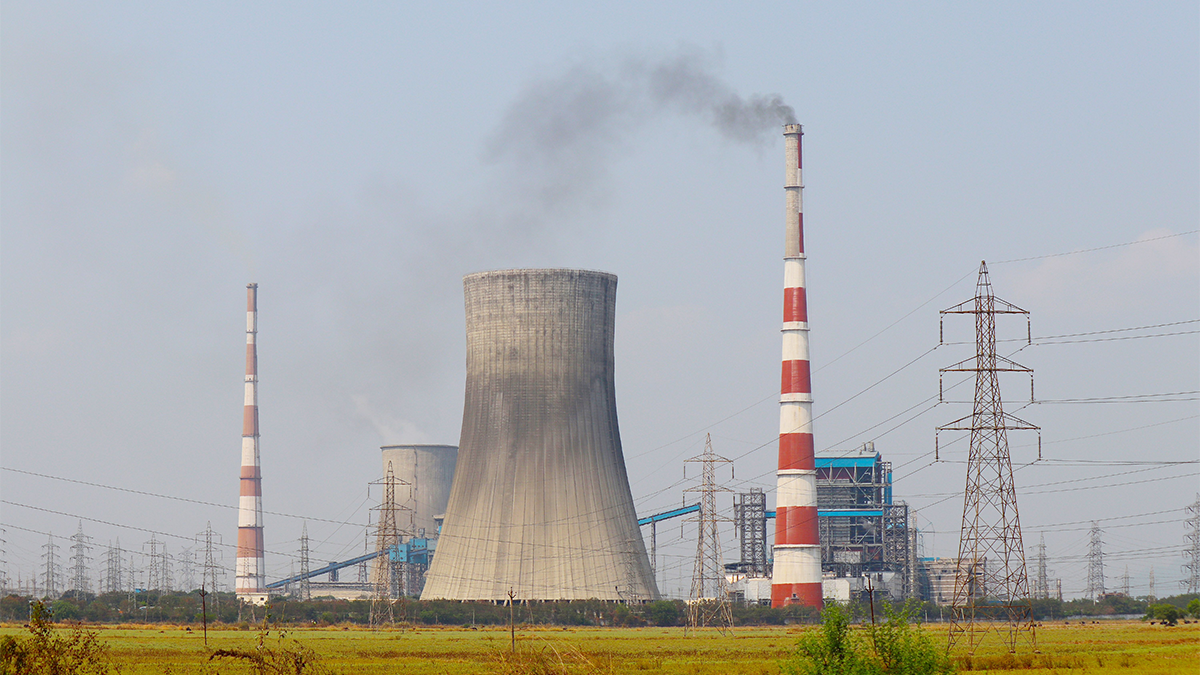
Collectively, we humans add more than 40 billion tonnes of carbon dioxide (CO2) to the atmosphere every year, and this number is rising. This gas, though invisible, is one of the biggest drivers of climate change today. The challenge is clear: how do we reduce something that is so deeply tied to the way our industries and energy systems work?
One answer lies not in completely stopping emissions overnight, but in managing them more smartly. This is where Carbon Capture, Utilization and Storage, or CCUS, comes into the picture. Most CCUS systems capture CO2 before it enters the atmosphere, although some approaches, such as direct air capture, remove CO2 that is already present in the air. The captured CO2 is moved safely, and then either stored deep underground or turned into something useful.
A simple idea, a big impact
To understand CCUS, imagine a factory chimney. Normally, gases produced during industrial processes are released straight into the air. With CCUS, that changes. Special systems are installed to capture CO2 before it leaves the chimney. This captured carbon is then compressed and transported to another location, where it is either stored in underground rock formations or reused in products like fuels or building materials.
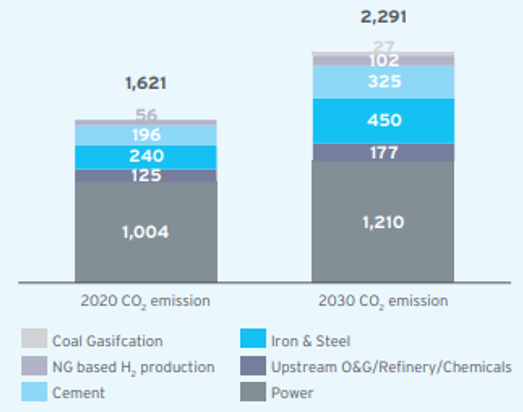
Figure 1: Sector-wise CO? emissions in India. Source: NITI Aayog Report on Carbon Capture, Utilization and Storage (CCUS), 2022
This idea may sound straightforward, but its impact can be significant. Instead of shutting down industries that are essential for everyday life – like steel, cement and energy production – CCUS allows them to continue operating while reducing their environmental impact. This balance is important, especially for developing economies that are still growing rapidly.
Why not just use clean energy?
A natural question arises here: if renewable energy is growing, why do we even need something like CCUS?
The answer lies in the kind of emissions we are dealing with. Some sectors, especially heavy industries, are difficult to clean up completely using renewable energy alone. Processes like making steel or cement produce CO2 as part of their chemical reactions, not just from burning fuel. This means that even if we switch to clean energy, emissions from these industries may not disappear entirely.
In countries like India, this challenge becomes even more important. In 2020, India’s power and industrial sectors together produced around 1,600 million tonnes of CO2, making up nearly 60% of the country’s total emissions. With industrial growth and urban expansion, this number is expected to rise to about 2,300 million tonnes by 2030.
This is where CCUS steps in – not as a replacement for renewable energy, but as a partner that helps manage emissions that are otherwise difficult to avoid.
How does CCUS work?
The process of CCUS can be understood in three simple steps: capture, transport, and storage or use. This entire process helps reduce the amount of CO2 released into the atmosphere, making it an important step towards a cleaner future.
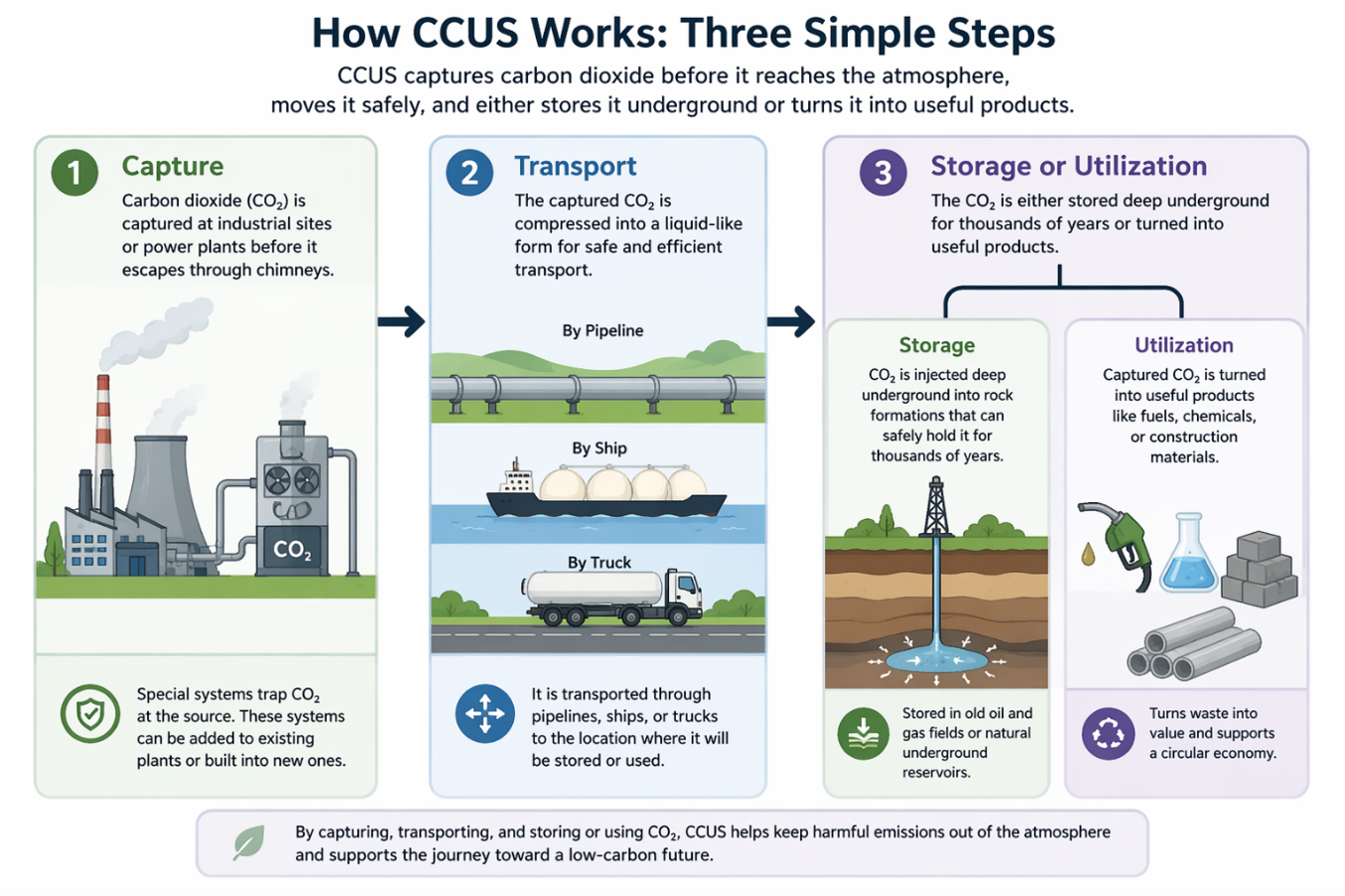
Figure 2: Illustration of the CCUS process. Information source: Tata Power Blog – What is Carbon Capture and Storage (CCUS) 101
Why is CCUS important?
CCUS offers several benefits in the fight against climate change.
- First, it helps reduce emissions from industries that produce large amounts of CO2, such as cement, steel and power generation. Instead of shutting these industries down, CCUS allows them to operate more cleanly.
- Second, it works with existing infrastructure. This means companies do not have to completely rebuild their systems, making it a more practical and cost-effective solution.
- Third, it supports energy security by allowing countries to continue using their existing energy sources while reducing emissions. This reduces dependence on imported fuels.
- Another key advantage is that captured carbon can be reused. It can be turned into products like concrete, fuels and plastics, creating a circular economy where waste becomes a resource.
- CCUS also creates new jobs in construction, engineering and research. At the same time, it helps protect ecosystems by reducing the harmful effects of climate change, such as rising temperatures and ocean acidification.
- Finally, it plays an important role in helping countries meet global climate targets, including those set under international agreements.
Different ways to capture carbon
There are several methods used to capture CO2, depending on the situation.
- One common method is post-combustion capture, where carbon is removed from gases after fuel is burned. Another is pre-combustion capture, where fuel is treated before burning to separate CO2.
- In oxy-fuel combustion, fuel is burned in oxygen instead of air, making it easier to capture CO2.
- Direct air capture goes a step further by removing CO2 directly from the atmosphere.
- There are also newer technologies like membrane separation, which uses filters to separate gases, and chemical looping, which captures carbon more efficiently.
- Another approach is bioenergy with carbon capture and storage (BECCS), where plants absorb carbon while growing, and that carbon is captured when the plants are used for energy.
Each method has its own strengths and challenges, and the choice depends on factors like cost, energy use and the source of emissions.
Figure 3: Overview of key CCUS technologies, illustrating different methods used to capture CO2 from industrial sources and the atmosphere for storage or reuse. Information source: Tata Power Blog – What is Carbon Capture and Storage (CCUS) 101
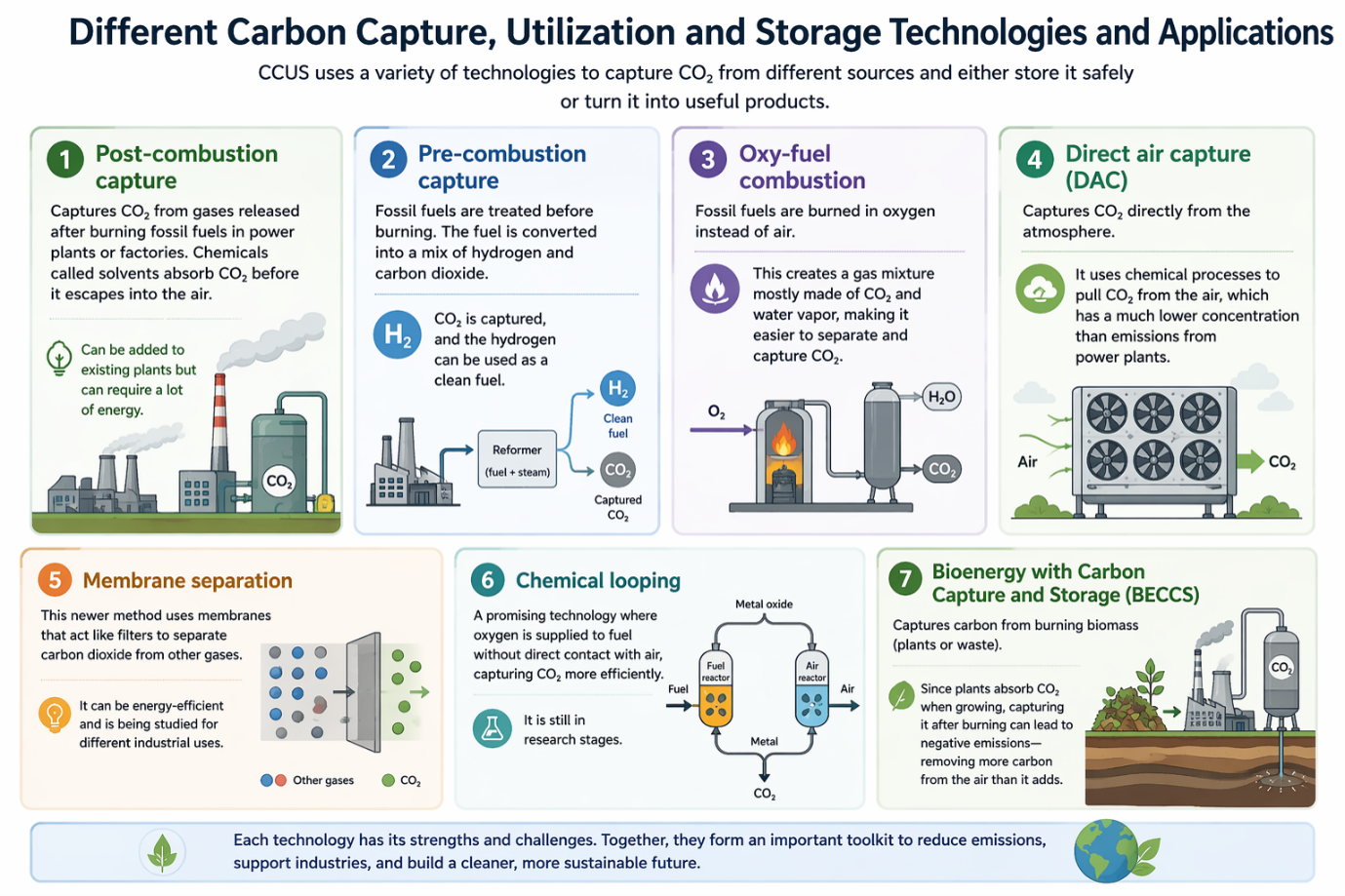
Figure 3: Overview of key CCUS technologies, illustrating different methods used to capture CO2 from industrial sources and the atmosphere for storage or reuse. Information source: Tata Power Blog – What is Carbon Capture and Storage (CCUS) 101
India’s early steps
While the concept of CCUS may sound futuristic, India has already begun testing it through several pilot projects.
At a thermal power station in Madhya Pradesh, a project by NTPC captures around 20 tonnes of CO2 every day from flue gases. Instead of simply storing this carbon, it is being used to produce methanol, showing how emissions can be reused in a circular way.
In another development, India has started exploring underground storage. At a coal mine in Jharkhand, efforts are underway to study how CO2 can be safely stored deep beneath the surface, including monitoring and testing the geological conditions. Meanwhile, in Gujarat, ONGC has launched a project that captures approximately 100 tonnes of CO2 per day and injects it into underground wells. This project also explores using CO2 to improve oil recovery, though the use of captured CO2 for enhanced oil recovery remains controversial – it can prolong fossil fuel extraction and potentially undermine the broader climate benefits of carbon capture efforts.
The steel sector is also experimenting with CCUS. Tata Steel has set up a facility that captures carbon directly from its operations, while JSW Steel is using captured carbon in the food and beverage industry.
These projects may still be in early stages, but they show that CCUS is moving from theory to practice.
Policy push and the road ahead
Recognising the importance of CCUS, the Indian government has started supporting its growth more actively. In the Union Budget 202627, a ?20,000 crore scheme was announced to scale up CCUS across major industrial sectors such as power, steel, cement, refineries and chemicals. (Read our story here.)
The goal is to move beyond small pilot projects and bring CCUS into wider use as part of India’s long-term climate strategy. This is especially important as the country works toward its target of achieving net-zero emissions by 2070.
Support from policies, combined with investments and research, will play a key role in determining how quickly and effectively CCUS can be adopted at scale.
A balanced way forward
It is important to understand that CCUS is not a perfect solution. Challenges such as high costs, energy requirements, and the need for infrastructure still exist. However, it offers something valuable – a practical way to deal with emissions that cannot be eliminated immediately.
In a world where the demand for energy and materials continues to grow, solutions like CCUS provide a middle path. They allow us to reduce harm while still meeting our needs.
As renewable energy expands and new technologies develop, CCUS can act as a bridge – helping us move from where we are today to a cleaner and more sustainable future.
Prachi Dadhich is a sustainability professional working at the intersection of ecology, energy, and climate action. She holds two master’s degrees: one in Ecology from Universität Bremen, Germany, and an MBA in Power Management from the University of Petroleum and Energy Studies, Dehradun. Her work spans green steel, green hydrogen and renewable energy, with a focus on helping industries move towards practical, low-carbon pathways. She is also interested in translating complex climate and sustainability issues into clear, engaging stories that connect research, policy, and real-world action.
Inspired to Take Action?
Tl;dr: A summary for the busy, the curious, and the done-for-today
Carbon Capture, Utilization and Storage (CCUS) aims to capture CO2 emissions from industries and either store them underground or reuse them in products.
CCUS is especially relevant for hard-to-decarbonise sectors like steel, cement and power, where emissions cannot be eliminated through renewable energy alone.
The technology works in three stages: capturing carbon, transporting it, and storing or converting it into useful materials.
India is testing CCUS through pilot projects in sectors including power, oil and gas, and steel, while building policy support for wider adoption.
CCUS is not a silver bullet, but it could help bridge the gap toward net zero by tackling emissions that are difficult to avoid.