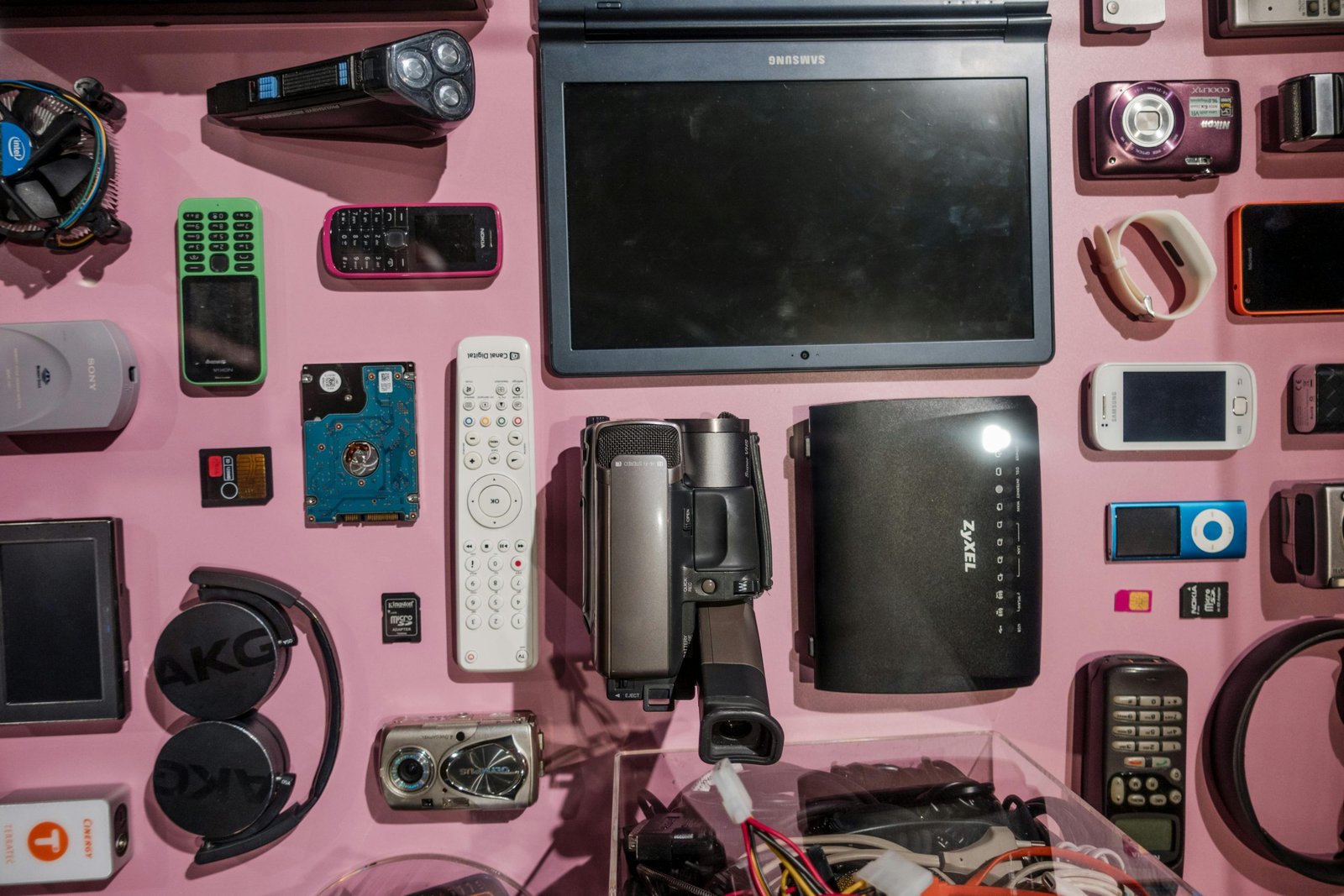
Every Indian home has a dusty drawer that is a graveyard for defunct electronic gadgets – a tangle of chargers and cables, outdated phones, a forgotten router, and maybe even a relic like a BlackBerry. Multiply that drawer by a billion; that’s us Indians upgrading our devices every few years, and you get one of the fastest-growing waste streams in the world – e-waste.
According to the Central Pollution Control Board (CPCB) estimates, India generates roughly 1.6 million tonnes of electronic waste every year. To help you picture the sheer enormity of the problem, think of the 1.6 million tonnes equating to as many as 40 Taj Mahals. If our own e-waste generation wasn’t massive enough, countries such as the United States and parts of Europe send e-waste to India labelled as ‘used goods’. This classification makes them legal to ship. Unfortunately, many of these products fail soon after arrival and rapidly become e-waste, adding to the already massive stream.
So what makes discarded electronics so different from regular trash that they warranted their own legislation? E-waste, when managed properly, can become a source of valuable materials like lithium and gold. However, when it enters informal recycling, its value is diminished, and on top of that, it becomes a major health hazard for the informal workers and their surrounding communities. This dual nature of e-waste as both resource and risk is precisely why India needed to step in with regulation.
Now, here’s the problem that neither the law nor the technology has solved, which is the journey from your drawer to a certified recycling facility. This is what’s known as the first mile, and in India, it’s where the system breaks down.
What exactly is e-waste, and why did India need a law?
E-waste includes discarded phones, laptops, chargers, televisions, printers, batteries and dozens of other electronic products that power daily life. These devices are deceptively complex. They contain valuable materials, such as gold, copper, cobalt, nickel and lithium, along with hazardous substances that can harm people and ecosystems if handled poorly.
To understand why e-waste laws matter, it helps to start with the health impacts of informal recycling. Climate Action Live spoke to environmental scientist Paromita Chakraborty, who has spent more than a decade studying pollution around informal e-waste hubs in Indian cities. Her research shows high levels of heavy metals, such as copper, lead, chromium and nickel, along with toxic chemicals, in the soil and air around informal recycling and disposal sites.
The worst damage does not come from devices lying unused in landfills. It comes from how they are processed by informal recyclers, who burn wires to extract copper, soak parts in acid to recover metals, and break devices by hand without protection. Chakraborty’s research shows that certain informal e-waste recycling practices can generate higher levels of specific toxic contaminants than open burning of municipal waste. These practices expose workers and nearby communities to pollutants that can linger in the environment for decades.
The case for regulation does not end with health and environmental harm. E-waste is also a rich source of critical materials. Advanced recyclers, such as Attero, recover battery-grade lithium, cobalt, nickel and graphite that can go straight back into new battery manufacturing. That value, however, depends heavily on the condition in which a device reaches the recycler. Damage, mixing and crude handling early on can sharply reduce both the quality and quantity of what can be recovered.
What does India’s e-waste law say?
In 2022, India updated its e-waste rules to address a deep-seated problem in the electronics market, where products were sold freely but responsibility ended once they became waste. The new rules are built around Extended Producer Responsibility. EPR means that companies that manufacture or import electronics are responsible for what happens to their products once consumers are done using them. Producers must ensure that a notified share of the e-waste they generate each year is collected and recycled through authorised channels. These targets vary by product category and rise over time, and a digital compliance system monitors the process.
Authorised dismantlers and recyclers generate EPR certificates after verified recycling takes place. Producers purchase these certificates to meet their obligations. It is important to note that missing a recycling target does not make the obligation go away. Any EPR compliance shortfall can be carried forward for up to three years, but regulators can impose financial penalties for non-compliance.
However, paying a penalty does not wipe the slate clean. Companies are expected to make up the gap, with partial refunds offered if they correct the shortfall within a defined timeframe. Repeated failure can lead to audits, closer scrutiny and even suspension or cancellation of registration by pollution control authorities.
What the system is designed to do
If the law is properly followed, discarded devices are supposed to be collected separately, stored without damage, and routed intact to authorised collection centres or recyclers. The aim is to prevent early breakage, mixing and unsafe handling so hazardous substances are contained and valuable materials can be recovered properly.
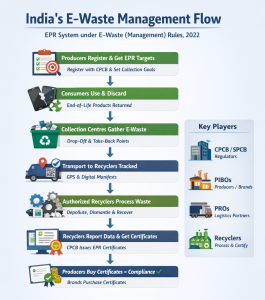
We spoke to EWRI, which handles the physical dismantling of discarded devices, to understand how the process works on the ground. In a best-case scenario, a device reaches an authorised dismantler such as EWRI. There, it is formally logged, depolluted, sorted, refurbished where possible, dismantled and separated into material streams under controlled environmental conditions.
Every step is recorded through lot IDs, digital manifests, QR-tagged packaging, GPS-tracked transport and weighbridges, creating an audit trail that allows recyclers to issue EPR certificates and companies to show they are meeting their legal obligations.
This traceability isn’t just a bureaucratic requirement. That’s what makes the formal system credible and allows capital to flow in. Indian recycling and battery-materials companies have raised significant funding in recent years. Lohum has secured more than $50 million to build battery recycling, reuse and materials recovery capacity. Attero has raised over $30 million in venture and strategic funding to scale lithium-ion battery and metal recovery operations. Recykal has raised over $20 million to expand digital traceability and price-discovery infrastructure.
On paper, this is how India’s e-waste system is meant to work.
But the first mile breaks the system
In reality, that clean handoff rarely happens. Devices are often damaged, mixed with other waste or partly dismantled long before they reach a formal facility. When that happens, much of their value is lost permanently. No amount of advanced recycling later can undo what is lost at the collection stage.
Anirudha Jalan, co-founder and chief strategy officer at Recykal, which is a digital marketplace, points out that most informal aggregators operate in a high-risk, cash-driven system where prices can change suddenly, deductions are unpredictable and payments are never guaranteed. In such circumstances, breaking devices down locally for quick cash often feels like the safer option, even if it destroys long-term value. Sending material to a distant recycler requires trust that many collectors simply cannot afford.
What is lost at this stage cannot be recovered later, even with advanced technology. If India wants to solve its e-waste crisis, it must start by solving the first-mile problem by bringing informal recyclers into the fold rather than sidelining them.
What does formalisation offer informal workers?
Formalisation has the potential to change everyday working conditions in tangible ways for the millions of people who already collect and handle e-waste. It can mean safer handling practices, access to protective equipment, and payments that are more predictable rather than negotiated on the spot.
Parts of this transition are already happening. Authorised recyclers are permitted to source material from third parties, including informal collectors, and some do this by onboarding them as registered vendors or suppliers within their own systems. Digital platforms, like Recykal, add another layer by making prices more transparent, helping aggregators see how the condition and segregation of material affect value, which can reduce losses and improve incomes over time.
Integration at scale requires more than individual company initiatives that are currently deployed by authorised recyclers. It needs structural support, something we can see working in a parallel waste stream. Hasiru Dala, for instance, has spent over a decade organising and supporting tens of thousands of informal waste workers in Bengaluru, primarily those engaged in collecting recyclables like paper, plastic and metal rather than e-waste.
Its work has focused on worker registration, access to social protection, identity documentation and long-term municipal partnerships, which help waste pickers move from invisibility to recognition in the city’s solid waste system. While Hasiru Dala does not operate as an e-waste recycler as of now, its experience shows that large-scale integration is possible when informal workers are recognised, organised and supported through institutional arrangements.
The bottom line
If you step back and look at the system as a whole, India’s e-waste law is not performing poorly because recycling is technically impossible or because investment is missing. Government data from various state pollution boards shows that India has hundreds of authorised e-waste recyclers and dismantlers with a combined processing capacity of over two million tonnes a year, while the country generates around 1.6 million tonnes of e-waste annually.
The gap is that India still lacks a simple, nationwide pathway that allows informal e-waste workers to formalise without fear. There is no government-backed registry, no standard process, and concerns around registration, taxation and exclusion continue to hold many back.
What’s Needed to Fix India’s E-Waste Problem (Starting at the First Mile)
| What’s needed | Why it matters |
| Clear pathways for informal collectors to formalise | Millions of people already collect e-waste, but there is no simple, nationwide process that helps them join the formal system without fear of paperwork, exclusion or loss of income. |
| Local mapping of collectors and scrap shops | Knowing who collects e-waste, where they operate and what they handle helps route devices safely before damage or informal dismantling occurs. |
| Training and basic safety support | Informal handling exposes workers to toxic materials. They need basic training and safer handling to reduce health risks and preserve device value early on. |
| Fair and transparent pricing at collection | When collectors are paid better for intact, sorted devices, they are less likely to break them down informally for quick cash. |
| Incentives that work at the first mile | Strong recycling capacity exists, but incentives must operate before waste reaches recyclers, not after value has already been lost. |
| Traceability from the start | Digital records, proper documentation and monitored transport help ensure e-waste actually reaches authorised facilities instead of leaking out early. |
| Integration, not displacement | The goal is not to replace informal workers, but to bring them safely into systems they already power. |
Unless the first mile is strengthened through better mapping, incentives, training and integration, the law will continue to look stronger on paper than it does in practice.
India has built the backend of an e-waste system that works. Now it needs to build the front door, one that is wide enough for the people who are already doing the work. The drawer in your home will fill up again. The question is whether the next time you clear it out, there will be somewhere safe and legal to send it and whether the person who collects it will be protected by the system or working around it.
Sonam Raina is a contributing writer at Climate Action Live, covering verified climate solutions across the built environment and interiors, fashion and textiles, waste management, and circular design. She focuses on evidence-led reporting that separates credible solutions from false and ineffective climate claims.
Inspired to Take Action?
Tl;dr: A summary for the busy, the curious, and the done-for-today
India generates 1.6 million tonnes of e-waste annually, driven by rapid device turnover and imports of “used” electronics that quickly become waste.
E-waste is both valuable and hazardous: it contains recoverable materials (like lithium and gold) but informal recycling methods expose workers and communities to toxic pollutants.
India’s 2022 rules use Extended Producer Responsibility (EPR), making manufacturers responsible for collecting and recycling e-waste through authorised, traceable systems.
The system is designed to safely channel devices to formal recyclers, preserving value and enabling material recovery. But it breaks down at the “first mile” (collection and aggregation).
Informal workers dominate this stage; without better integration, incentives and formalisation, much value is lost early and the law remains stronger on paper than in practice.