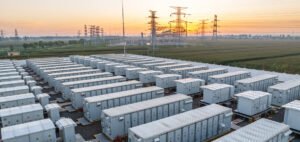
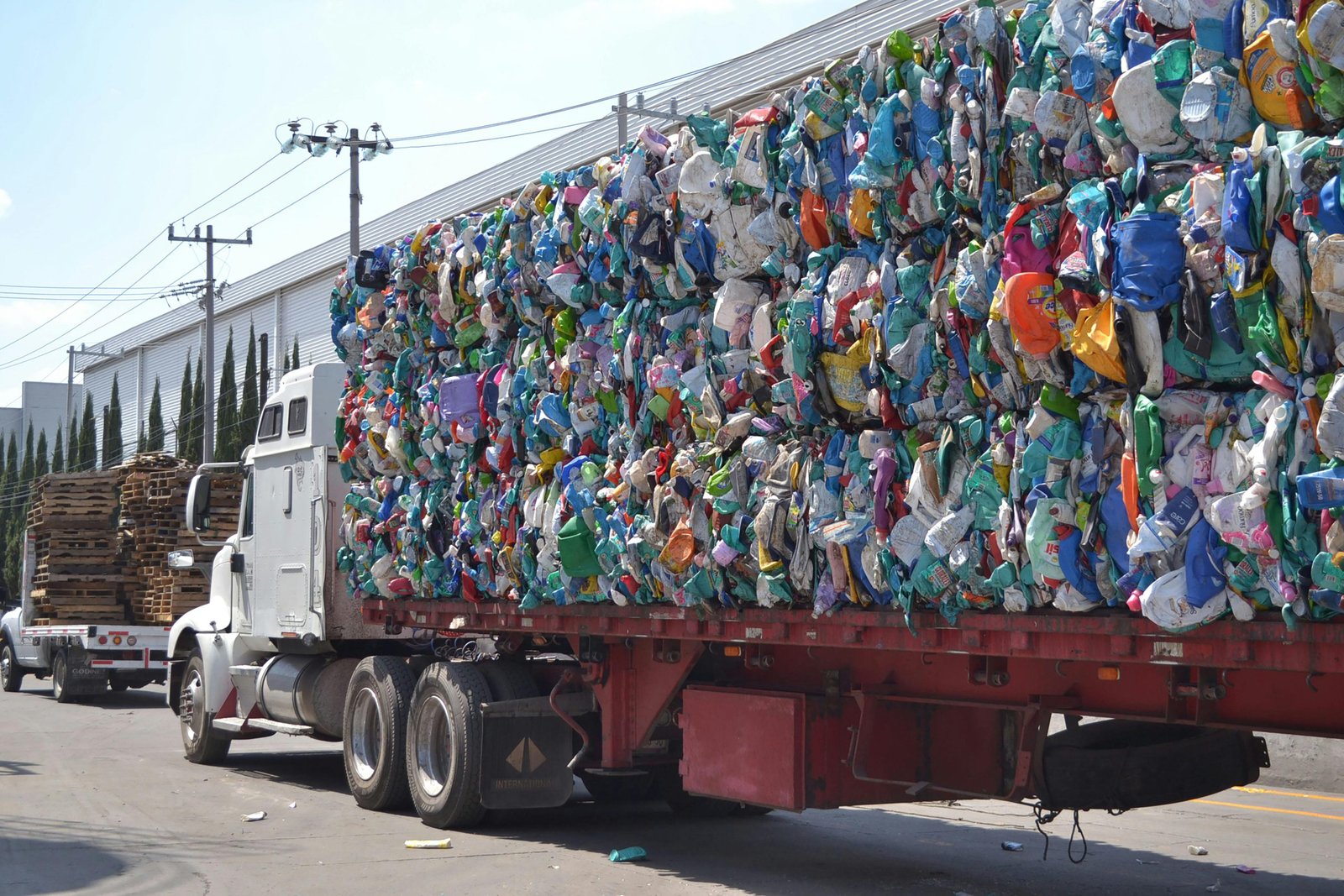
The European Union (EU) generated 2,233 million tonnes of waste, including 42,5 million tonnes of plastic waste, in 2022. India imported 3.5 million tonnes of it, roughly 20 times the waste the country itself generates in a single day, becoming the bloc’s second-largest waste destination. Plastic, metal, paper, textiles, e-waste: all of it flowed in. Now, as the EU moves to clamp down on waste exports to developing countries, India is among 24 countries asking for special exemptions to keep those shipments flowing.
The request has reopened an uncomfortable question. Why does a country struggling to manage its own waste want to import Europe’s?
While India maintains that these waste imports are vital for its recycling industry, there are concerns that waste gets poorly managed, imposing environmental and health costs on workers and local communities, and fuelling illegal trade networks.
“We have enough waste in our own country that requires a well-defined collection system, and a sound reprocessing and recycling system,” says Satish Sinha, associate director at Toxics Link, a Delhi-based non-profit.
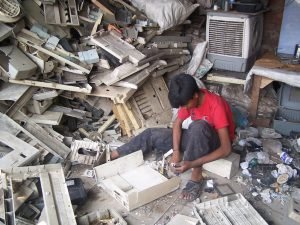
A young worker sorting plastic waste with no protective equipment. Photo courtesy Toxics Link
Europe’s green image
In March 2025, Inger Andersen, Under Secretary-General of the United Nations, told the European Union Council on Environment that Europe’s environmental leadership “has never been more needed or more welcome.” This came as yet another reminder of how the EU has positioned itself in environmental politics. However, this narrative overlooks the EU’s dependence on developing countries to meet its environmental goals through waste exports or resource extraction.
Since 2004, EU waste exports have risen by 72%. Every year, the bloc ships out around 33 million tonnes of waste, nearly half of it to developing countries.
The problem is not just volume, but oversight. Studies estimate that 15-30% of EU waste shipments may be illegal. The Basel Convention, which underpins global waste trade rules, has long been criticised for weak enforcement and loopholes that allow toxic waste to move under the label of recyclables, as researchers Lekha Sridhar and Parul Kumar’s 2019 study shows.
The convention has been criticised for having made a negligible impact on international waste trade, not imposing a blanket ban on the export of toxic waste, and for the lack of a comprehensive non-compliance mechanism that could punish those breaching rules. In this light, it remains to be seen how effective the EU’s new waste regulation, under which India seeks authorisation to import “non-hazardous” European waste, will be.
According to the European Commission, the new regulation aims to ensure that the EU doesn’t export its waste management problems to third countries, and that waste is managed in an “environmentally sound” manner. It is also intended to prevent illegal shipment of waste within the EU and exports to developing, non-OECD countries. (The OECD is a group of primarily rich market economies; all other countries are non-OECD.)
The Indian government and recycling industry, in seeking imports, argue that these imports do not constitute dumping and instead provide feedstock for India’s nascent recycling industry. With rising consumption and dwindling access to virgin raw materials, imported scrap, they say, is essential.
What India is asking for
In 2024, the EU overhauled its Waste Shipment Regulations (WSR), implementing tougher controls on waste trade. Rules framed under WSR ban plastic waste exports to non-OECD countries from November 2026, alongside a general ban on waste export for disposal and on hazardous waste exports for materials recovery.
But non-OECD countries can formally request permission to keep importing non-hazardous waste. In February 2025, India did just that.
In its request for exemption, India has asked for about 150 types of waste from the EU, including plastic waste under B3011, which refers to mixtures of plastic wastes consisting of polyethylene (PE), polypropylene (PP) or polyethylene terephthalate (PET), as well as a group of cured resins, and non-halogenated and fluorinated polymers. India has also requested plastic under A3210, which covers hazardous plastic waste.
The request for exemptions includes paper waste, hazardous e-waste, rubber waste, waste tyres, lead scrap excluding metal waste in massive form, textile waste and waste collected from households.
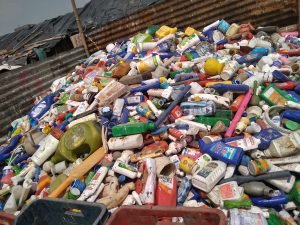
Representative image. Photo courtesy Toxics Link
“We are a growing economy,” says Sanjay Mehta, President of the Mumbai-headquartered Material Recycling Association of India. “India has asked for plastic waste since a lot of demand for granules is coming from overseas countries, and we have skilled labour, which is economically cheaper than [EU labour].”
Import, he says, is the only option as the availability of virgin-grade materials is decreasing. “We want to import [the right] quality and quantity of scrap material until we generate sufficient raw materials in the domestic market,” he says.
Critics warn that the exemption leaves the door open for continued illegal waste trade, and suggest India manage domestic plastic waste better.
A country drowning in its own waste
India generates around 1,60,038 tonnes of solid waste every day, which is about 111 tonnes or 10 trucks per minute. A little more than 18% goes straight to landfills – dumping grounds that create severe environmental and health concerns across India – while almost a third remains unaccounted for. About 80% of municipal solid waste is untreated or disposed of unscientifically.
India is also the world’s third-largest fossil carbon dioxide emitter, according to the latest Global Carbon Project report. Pollution from waste generation and mismanagement contributes significantly to this footprint.
Sinha says it does not make economic or environmental sense for India to import plastic waste. “We are the largest generators of plastic waste, and finding it difficult to manage our own plastic waste, so why import more? The whole country is littered with plastic at this point in time,” he emphasises.
Data shows that no more than 60% of plastic waste in India is recycled, most of it by the informal sector, yet a significant amount continues to worsen environmental harm, biodiversity loss and pollution. Nearly 77% of the waste generated in cities is dumped.
In its request for exemption, India has also asked for textile waste, when it is already home to about 8.5% ( 7,793 ktons) of global textile waste annually. Much of this flows to the Indian city of Panipat, which handles about 60% of India’s recycled textile waste, including a big chunk of imports from the European Union.
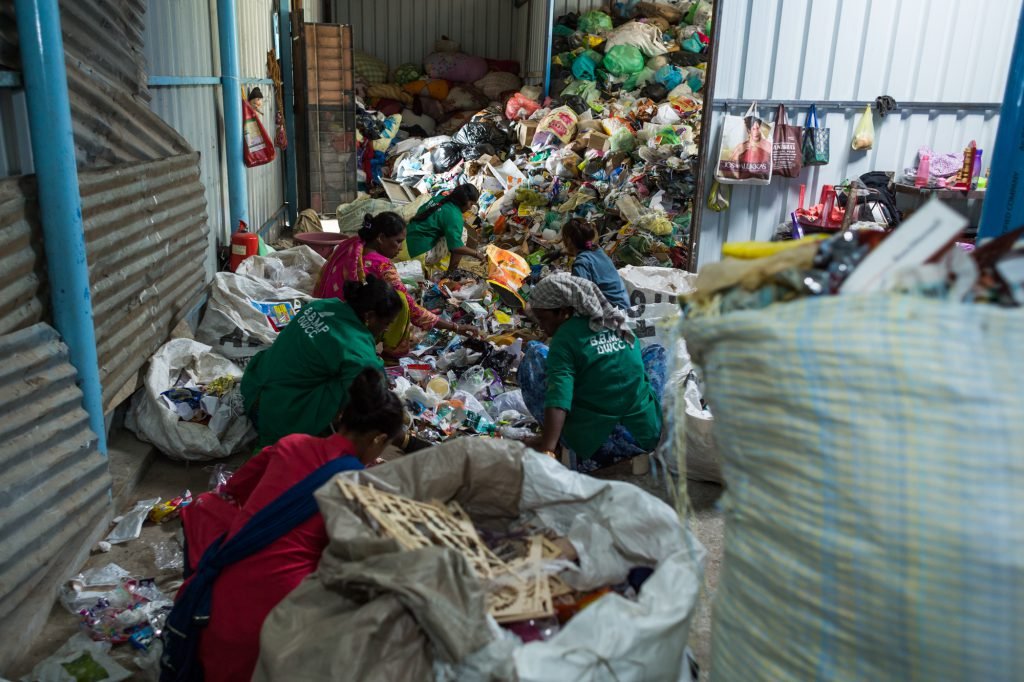
Workers sorting plastic waste. Photo courtesy Hasiru Dala
The textile industry is the third-largest contributor to dry municipal solid waste and only about a third of India’s textile waste is reused, according to a 2025 report by the Center for Study of Science, Technology and Policy (CSTEP). The majority of the recycled yarns do not meet global quality standards. The rest of the waste is incinerated, downcycled or landfilled.
Inclusion of e-waste on India’s list is also concerning, as escalating domestic e-waste generation has been a crucial issue. India generates about 2.9 million metric tonnes of e-waste, which makes it the third-largest e-waste generator globally.
The majority of e-waste is processed by the informal waste management sector. In this process, informal workers are constantly put at risk with primitive, mostly manual, operations where environmental and occupational health and safety measures are largely ignored. In fact, in February, the National Green Tribunal (NGT) highlighted gaps in the management of e-waste across the country, stating that 17 states and union territories did not currently have any e-waste recycling facilities.
So what is India’s rationale?
Mehta cites a range of reasons why the import of waste is necessary – the lack of quality virgin feedstock, the need to support a growing recycling industry, generating employment and reducing mining.
If India wants to export to the international market, Mehta explains, it needs high-value products, which require high-grade raw materials as feedstock – materials that are not hazardous and come from overseas markets. “If we don’t receive the material from the EU, then our circular economy will suffer greatly. There will be massive unemployment. We are receiving 35% of our raw materials from the European Union, so there’s a big dependency,” he says.
The exemption is not a blanket permission and will be subject to strict EU requirements, Mehta clarifies, adding that imports will only be handled by those recyclers that comply with EU law. Further, waste imports are monitored and governed by the Central Pollution Control Board and the Ministry of Environment, Forest and Climate Change to ensure there is no malpractice and mismanagement.
According to the European Union, the first list of countries exempted from the ban, which will continue to receive non-hazardous waste, was to be announced by 21 November 2026, with updates every two years, but there’s been no news so far. If approved, the exemptions will take effect from 21 May 2027, and the non-OECD countries on the list will continue to receive waste exports from the EU.
Can India actually recycle what it wants to import?
Do developing countries, which have become destinations for plastic dumping, have the capacity to recycle imported waste? Specifically, does India have the capacity? Mehta says yes, as it has the skilled manpower and a waste management industry that is working with the government to better organise the sector.
Environmental experts are not so sure. “Even if India achieves all its recycling targets for plastics under its Extended Producer Responsibility regulations, the country’s recycling infrastructure still won’t have the capacity to handle more imports,” says Siddharth Ghanshyam Singh, Programme Manager at Delhi-based Centre for Science and Environment.
“India generates as much rigid-plastic waste as it can recycle,” Singh says, “and it actually generates more flexible plastics than its recycling systems can process. By no stretch of the imagination does it make sense to import plastic waste from other countries.”
Moreover, Sinha points out, plastic recycled in India gets downcycled – its quality deteriorates from the original. “Most of the recycling industry does not use high-tech technology, especially in small-scale recycling facilities. So it creates more pollution as well as more problems than solutions it provides because of energy consumption, and the waste that it generates,” he explains.
Impact on domestic waste sector
“If India imports plastic waste, it is bound to impact the local recycling markets and how waste is picked up domestically. Recyclers can easily pick up better-quality plastic waste from the shipyard to recycle, and more domestic plastic waste will end up not recycled, affecting the national circular economy goals,” says Nalini Shekar of Hasiru Dala, a Bengaluru-based waste management NGO.
She also points out that this will impact the livelihoods of waste workers and others who depend on recycling domestic waste to earn a living. “If one waste picker picks up about 80 to 120 kilos of recyclables, they create around 24 jobs in the supply chain. This job creation will stop, as picking up waste on the street will become very expensive,” she explains.
Mehta counters, on the other hand, that importing waste will create more jobs.
Hiten Bheda, chairman, All India Plastic Manufacturers Association, says that what is called “waste” here can be a resource. “If the country is able to handle that resource skillfully and manage it well, and get input materials for the economy, there should not be a problem. But this is as long as it is not hurting local domestic industry,” he explains.
Singh says that once waste reaches Indian ports, monitoring is weak. When there is mismanagement of imported waste, and it ends up in illegal sites, underprivileged communities are the most affected. “This waste piles up in low-income neighbourhoods, impacting their health,” he says.
Shipping millions of tonnes of fossil-fuel-based plastic waste across the world has its own climate cost. “While one could argue that by importing plastic waste and recycling, there will be a reduction in the usage of virgin material, it’s important to note that recycling itself requires a lot of energy and water,” Sinha says. And since plastic can only be recycled a few times, the imported plastic will also end its life in India, he adds.
Through the lens of climate, pollution and health
India’s plastic waste is currently causing significant environmental harm. For instance, a substantial share is documented as ending up in rivers and coastal waters, contributing to the global crisis of marine debris. Despite the National Green Tribunal’s ban on the open burning of waste in open spaces, a 2024 study estimated that about 56.8% metric tonnes a year of municipal solid waste is open-burned in India, of which 5.8% metric tonnes is plastic.
Studies have shown that open burning of plastics is associated with increased risks of heart disease, respiratory issues and neurological disorders. Moreover, the ash from open burning contains dioxins, heavy metals, and other toxicants that contaminate soil and groundwater. This harms local flora and fauna, and also disrupts their respective food chains.
The degradation of plastics creates microplastics, which have been found everywhere: in soil, food and the human body. Exposure to microplastics has been linked to a wide array of concerning health risks, including cancer, heart attacks and reproductive problems.
Plastic also becomes a vector for chemical pollutants. “It mobilises other pollutants, carrying them into rivers, oceans and food chains. The plastic itself may be relatively inert; what it delivers is not,” Sinha says.
India also has a textile waste problem. There are severe health risks linked to long-term exposure to textile waste without proper safety measures. For instance, an investigation by The Guardian found that lung disease, skin conditions, and cancer are rising in Panipat, and this could be linked to the city’s textile waste recycling industry.
In this light, importing such waste could not only risk environmental harm but also pose significant health risks if mismanaged.
“Waste colonialism”
The debate sits within a broader global reckoning over “waste colonialism”, a term that emerged in the late 1980s to describe wealthy countries exporting their waste burdens – often toxic – to developing and low-income countries, even though the latter didn’t have the technological or regulatory means to manage this waste.
There is an evident power imbalance when the 24 countries that request exemptions to import waste from the EU are all developing countries.
“To suggest that the EU is not going to continue to be reliant on Global South countries to manage its waste or the material that is not profitable for them to recirculate is absurd,” says Elizabeth Ricketts, co-founder of Ghana-based The Or Foundation and facilitator of the Stop Waste Colonialism campaign. She provides an example: “Only one per cent of clothing globally is recycled into new clothing, and right now the EU really only takes responsibility for recirculating about 10% of its own product.”
There have been reports of highly contaminated waste being shipped fraudulently. Singh says “legal” waste dumping is already happening. “In the EU, costs of compliance and labour are high, and they have stricter rules regarding mismanagement, so there can’t be any burning of waste. So, sending it to countries like India is not from an environmental perspective but from an economic perspective,” he explains.
Mehta rejects the colonial framing. “We are asking for waste imports. They did not ask us to compulsorily take their material. We have gone to them,” he says.
Bheda says there is a need to look at a broader picture. “It’s a question of resource efficiency. Consider that by 2047, India would like to be a 30 trillion dollar economy, with 25% coming from manufacturing. If we put down the numbers, we will realise we need huge amounts of raw material to support that manufacturing activity. Do we have factories to churn out raw materials for such manufacturing? No. So, importing waste from the EU is more about importing raw materials, which is important for India’s economy,” he explains.
However, he suggests a conditional and controlled exemption, provided there is no adverse effect on the domestic recycling industry because of the imports.
The missing piece: Transparency
Some of this opposition could be quelled with public clarity on how the imported waste will be used, where it will go, and the steps taken to prevent mismanagement.
We reached out to the offices of the Ministry of Environment, Forest and Climate Change of India, the Central Pollution Control Board and the Directorate General of Foreign Trade with questions, but haven’t received a response yet.
Importing countries must have strong domestic regulations and enforcement, must improve waste segregation and collection domestically, and must strengthen data collection and monitoring of waste, Sridhar and Kumar said in their study. They also called for tightening up the Basel Convention, and for improved international cooperation, including technology transfer for waste management to countries that need it.
Sinha calls for transparency at every step. “Who has imported it? How has it been recycled? What quantity has been recycled? What amount of waste has been produced by it? What is the quantum of energy which has been used up in recycling this? The whole chain needs to be the tracking mechanism, and transparency is absolutely uppermost,” he says.
More recently, there have also been calls for investing in “urban mining” to recover materials from India’s own e-waste. Since 2022, negotiations have been underway to frame and ratify a Global Plastics Treaty, and trade regulations would be a critical step in addressing how countries meet their commitments in the years ahead.
As India weighs Europe’s scrap against its own waste crisis, the question is: are imports worth the real environmental and community costs?
Aisiri Amin is an independent journalist based in Bangalore. She writes about the environment, gender rights and culture.
This report was produced with a grant from Break Free From Plastic.
Inspired to Take Action?
Tl;dr: A summary for the busy, the curious, and the done-for-today
India imports large volumes of EU waste despite struggling with its own waste management.
It is seeking exemptions from new EU rules that restrict waste exports.
Industry sees Imports as economic inputs, but they pose environmental and health risks.
The issue reflects a tension between “waste colonialism” concerns and resource needs, with weak oversight a key risk.