Blending coffee and music comes naturally to Carnatic musician and coffee roaster Akshay Vaidyanathan. In 2019, he founded Kapikottai, a coffee brand he describes as a fun entrepreneurial experiment. A year later, he launched a new specialty coffee roast using Excelsa coffee beans, a less popular species of coffee.
While he introduced it as a small, experimental batch, Vaidyanathan says, “It’s been an institution since then, and sells out fast. A lot of people don’t realise it is another species. They feel it’s just good coffee.”
That distinction may soon matter more than ever.
Both Arabica and Robusta, the two species that dominate global coffee production, face mounting stress from rising temperatures and shifting rainfall patterns. Temperatures above 30°C reduce yields, affect bean quality and increase plant stress, particularly for Arabica coffee, which is more heat-sensitive than Robusta. India grows both varieties, though primarily Robusta, largely across the Western Ghats.
With changing climate conditions, researchers and farmers are turning to alternative and lesser-known coffee species. Among them is Excelsa.
An overlooked species gains new relevance
Excelsa (C. dewevrei), native to parts of Tropical and West Africa as well as Southeast Asia, has long existed on the margins of India’s coffee landscape. The trees, often planted as boundary markers or for shade, can be found in South and Northeast India. However, they were never widely commercialised for coffee production.
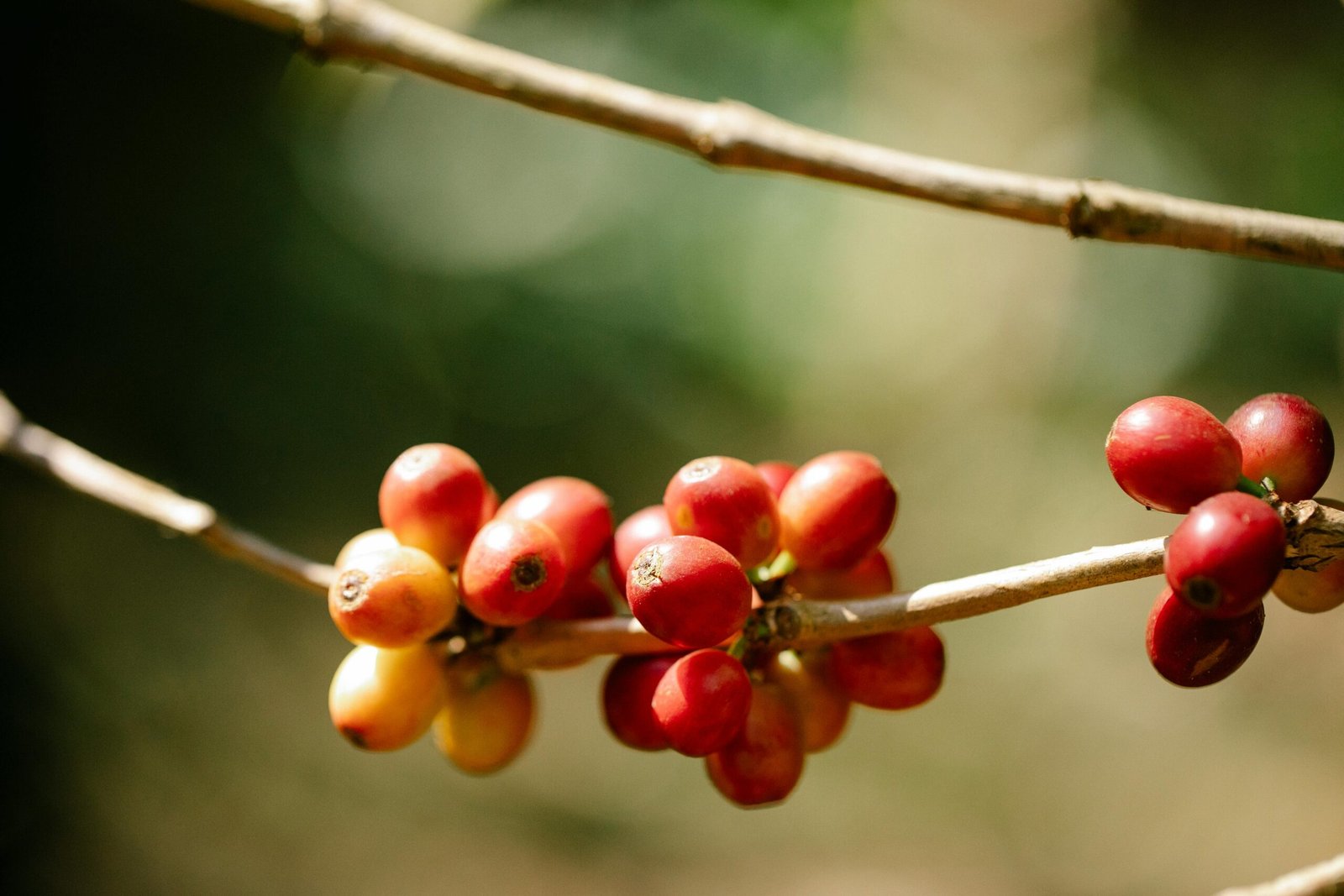
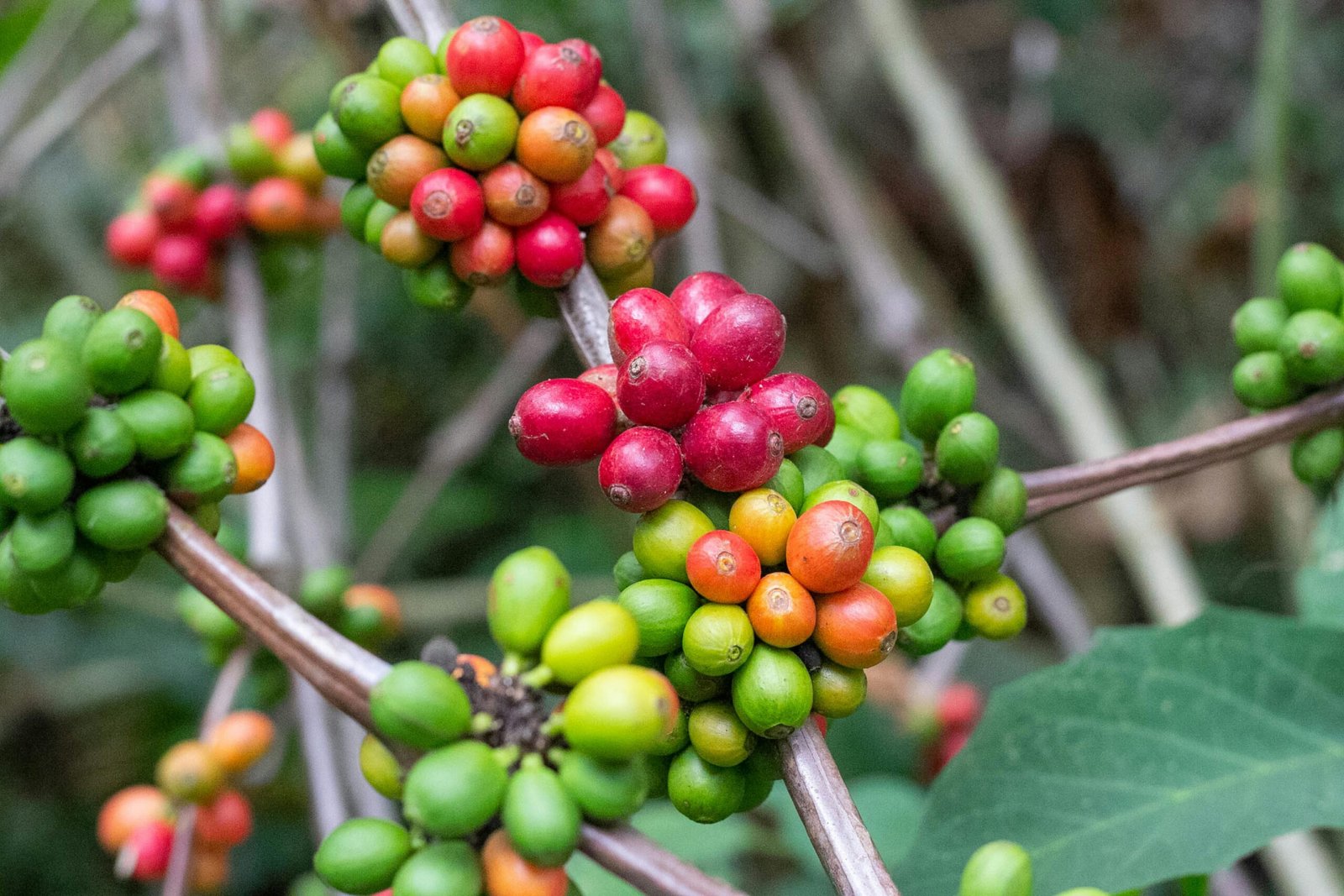
As erratic weather patterns threaten coffee production, researchers and farmers are turning to more climate resilient coffee species like Excelsa (Coffea dewevrei). It is often planted as boundary markers or for shade, but not yet widely commercialised for coffee production, as the trees grow quite tall. Photo by Michael Burrows on Pexels
According to an unpublished paper by the South India Coffee Company (SICC), Excelsa was introduced to India in the late 1800s by a British planter, Colonel Benson, as an alternative to Arabica following pest and disease outbreaks. However, due to its height — six to 15 metres — and dense branching, it proved impractical for estate-scale management and was never commercialised.
Today, shifting climate patterns are prompting a revaluation.
Akshay Dashrath, co-founder of SICC, has around 60-year-old Excelsa trees on his coffee estate in Karnataka’s Kodagu district. His grandfather used to only drink Excelsa at home. “It was also blended with Arabica in Kerala,” he recalled.
Dashrath added that since Excelsa was prone to pests such as the berry borer, the Indian Coffee Board had advised that it be cut down. But, Dashrath’s family refused and decided to preserve the trees. Today, the same trees are gaining renewed interests.
In 2024-2025, SICC began revaluating Excelsa across five coffee estates for its potential climate resilience and adaptability. Since Excelsa is not listed as a commodity, it is difficult to gauge its total production in India. But, in 2025, SICC sold over four tonnes of green coffee and in 2026, it is estimated to go up to five tonnes.
A shifting climate, a shifting crop
Across India’s coffee-growing regions, farmers are dealing with climate instability.
Kerehaklu Estate in Karnataka’s Chikkamagalaru district has been growing both Excelsa as well as the Liberica coffee species since 1953. “We are seeing significant climate-related issues, particularly with longer and more intense rainfall during the monsoon and early summers,” Pranoy Thipaiah, managing partner of the estate, told Mongabay-India in an email interview. “Plants’ biological clocks have shifted, and pest pressure has increased.”
Excelsa and Liberica, he added, were better suited to climate variations. Their long gestation period means they are harvested around March and April, well after the unseasonal/late monsoon rains have passed, which still affects Arabica.
Thipaiah is now expanding his trials. This includes seven different varieties of Excelsa and Liberica from Vietnam, which are growing in his nursery, and he plans to transplant them into the main estate next year. “We currently only grow a couple hundred kilos, but that quantity is increasing,” he said.
In 2018, the SICC introduced Excelsa to specialty roasters in the United Kingdom, where it was marked as a climate-resilient specialty coffee. Some early adopters have since received industry recognition for this species.
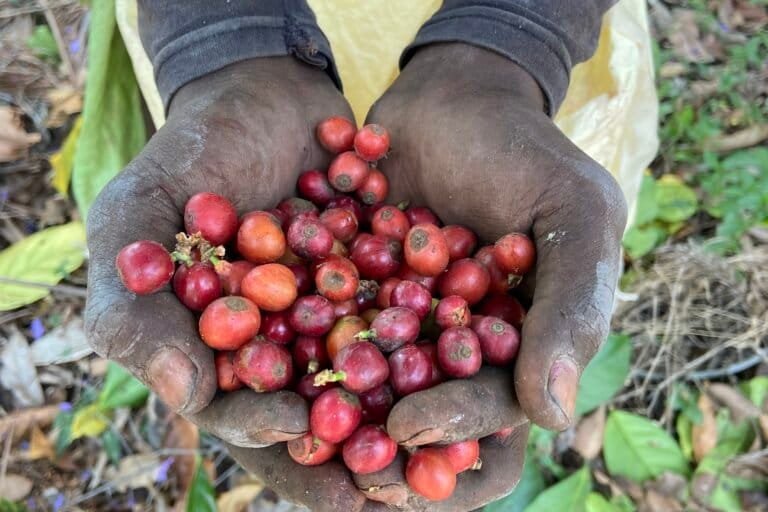
Excelsa coffee fruits harvested at Kerehaklu Estate in Chikkamagalaru district, where Excelsa and Liberica coffee have been grown since 1953. Pranoy Thipaiah, managing partner, shares that they are witnessing longer and more intense rainfall. Plants’ biological clocks have shifted, while pests have increased. Image by Pranoy Thipaiah, as published on Mongabay India
The search for alternatives
The search for climate-resilient coffee is not only limited to India.
Researchers have identified 133 different species of coffee. Even though many are not commercially available yet, they are now being studied for their potential to withstand changing climate.
Among the foremost researchers, who has identified several new species of coffee, is Aaron Davis, senior research leader, Crops & Global Change, Royal Botanic Gardens, Kew. He has spent decades researching coffee in Africa and Asia and says that the dominance of Arabica and Robusta may soon be challenged by more climate resilient species.
“In the next decade or sooner, we may see some major disruptions in coffee cultivation,” predicts Davis.
Arabica, he explained, requires a cool tropical climate with distinct dry periods, while Robusta needs a warm, wet tropical climate with short dry periods, but is not drought tolerant. Neither species can survive the changing climate in coffee-growing regions.
Davis says that the solution here is diversification.
“When we talk about climate-resilient coffee, it is about finding climate appropriate species,” he said. “We need a portfolio of coffee crop species to adapt to altered climates.”
Excelsa is one such coffee species. It is already being scaled in Uganda and Vietnam, and may soon enter mainstream supermarkets. “Ugandan Excelsa could feature in supermarkets within a decade,” he added.
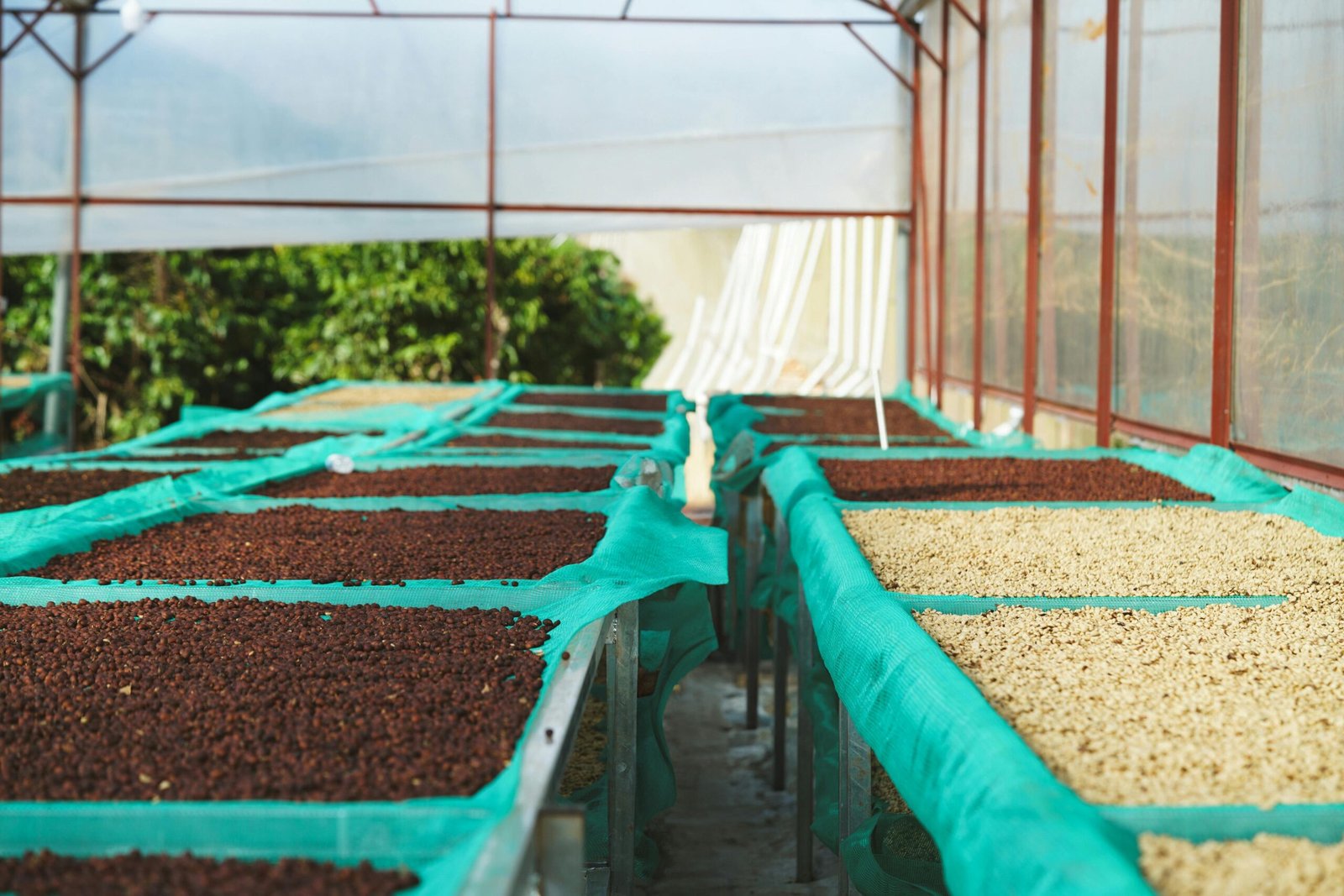
Coffee beans drying in Viet Nam. Researchers studying coffee in Africa and Asia say that the dominance of Arabica and Robusta may soon be challenged, as they may not survive changing weather patterns. Photo by 1500m Coffee.
Farmers in Uganda have been growing hundreds of acres of Excelsa, since the early 2000s. Kiwuka Catherine, senior research officer, of the National Agricultural Research Organisation, Uganda, said that small holders and large farmers have been taking up excelsa in Uganda as an adaptive response to climate change.
“Most farmers report that Excelsa is more resilient, more productive and thus more profitable than Robusta,” she told Mongabay-India in an email response. At least 200 farms in Uganda and several farms in India, Vietnam and South Sudan are now producing excelsa for export, including high-quality Excelsa to the UK.
Other species are also under consideration. Stenophylla, for example, is much more heat tolerant than Arabica and more drought tolerant than Robusta, and yet has a flavour that is almost identical to Arabica.
The shift to other species was happening already and it was not only due to climate change. Recently, genomic research showed that Liberica and Excelsa are two different species. Liberica is flexible in terms of where it can be grown, thriving in both wet and drier conditions and at higher temperatures than most other coffee crop species.
In South East Asia, there is a focus on selection and breeding of Liberica coffee using genomic research, including hybrids as an option to create climate resilient species.
More recently, research on climate resilient coffee led by the Royal Botanic Gardens, Kew, UK, has investigated a hybrid possibility between two coffee species, Liberica and Excelsa, sampled across Europe, Africa and Asia. The hybrids had qualities which make them a good choice to combat heat and excess moisture stress as well as disease resistance. These improved hybrids can be brought into production quickly. The researchers have proposed a new name for this interspecies hybrid called Coffea X libex (commonly referred to as Libex coffee).
This new finding is crucial for the future of coffee as it broadens the range of cultivated coffee species and hybrids offer a sustainable option, according to Dashrath of SICC which participated in the research.
From niche to commercial markets
In India, Excelsa is slowly moving from obscurity into the mainstream coffee market.
SICC is collaborating with Royal Botanic Gardens, Kew, who are providing academic support for Dashrath’s innovative research.
While Excelsa offered a promising alternative, there is little practical knowledge about how it has grown. “We followed standard Arabica protocols, but made the planting pits deeper to accommodate the taproot — just a bit of practical thinking,” Dashrath said. “From there, it was largely guided by observation. We select seeds from specific plants on our farm, some of which have been genotyped at Kew, and supply them to a local nursery.”
This project has evoked a lot of interest in the future of coffee in South India. More coffee growers have become interested in planting Excelsa. They have received requests for more than 4,000 saplings for 2026.
Future of coffee
The future of coffee growing and consumption could see species like Excelsa, Stenophylla or Liberica coming to the fore. “Excelsa’s mild flavour, and low caffeine content or using it in instant coffee could be agreeable to the consumer,” Davis said. So, along with moving coffee farming as the climate changes, the use of regenerative or climate smart agriculture, or perhaps improving Arabica and Robusta, and multiple alternative coffee species could prove critical resources to support the future of coffee cultivation across the coffee growing landscape.
As a safety net to sustain global coffee production, the search for climate resilient coffee needs more momentum with focused research, policy and government backing.
The Central Coffee Research Institute (CCRI) in India was sent questions on their research on climate resilience and coffee via email on March 9, March 10 and April 1, 2026 but we did not receive a response.
This story was originally published on Mongabay India.
Inspired to Take Action?
Tl;dr: A summary for the busy, the curious, and the done-for-today
Arabica and Robusta coffee are increasingly threatened by heat, erratic rainfall, pests, and shifting monsoon patterns linked to climate change.
Growers in Karnataka are reviving lesser-known species like Excelsa and Liberica because they tolerate higher temperatures and unstable rainfall better.
Researchers at Royal Botanic Gardens, Kew and Indian growers are studying numerous coffee species and developing new climate-resilient hybrids.
Experimental climate-resilient coffees are already entering specialty markets, with demand growing for Excelsa saplings and exports from India and Uganda.
Experts say the long-term solution will combine resilient coffee species, regenerative agriculture, shade management, and stronger policy support for farmers.