At an industrial site some months ago, a manager asked me a fair question.
A treatment system just like the one he had installed was running beautifully at another location he had visited. Clean water was coming out the other end and everyone seemed pleased. So why was this system, built on the same technology, struggling?
He was looking for something to repair. What I had to tell him was that there was probably nothing wrong with the technology at all.
The plant he had admired was a small one, treating a handful of kilolitres a day. His was many times larger. A process that behaves impeccably at a small scale does not simply become a bigger version of itself when multiplied. It becomes a different engineering problem in a different context. Success at one scale tells you something, but not enough to predict performance at another.
That conversation captures much of what years in the field have taught me about why climate solutions fail. We assume that what worked somewhere will work everywhere. We assume that proof at one scale is proof at every scale, and that once the technology has been invented, the rest is simply installation.
It is almost never that simple.
Pilots matter because they are how we learn how a process behaves. But a pilot is not yet a solution. Climate challenges are rarely small. A city’s sewage is not 15 kilolitres a day. Its organic waste is not one tonne. A technology has to work not only at one million litres a day but at 25 or 50 million. It has to perform across sites that are never quite alike, with different water quality, operating conditions, soil, construction and maintenance practices.
A system that works only at a small scale has not solved the problem. It has demonstrated a possibility.
Closing the gap between possibility and solution requires patience. Not patience in the sense of delaying action, but in staying with a system after installation. Watching it through seasons, changing loads and changing conditions. Correcting what does not work. Treating a climate solution not as a product that is handed over once, but as something that has to keep working over time.
Building systems at that scale demands a kind of competence that cannot be acquired from a design sheet. It comes from experience, and experience comes only from staying with systems long enough to watch them succeed and fail across years, seasons and scales.
There is a trap in that. You cannot gain large-scale experience unless someone first trusts you with a large-scale project. Yet customers understandably award projects to firms that already have such experience. Climate urgency only sharpens the dilemma because it does not wait for anyone to accumulate decades of judgement.
That raises a question I wish more of us asked. Do the people building and selling climate technologies see long-term stewardship as central to their work, or merely as an afterthought?
But vendors are only half the story. Customers have to stay too.
Much equipment is purchased to satisfy a statutory requirement. Once the certificate is in hand, maintaining a sustainability system quickly becomes a non-core headache. It was never the institution’s priority.
So when the system fails, each side blames the other. The customer says the vendor supplied faulty equipment. The vendor says the customer neglected maintenance. Both are partly right. These systems work only when both sides stay with them.
This is where climate’s implementation challenge comes into focus. We rightly want to scale solutions quickly. But in the rush, we often deploy technologies before we have learned enough about how they behave in the real world. We commission them into ecosystems already under stress, then treat the commissioning date as the finish line. In reality, it is barely the start.
Most of what I know I learned not on the day a system was switched on, but in the years that followed, returning regularly to see how it actually performed rather than how it had been promised to perform.
The gap between those two is where the real lessons usually lie.
The meter is the easy part
Take the humble water meter. Even something this simple succeeds only if someone stays with it.
The founder of a Hyderabad-based company that has installed meters across homes and campuses in the city, was candid about his product. People buy water meters for practical reasons, he said: fair billing, leak detection or resolving disputes. Compliance and convenience drive the purchase. The meter itself is reliable. Installing it is straightforward.
The hard part comes afterwards: Installing a meter does not mean it functions well. Functioning on day one does not mean it keeps working.
At one residential community with 59 villas and 90 apartments, the environment manager and a team from the company spent nearly 10 months making flat-level metering work reliably. They stabilised the system, resolved anomalies in the readings and manually transferred data when automation failed.
The technology had not arrived fully formed. It became successful because people stayed with it until it was. The outcome was durable. Water consumption fell by at least 10% and stayed there.
That reduction did not come from installing a meter. It came from 10 months of refusing to walk away.
It’s not only meters
The same pattern plays out in sewage treatment plants.
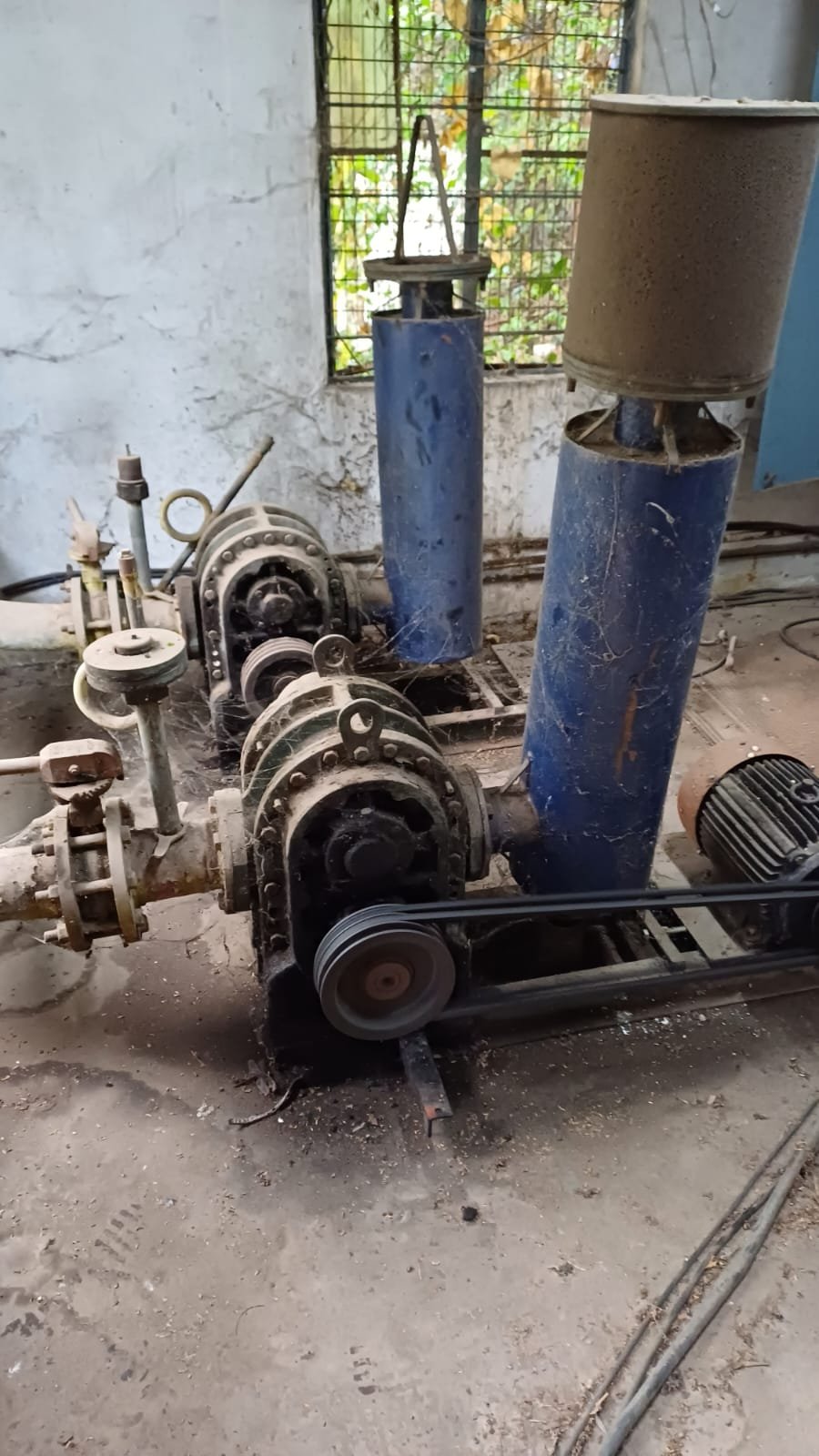
A sewage treatment plant pump house. Commissioned but untouched since. Photo by Vijay Kanda
Across several Indian cities, apartment complexes above a certain size are required to operate their own sewage treatment plants. It is a sensible regulation. But it has also produced many plants that are installed to satisfy an inspection rather than to perform reliably.
Anyone who works in this field recognises the pattern. Plants are commissioned, approvals are secured and, within months, performance begins to decline. Residents spend lakhs correcting defects they never knew existed because treated water can look perfectly clear while still failing every parameter that matters.
The reasons are rarely dramatic. A pump is unsuitable for raw sewage. A blower is switched off because someone objects to the noise. Sludge is not cleared. Treatment medium is never replaced.
These technical failures arise because the people responsible for operating the plant are not involved in selecting it and may not understand what they have inherited. The plant was commissioned for inspection day, then left to itself.
Mechanical systems at least advertise their problems. The water darkens, odours appear and a silent blower is eventually noticed.
Nature-based treatment systems, increasingly promoted as low-maintenance alternatives, fail more quietly. A treatment bed can clog while continuing to look healthy. Green vegetation gets mistaken for good performance.
The lesson is the same: Installation is only the beginning.
When policy is the product
The pattern is not confined to hardware. Policies also require stewardship.
In May 2023, Telangana created a framework for groundwater extraction. On its own terms, the policy is sensible. It prices groundwater extraction, requires metering and creates greater accountability.
What it did not anticipate was the incentive it created. Because the groundwater withdrawal it permitted remained significantly cheaper than municipal supply, pumping borewell water became the more economical choice.
One industrial campus I know had designed an integrated rainwater harvesting system costing about Rs 1 crore. The objective was to reduce dependence on both groundwater and municipal supply. But once permission to extract groundwater was granted, the economics changed. Investing in rainwater harvesting no longer made financial sense. The project was abandoned because pumping groundwater became the cheaper option.
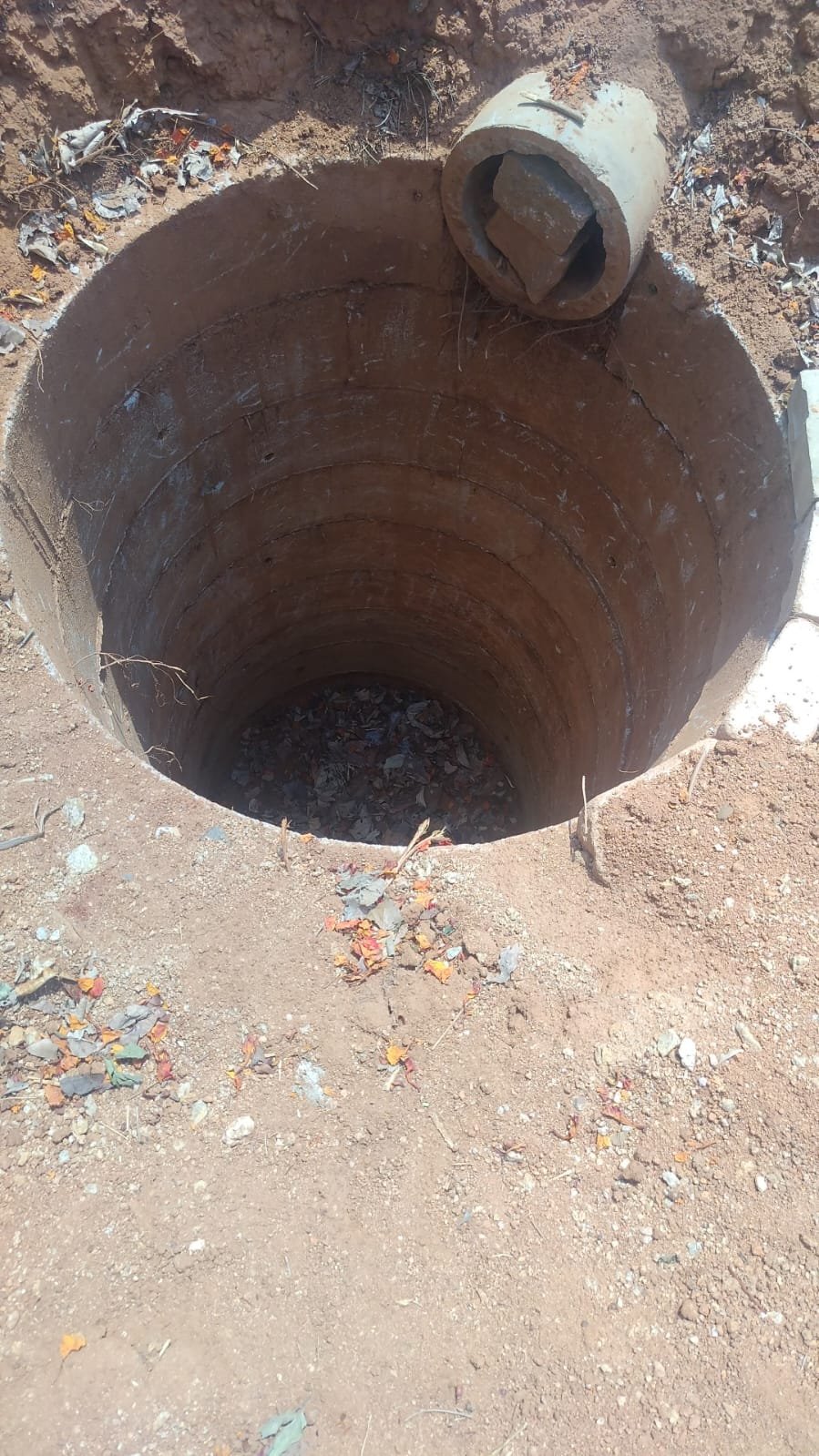
A rainwater harvesting recharge pit, silted and filled with debris. Without desilting, large stones obstruct the inlet pipe. Photo by Vijay Kanda
The regulation achieved its immediate objective. It created a statutory framework and a pricing mechanism. But it also weakened the incentive for a long-term investment that would have reduced groundwater dependence.
Nobody intended that outcome. It emerged because policies, like technologies, continue evolving after they are launched. They shape incentives that are often invisible at the drafting stage. Unless someone stays with the policy, watches those incentives and adjusts them, unintended consequences become part of the system.
The same lesson, wherever you look
By now the pattern should be familiar. A system is installed. It performs when commissioned. Then, gradually, performance slips because attention moves elsewhere.
In each case, what was missing was long-term stewardship.
This is not only my experience. Research has begun reaching similar conclusions.
A 2025 study led by Shivani Agarwal examined six Indian tree-planting projects in the voluntary carbon market using satellite imagery and field surveys. Half were no longer operational despite increasing tree cover while they functioned. The more durable projects shared three characteristics: continued engagement, tangible economic value for local communities and greater security over the land on which they depended.
Other work on nature-based climate solutions reaches similar conclusions. The limiting factors are often governance, institutional capacity, behaviour and long-term stewardship rather than engineering itself.
Technology alone rarely determines whether a climate intervention lasts.
What the field has taught me
None of this is an argument against the interventions themselves. The water meter is a good idea, so are sewage treatment mandates, groundwater frameworks and rainwater harvesting.
What I have learned is that we ask the wrong question when assessing a climate technology, project or regulation. We tend to ask whether it works.
The more important question is what happens after installation. Who answers the phone when conditions change? Who notices when performance begins to slip? Who has the authority, resources and incentive to correct course?
Where there are no clear answers to those questions, the risk of failure is already high.
Climate action is often described as a race to invent better technologies. My experience has taught me that the harder challenge is something less glamorous: It is building institutions, relationships and habits that remain long after the ribbon has been cut.
Vijay Kanda works on rainwater harvesting, lake management, wastewater treatment and groundwater systems, and writes about what it takes to make climate interventions last.