
Outside office complexes, tea stalls and restaurants across Indian cities, discarded cigarette butts are so common that they barely register as waste. A whopping 100 billion cigarette butts were trashed in 2021-22, amounting to 17,000 tonnes – equivalent in weight to 430 railway coaches or 4,000 elephants – according to a study submitted to the National Green Tribunal by the Central Pollution Control Board (CPCB) and the Indian Institute of Toxicology Research. This means some 1.9 lakh butts were thrown away every minute in the country.
Globally, cigarette butts are the most littered item – numbering around 4.5 trillion, and amounting to 726,000 tonnes of trash. This would be equivalent to the amount of trash dumped in Delhi’s three landfills, Ghazipur, Bhalswa and Okhla, over two months.
And cigarette butts are not harmless litter. “Cigarette butts may look small, but they punch far above their size in terms of environmental burden,” says Kaushik Chandrasekhar, Assistant Programme Management Officer at the United Nations Environment Programme, India.
Let’s meet two Indian startups turning this trash into… not “wealth”, but something valuable – while preventing the enormous environmental harm that untreated cigarette butts do in landfills.
Enter the startups
Code Effort
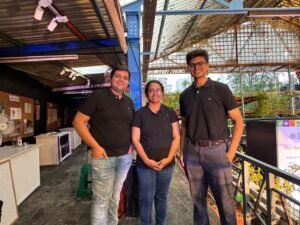
Founded in 2018 by Naman Gupta after he noticed the ubiquity of cigarette butt litter in Noida. It is described as India’s first dedicated cigarette-butt recycling company, with an expansive network of disposal bins and partnerships with informal waste pickers.
BuffIndia
Created by Ketan Prajapati, this venture takes a behaviour-first approach, positioning itself as an end-to-end cigarette waste management outfit focusing on awareness and habit change before scaling up volume.
Necessity is the mother of startups
In 2019, the Indian government’s Expert Committee on Single-Use Plastics (SUP) categorised cigarette butts as low utility, high environmental impact plastic. It listed cigarette filters among the top 12 single-use plastic products recommended for phase-out “as early as possible”.
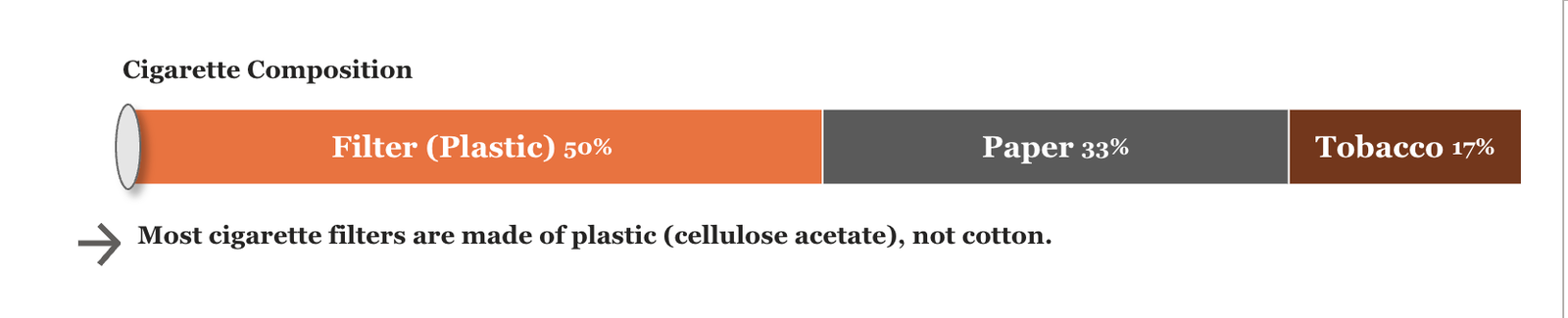
Here’s why: Cigarette filters are made of cellulose acetate. “Cellulose acetate is a form of plastic,” explains Chandrasekhar, “so once cigarettes are discarded, they persist for long periods in the environment instead of breaking down quickly.”
What compounds the problem is that there are few ashtrays in public smoking zones, low awareness about safe disposal, and almost no incentive for recovery.
When Naman Gupta noticed this problem in Noida in 2018, he saw an opportunity and created Code Effort. “There were no specific regulations, no policies, and no players addressing cigarette waste,” says Gupta, founder and CEO, Code Effort.
Gupta says butts can be chemically processed to remove impurities, and then used to make plastic pellets and even lightweight clay-fired bricks.
“At Code Effort’s facility, all three components of cigarette butts – tobacco, paper and the filter material – are separated and recycled,” explains Gupta. “Tobacco residue is converted into compost and sold to nurseries. The paper is repurposed into recycled paper and mosquito-repellent products. The filter material undergoes an automated recycling process.”
After recycling, the filter material is used as stuffing for cushions, toys and gifting products, as well as in textiles, yarns and mannequins. The idea of toys made from cigarette butts raises immediate safety concerns, especially for children. Gupta insists that the risk lies not in the material itself but in the toxins that filters absorb. Cellulose acetate, he says, is also a raw material for everyday products such as spectacles and plastic films.
The company’s processes are certified by the International Organization for Standardization (ISO), the Bureau of Indian Standards (BIS), Forest Stewardship Council (FSC) and Global Recycled Standard (GRS), he says, and every recycled batch undergoes lab testing before being used. “Recycling comes first, then lab testing, and only then production,” he says.
The CPCB report confirmed that cigarette and bidi butts did not cross hazardous-waste toxicity thresholds, but suggested further studies to examine the human-health effects of decomposing cellulose acetate, which persists for long.
Today, Code Effort claims to collect roughly two tonnes of cigarette waste every day – that’s 60–70 lakh cigarette butts – through a network of dedicated disposal bins, cigarette vendors and waste pickers. It has recycled approximately 1,200 crore cigarette butts by count since its inception.
While Code Effort focuses on high-volume recycling through decentralised collection and processing, another startup is approaching the same problem from a behaviour-first perspective. BuffIndia, an Ahmedabad based company, was founded by Ketan Prajapati. Having lived through bushfire-prone conditions in Australia where cigarette disposal is taken seriously, Prajapati was struck by India’s casual approach to discarding filters.
“In India, you’re almost expected to finish a cigarette and throw it on the ground,” he says, adding that even when people want to do the right thing, they can’t. “Because there is no proper, designated bin for cigarette waste, no awareness of it, they end up throwing it on the ground.”
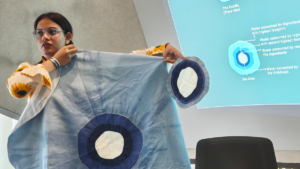
During early fieldwork for his startup, Prajapati says surveys revealed that many smokers – including well-educated ones – mistakenly believed cigarette filters were made of cotton and would biodegrade quickly.
The company currently handles between 1.8 and 2.5 tonnes of cigarette waste per month – modest when compared to the amount of waste generated, but growing steadily. “We are not volume talkers, we are talking about habits and a proper mechanism,” Prajapati says.
BuffIndia positions itself as an end-to-end cigarette waste management company, operating across collection, awareness, recycling and product creation. Unlike models that focus immediately on mass collection, BuffIndia follows a top-down approach: starting with corporate offices, hotels and institutions that already prioritise sustainability, before expanding to restaurants, bars and eventually individual vendors.
The company installs dedicated disposal devices at smoking zones, conducts awareness programmes, and manages door-to-door collection through its own teams. Collected waste is transported to a central recycling facility in Ahmedabad.
“At the facility, cigarette butts undergo an ISO-compliant process involving acidic hydrolysis, high-temperature treatment, and medical-grade testing. The recycled material, often combined with clay, is converted into decorative products,” Prajapati explains.
He draws a parallel with plastic litter: “Twenty-five years ago, chocolate wrappers on roads were normal. But when bins became mandatory, disposal became habitual. We are trying to do the same with cigarette waste.”
On the question of toxicity, Prajapati remains measured. “I don’t want to make claims that require decades of research to prove,” he says. “But our process ensures the material is tested, treated and stabilised to minimise exposure risks.”
But, it’s an uphill run
Both startups face systemic limits. India currently has no dedicated public collection or recycling system for cigarette-butt waste, leaving the efforts of startups to fill a policy vacuum. Without broader infrastructure and supportive public awareness, their reach remains partial.
Code Effort highlights a market challenge: creating sustained demand for recycled products. Competing with cheaper conventional alternatives restricts growth, constraining the scale of collection, R&D investment, and product diversification.
BuffIndia operates at a relatively modest scale (handling between 1.8 and 2.5 tonnes of cigarette butts per month) and its incremental, top-down expansion strategy means behaviour change and infrastructure rollout are gradual.
Both models also contend with the large volume of cigarette waste generated across the country, and the entrenched norm of indiscriminate littering in public spaces.
The problem requires better citizen awareness, says Chandrasekhar, as well as improved infrastructure and better-designed public spaces to collect and handle waste, and policy design. “Startup initiatives that improve collection or create incentives to ensure citizens do not litter can help in specific contexts and can reduce the load on public systems,” he remarks.
Policy and civic systems
Chandrasekhar says some countries are taking measures in line with the polluters pays principle, which holds producers financially responsible for the environmental damage caused by their products. The European Union has an Extended Producer Responsibility (EPR) for tobacco filters. San Francisco in the United States collects litter taxes from retailers, charging ~$1.25 per pack of cigarettes sold, which is used to mitigate the city’s annual costs of abating butts litter. It also helps in curbing improper disposal by funding litter education and funds the cost of collecting and processing cost of cigarette litter.
Policy and civic systems could similarly give scale and traction to such solutions in India. Some components of a systematic support structure would be:
- Public collection and recycling systems for cigarette filters, backed by government coordination or extended producer responsibility frameworks, to create systemic partners for these startups, rather than having them operate in isolation.
- Designated infrastructure installed in public spaces, paired with awareness campaigns to normalise proper disposal – not just in corporate or institutional settings but across streets and communities.
- Incentives for recycled products that can help build market demand so that recycled/upcycled materials can compete with cheaper conventional alternatives.
- Policy alignment on producer responsibility that holds manufacturers financially accountable for cigarette-butt cleanup and recycling costs, similar to measures in the European Union and San Francisco, and to India’s EPR mandates for electronics, for instance.
Overall, cigarettes must be discouraged
Ultimately, recycling and collection address the symptoms of cigarette pollution, not the source. Broader tobacco control policy can amplify impact. From 1 February, India is implementing a significant tax increase on tobacco products, which will cause a 20% rise in cigarette costs, potentially reducing consumption.
As we’ve seen, cigarette-butt pollution involves behaviour, innovation and policy. While startups like Code Effort and BuffIndia show that collection and recycling are possible, they need broader public awareness and policy support to scale. Without clearer responsibility, better infrastructure and behaviour change, cigarette butts will continue to remain one of India’s most overlooked yet persistent plastic pollutants.
Md Kaifee Alam is a Delhi-based multimedia journalist. Passionate about ground reporting and public-interest journalism, he likes to write on environment, politics, culture, education, health, and their intersections. He is particularly interested in exploring the human dimension of policy and its impact on society.
Inspired to Take Action?
Tl;dr: A summary for the busy, the curious, and the done-for-today
India generates massive cigarette-butt waste (100 billion annually), making it one of the most common and overlooked forms of plastic pollution, with significant environmental persistence due to cellulose acetate filters.
Startups like Code Effort and BuffIndia are tackling the issue through recycling and behaviour change – turning butts into products (e.g., pellets, textiles and decorative items) while building collection networks.
A key challenge is low awareness and lack of disposal infrastructure, with many people unaware that cigarette filters are plastic and non-biodegradable.
These solutions remain limited in scale due to weak policy support, low demand for recycled products and entrenched littering habits.
Scaling impact will require stronger policies (like EPR for tobacco), better public infrastructure, incentives for recycling, and broader efforts to reduce cigarette consumption itself.