
At a metro station in Mundka, Delhi, commuters escaping the heat can step into a government cooling station equipped with giant coolers, mist fans, drinking water and basic medical supplies. It is a small intervention, but an important one. Five years ago, there was no such facility.
India has got better at responding to extreme heat. Across more than 250 cities and districts, Heat Action Plans now promise early warnings, drinking water, changes to working hours and other measures to protect people when temperatures spike. This marks real progress. But it is also increasingly clear that the country is building a system designed to get people through the next heatwave, rather than one designed for a future of increasingly severe heat.
This distinction matters because the heat is not going away when this summer does. The ongoing El Niño is strengthening and is expected to persist into early 2027, increasing the likelihood of above-normal temperatures across much of the world. The World Meteorological Organization has also warned that 2027 could be another record-hot year. For India, that makes the question of how we prepare for heat more urgent than ever.
Fieldwork by our team at Sustainable Futures, undertaken across nine Indian cities, suggests that while short-term heat responses are becoming more common, the long-term work of making cities resilient to heat remains patchy. The problem is not a lack of action, but the kind of action we are choosing, and whether we are building for the next summer or the next decade.
How heat action works in India today
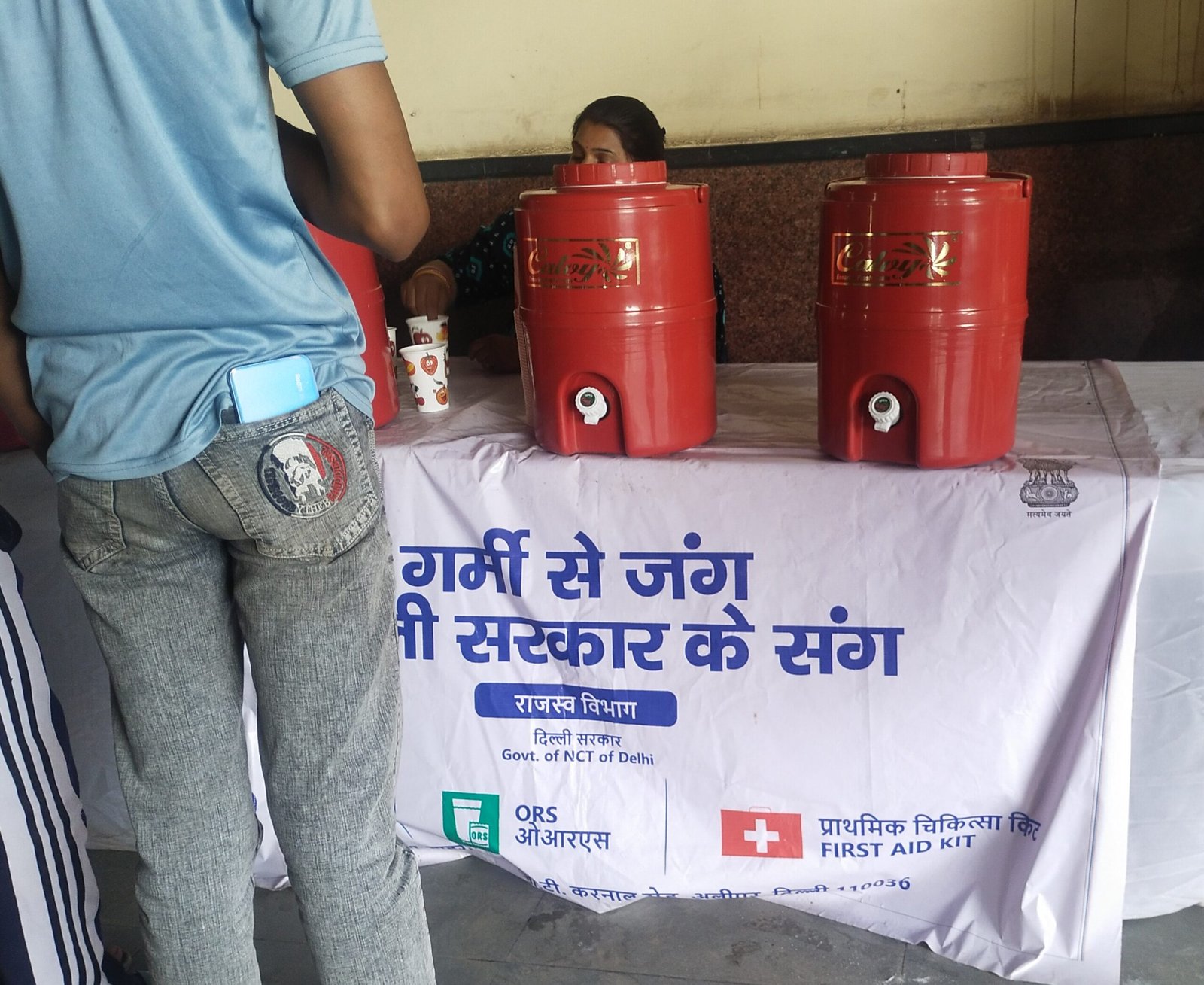
ORS and water dispensers at a metro station in Delhi NCR. Photo by Escandita Tewari
A Heat Action Plan, or HAP, is the document that states, cities or districts use to plan, prepare for and respond to a declared heatwave. HAPs typically include temperature alert thresholds, a vulnerability assessment for the region, and a list of actions for different departments to take before, during and after a heatwave.
In just over a decade, India has gone from one Heat Action Plan (HAP) in Ahmedabad to more than 250 for cities and districts across 23 heat-prone states. These house a full bundle of short-term measures to protect people from succumbing to the impacts of extreme heat. Some of the most prominent of these include awareness campaigns, ORS distribution, provision of drinking water, and altered work timings.
On paper, that’s a promise to protect people from extreme heat. In practice, a study found that while HAPs list a wide range of interventions, most lack the specificity or implementation framework to actually deliver them. Our own fieldwork, assessing on-the-ground heat action across nine cities found something more specific: long-term measures were largely absent outside the health department. The short-term measures that did exist – and they made up the bulk of all action taken – weren’t even driven by the HAPs themselves. They were driven by top-down guidelines from state and national governments.
What top-down push produces
Unlike any other disaster where the nature of impact does not vary as much by geography, heat is a hyper-local phenomenon. With weather changing over short distances – the Bharat Forecast System (BharatFS) operates at 6 km horizontal resolution – a one-size-fits-all solution for heat does not account for granular differences based on temperature, humidity, build environment and similar factors.
For instance, the set of solutions that work for the dry heat in Delhi might simply not be effective in Mumbai which experiences humid heat, or those that work in the sub-urban areas of a city, might not work in the city centres. But today, a national advisory lands the same way everywhere. It doesn’t adjust for the local factors shaping heat vulnerability in a given place. What gets implemented is generic, and short-term by design. These measures are quick to act on and easy to fund through routine budgets, which is partly why they dominate.

Source: https://www.sustainablefutures.org/publication/is-india-ready-for-a-warming-world-how-heat-resilience-measures-are-being-implemented-for-11-of-indias-urban-population-in-some-of-its-most-at-risk-cities/
Where long-term action does exist, it is clustered almost entirely around the health department. Elsewhere, measures that touch on heat weren’t necessarily designed to solve for it. For instance, when asked what they did for extreme heat, bureaucrats would mention tree planting initiatives, but few mentioned targeting them to areas where their impact could be the greatest.
Across the nine cities we visited, this pattern told a consistent story: our system is built to manage heat for the next summer, not the next decade.
Why short-term actions alone fail
Long-term measures are fundamentally important because they can build systemic resilience against the many compounding and cascading impacts of extreme heat. But long-term measures are structural and take years to build, which means that we cannot start building them when we need them. As the intensity of extreme heat rises every year, the effectiveness of short-term fixes will eventually hit a ceiling. Today, if well implemented, short-term measures can maybe help reduce a few deaths on a bad week. But they don’t build resilience for a future of rising heat stress.
Long-term resilience looks different: building shading infrastructure, amending building codes, providing dedicated financing for long-term measures and year-round institutional capacity and efforts to plan for heat, and not just when a heatwave is declared.
The economic turn
Heat is no longer simply a disaster story. It is increasingly an economic one. The World Bank estimates that nearly three quarters of India’s labour force is exposed to extreme heat, and that by 2030, heat could reduce annual working hours by 5.8% – equivalent to the loss of around 34 million full-time jobs. A cooling station can shelter a worker, but it cannot protect their jobs.
Heat vulnerability moves with work. Construction workers, street vendors, delivery riders – anyone whose livelihood depends on being outdoors – stay exposed regardless of how many cooling stations a city builds. And the effects don’t stop with them: heat disrupts service delivery, slows supply chains, reduces productivity, and creates operational risks across the economy. It touches the systems that connect work, markets and everyday life, not just the people standing in the sun.
The difference is intent
By next summer, there will probably be more cooling centres, more advisories and more people who know what to do when a heatwave warning arrives. We should welcome that progress. Short-term measures save lives, and they will remain necessary as extreme heat intensifies.
But they cannot be the measure of whether we are prepared for heat. What’s missing is the long-term part of the equation – and the intent to build it alongside, not instead of, what already exists. And creating the institutions and financing to keep doing this year after year.
The point is not to choose long-term resilience over immediate relief. It is to build the two together. India has shown that it can learn to manage a heatwave. The test now is whether it can prepare for a hotter future.
Escandita Tewari is a researcher working on heat governance in India.