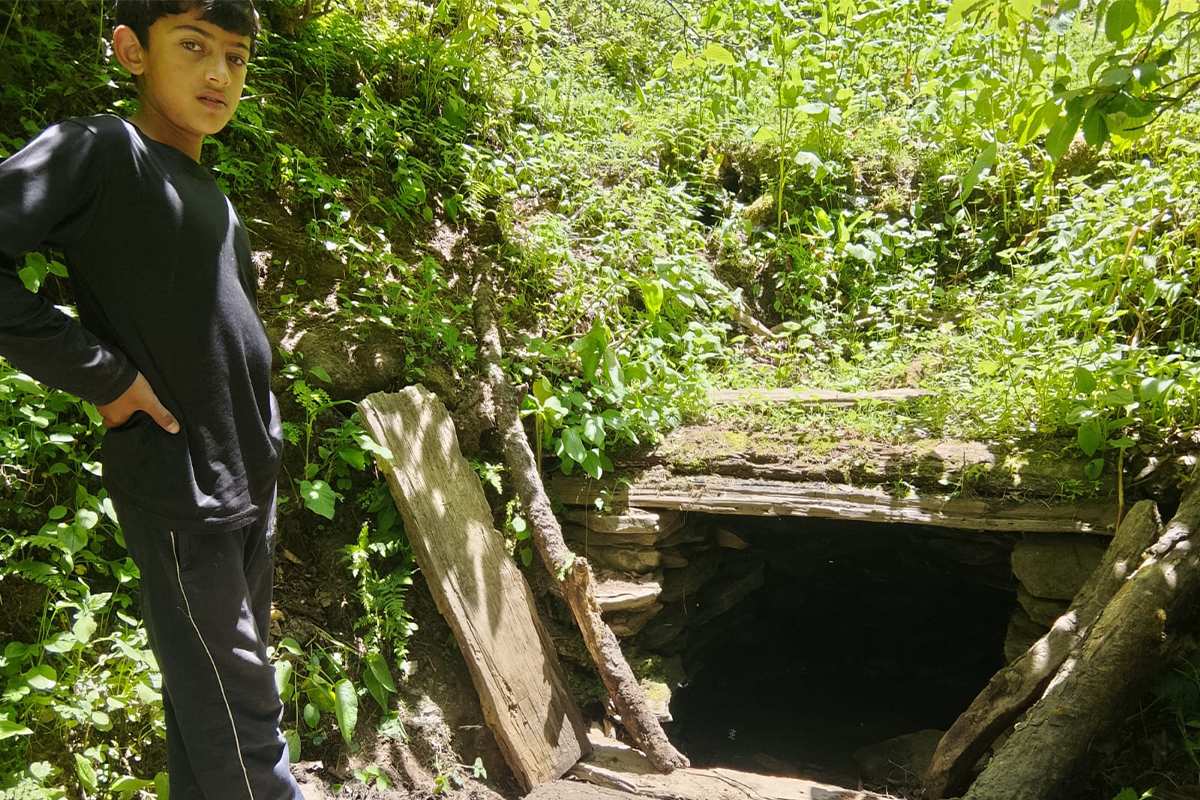
In Ludera village of Himachal Pradesh’s Chamba district, the signs of water stress appeared long before ‘climate change’ became a buzzword.
The district lies on the banks of the Ravi river. For generations, residents moving livestock to higher-altitude grazing grounds during summer months depended on small natural springs for drinking water.
“When we take our cattle to the dhar during the summer months, rivers are too far away,” says Balkrishan Singh. “Earlier, water was available throughout the season, but many of these sources are now drying up.”
These mountain springs have sustained lives and livelihoods for generations. In addition to providing water for livestock, they have irrigated small farms and supplied drinking water to villages – long before pipelines reached the Himalayas.
Today, many of those springs are becoming less reliable, even as the state records episodes of unusually heavy rainfall.
Longer dry spells followed by intense cloudbursts mean less water seeps slowly into the ground to recharge the underground aquifers that feed Himalayan springs. Instead, much of it rushes downhill as runoff, leaving communities with both floods and water shortages. Sustained groundwater recharge, by contrast, depends on slower and more evenly distributed rainfall.
Himachal Pradesh is responding with a different kind of climate adaptation. Rather than focusing only on delivering more water through pipes and storage tanks, it is beginning to restore the natural landscapes that produce water in the first place. From reviving traditional springs and protecting recharge zones to restoring forests, ponds and watersheds, the state is testing whether nature-based solutions can build long-term water security in the warming mountains.
The transition is still uneven and far from complete. But across districts from Chamba to Lahaul-Spiti, communities are already seeing how restoring ecosystems can make mountain water systems more resilient.
Changing rainfall patterns
The changes observed in villages such as Ludera are reflected across much of Himachal Pradesh. While annual rainfall may remain close to normal in some years, the way it falls has changed.
Between 2010 and 2024, Himachal Pradesh experienced sharp swings in rainfall, ranging from severe pre-monsoon deficits to episodes of extreme precipitation. The pattern continued in 2025.
While high-altitude districts such as Lahaul-Spiti and Kinnaur experienced rainfall deficits during parts of the year, districts including Shimla, Kullu, Bilaspur and Hamirpur recorded exceptionally heavy rainfall during intense weather events. The result was a growing imbalance: more runoff during storms, but less groundwater recharge between them.
These sharp swings expose a fundamental weakness in mountain hydrology. Heavy rain may fill rivers and trigger floods, but it does little to recharge groundwater if it falls too quickly. Springs depend on slow, sustained infiltration through soil and rock, not short bursts of intense rainfall.
The consequences have become increasingly visible. In 2018, Shimla faced a severe water crisis that left many residents receiving water only once every eight days, while authorities appealed to tourists to stay away during the peak summer season. The crisis exposed the vulnerability of Himalayan towns to changing rainfall patterns and highlighted the need to look beyond water distribution systems towards protecting the natural sources on which they depend.
Restoring nature’s water infrastructure
For decades, governments approached water scarcity by bringing water to people. Climate change is forcing Himachal Pradesh to also restore the landscapes that produce water.
The shift marks an important change in thinking. Pipelines, storage tanks and distribution networks can transport water, but they cannot replenish the springs, streams and aquifers on which water supply infrastructure depends.
“The government often starts water-supply schemes wherever water is available and transports it through pipelines, but pays little attention to protecting the source itself,” said Kulbhushan Upmanyu, president of the grassroots collective Himalaya Niti Abhiyan. “Water conservation should begin by identifying recharge zones, understanding groundwater movement through hydrological and geological studies, and protecting forests and vegetation that sustain springs.”
The approach, called springshed restoration, doesn’t treat a spring as an isolated water source. Rather, it restores the forests, soils, wetlands and recharge zones that capture rainwater and allow it to slowly percolate underground before emerging as springs months later.
The work has been carried out by the Jal Shakti Department and the respective Gram Panchayats, using funds under various initiatives such as the Jal Shakti Abhiyan’s Catch the Rain campaign, the Watershed Development Component of the Pradhan Mantri Krishi Sinchayi Yojana (WDC-PMKSY 2.0) and the Climate Change Adaptation in Rural Areas of India (CCA-RAI). Work involves clearing water channels, building or cleaning up recharge pits to collect rainwater, restoring ponds and storage tanks, and protecting the source of the spring.
In Una district, the authorities have begun restoring traditional ponds that had fallen into neglect after piped water became widespread. Instead of applying a standard template, engineers assessed each pond’s geography, catchment area, water source and pollution levels before designing site-specific restoration measures.
According to Naresh Dhiman, Superintending Engineer with the Jal Shakti Department in Una, this scientific approach is what distinguishes the project. Each pond’s geographic location, catchment area, water source, pollution status and local needs were studied separately, and technical solutions were prepared accordingly.
Once completed, the restored ponds are expected to recharge nearly 5.8 million cubic metres of groundwater annually while increasing local water availability by an estimated 0.90 million litres a day – enough to meet the daily needs of 9,000 people.
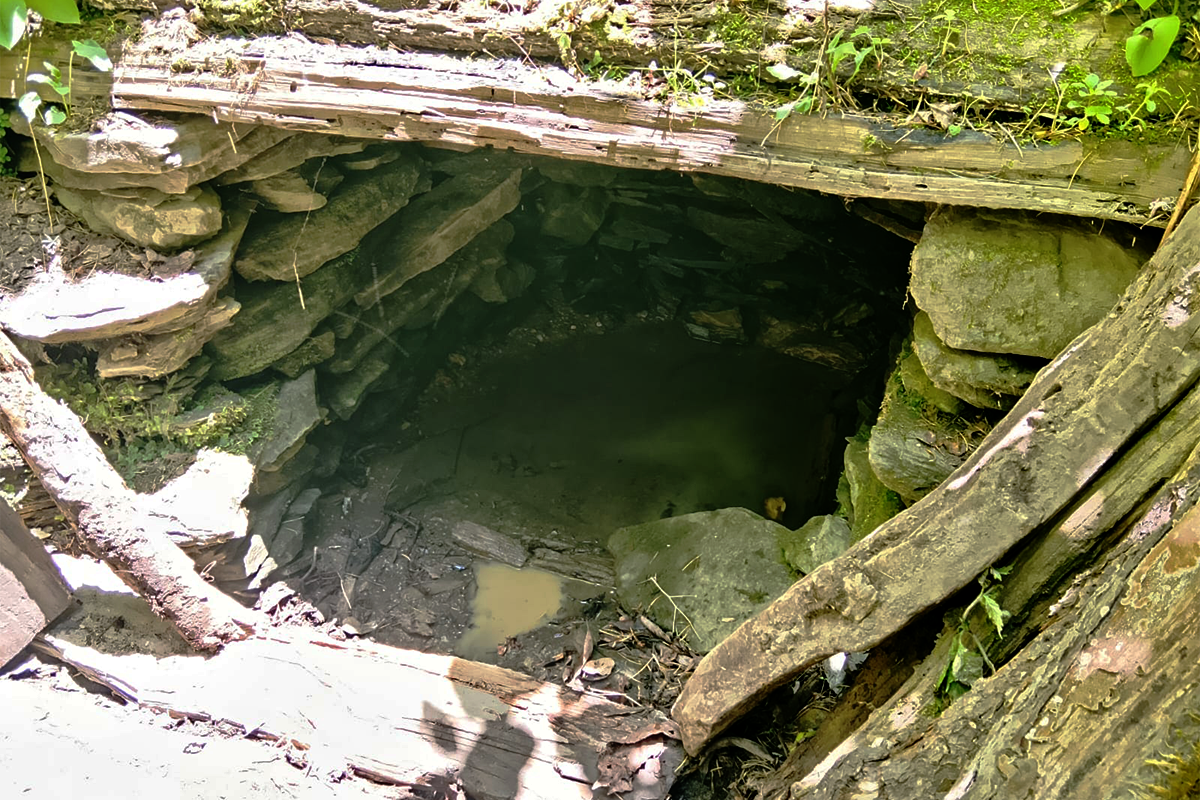
Locally known as a dibri, these natural water sources are fed by groundwater that seeps to the surface. They have long provided drinking water for local communities and their livestock, but many are now drying up. Photo by Surinder Kumar.
Rather than relying solely on engineering infrastructure, the project treats ponds as natural assets that capture rainwater, replenish underground aquifers and strengthen water security for both drinking and irrigation.
Residents have adapted similar practices. Satya Devi of Kalwara village of Chamba says the community cleans its traditional spring only lightly because excessive digging can alter its natural flow. Once the small collection pit, locally known as a dibri, fills with water, villagers channel the overflow into a small pond for livestock.
In Khurik panchayat of Spiti block, traditional water bodies and storage tanks were restored under the Catch the Rain campaign in 2024. Panchayat Pradhan Dechen Angmo told Climate Action Live that the restoration has improved water availability during the summer months and now supports drinking water for around 650 residents through household tap connections. The stored water is also used for kitchen gardens, though water availability still declines during winter when many natural sources freeze.
Kalzang Dolma of Margo Rangrik village says the difference has been noticeable. “Earlier, the storage tanks would run dry by late summer, but after restoration they continue to supply water throughout the season.”
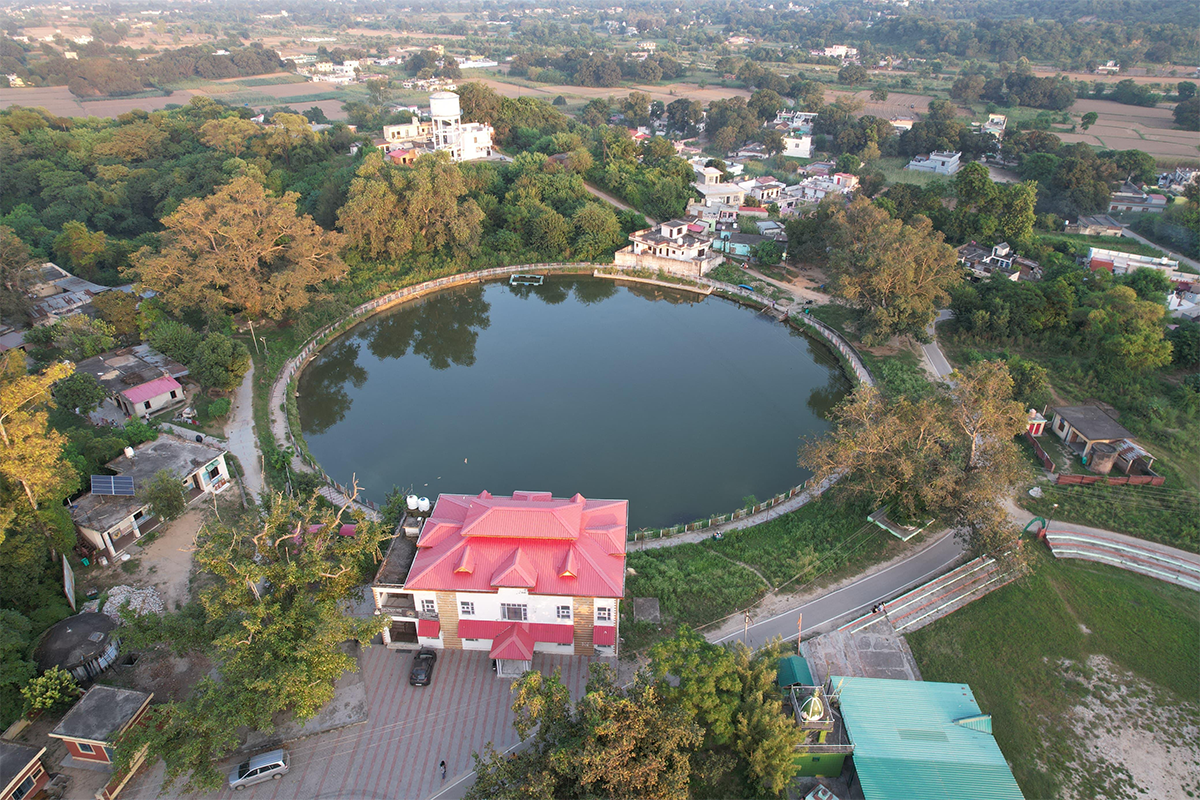
Pond rejuvenation in Saloh, Dulehar and Pubowal reflects a nature-based approach to water conservation and climate resilience in Una district. Image courtesy: Office of the Deputy Chief Minister, Himachal Pradesh.
Across Lahaul-Spiti, where winter freezes and rugged terrain complicate water supply, traditional springs remain indispensable despite official claims of universal tap-water coverage under the Har Ghar Jal programme of the central Ministry of Jal Shakti.
The Har Ghar Jal programme was launched by the Ministry of Jal Shakti in 2019 with the aim of providing tap water to every family by 2024. Himachal Pradesh too claims 100 per cent “Functional Household Tap Connection” provision under the Jal Jeevan Mission, which seeks to provide tap connections to households in rural areas.
Nirmala Devi, Pradhan of Salgran Panchayat, told Climate Action Live that several wards are not yet covered. Even in areas where the scheme has been implemented, water does not always reach households regularly, especially in the winter. During the winter months, when pipelines freeze, “springs remain our primary source of water for domestic use and kitchen gardening,” she said.
Do restored springs make a difference?
The benefits of restoring springs become clear in Tingret Panchayat of Lahaul-Spiti, where multiple natural springs have been rejuvenated and channelled into a common village source through joint efforts by the Jal Shakti Vibhag (water department) of Himachal state and local communities.
Although every household in Chhaling village has a tap connection, the village is not yet connected to a regular piped water supply, with nearly 150 residents dependent on a public tap.
“Earlier, people had to carry water from the public tap or directly from the springs whenever the supply was disrupted,” Panchayat Pradhan Anita Kumari said. “Now, when water is available at the rejuvenated source, households can pipe it to their homes, making access much easier.”
The restored springs have also improved irrigation for kitchen gardens and agricultural fields, supporting the cultivation of fruits and vegetables during the growing season.
However, spring rejuvenation alone cannot solve the Himalayan water crisis. While restoring recharge zones and improving groundwater infiltration can revive declining springs, Anand Giri, Assistant Professor at IIT Mandi says, long-term water security will also depend on consistent and long-term watershed restoration, forest conservation, climate-resilient agriculture, disaster-resilient infrastructure and efficient water management.
The experience of villages such as Ludera, Khurik and Tingret suggests that restoring springs and watersheds can make communities more resilient to a changing climate. The bigger challenge is scaling those efforts across an entire mountain state.
Himachal Pradesh has made a start. According to the Economic Survey 2025-26, the state has completed 17 restoration works under the Watershed Development Component Plus pilot programme, while 1,488 Natural Resource Management works have been implemented to improve soil moisture, reduce erosion and enhance groundwater recharge. NABARD has also sanctioned 22 springshed development projects across 10 districts to strengthen drinking water and irrigation security.
Progress, however, remains uneven.
Under the WDC-PMKSY 2.0 framework, 417 springs have been identified for restoration across the state. Work has been completed on 178 springs, while another 130 are under restoration. More than a quarter of the identified springs, 109 in all, are yet to see work begin.
Scientific planning also remains a bottleneck. Although the Department of Land Resources has identified 79 additional springs for pilot springshed management, hydrogeological surveys essential for understanding groundwater movement have so far been completed in only 15 project areas.
The pace of implementation matters because climate risks are escalating rapidly.
According to the State Disaster Management Authority’s Memorandum of Damages, Himachal Pradesh has suffered disaster-related losses of around Rs 46,000 crore over the past four years, equivalent to roughly 4% of its Gross State Domestic Product each year.
Against that backdrop, restoring springs is no longer simply an environmental programme. It is increasingly becoming an investment in climate resilience.
The lessons extend well beyond Himachal Pradesh. Across the Indian Himalayas, millions of people depend on springs for drinking water, farming and livestock. As climate change alters rainfall patterns and weakens the natural systems that sustain these water sources, mountain communities will need to look beyond conventional infrastructure.
Pipelines, reservoirs and treatment plants will remain essential. But they can only distribute the water that nature provides.
Protecting forests, restoring watersheds and reviving springs offer a complementary approach by helping landscapes capture, store and gradually release water. As Himachal Pradesh is discovering, the most resilient water infrastructure may not always be built from concrete. Sometimes, it begins with restoring the ecosystem itself.
For villagers like Balkrishan Singh of Ludera in Chamba district, the measure of success is far simpler than rainfall statistics or programme targets. It is whether the spring on the grazing trail still flows when summer arrives. As climate change reshapes the Himalayas, restoring the landscapes that feed those springs may prove to be one of the region’s most important climate adaptations.
Inspired to Take Action?
Tl;dr: A summary for the busy, the curious, and the done-for-today
Himachal Pradesh is restoring traditional springs and watersheds to tackle water scarcity caused by erratic rainfall, shifting from pipe-led solutions to nature-based climate adaptation.
Longer dry spells and intense cloudbursts are drying up Himalayan springs. Restoring forests, ponds and recharge zones helps groundwater percolate slowly, keeping springs flowing.
Villages across Chamba, Lahaul-Spiti and Una are cleaning and protecting traditional springs (dibris) and ponds, ensuring water for drinking, farming and livestock even when piped supplies fail.
The state has restored 178 of 417 identified springs, but progress is slow; scientific hydrogeological surveys are complete for only 15 projects, while climate losses exceed ₹46,000 crore in four years.
Springs are more reliable than pipelines in the Himalayas. Protecting the ecosystems that feed them may be the region's most important climate investment.