

 India’s ₹20,000 crore budget allocation to Carbon Capture, Utilisation and Storage (CCUS) announced earlier this year positions CCUS as both a climate solution and a lifeline for India’s coal-dependent economy. This raises a critical question: is this pragmatic decarbonisation, or an expensive way to prolong the fossil fuel era?
While allocations for renewable energy in this year’s Union Budget rose to ₹32,914.7 crore, a 29% increase from revised estimates for 2025-26, it was the allocation of ₹20,000 crore to CCUS that emerged as the wild card. The move reflected a growing recognition that while solar and wind will drive much of India’s energy transition, industries such as steel, cement, refineries and coal-based power will still need technologies that can cut emissions without shutting down critical industrial capacity where alternatives remain limited or expensive.
This is the first in a four-part series that explains what carbon capture, utilisation and storage are – yes, they’re a bunch of related but separate technologies – and the logic behind India’s big bet.
CCUS explained
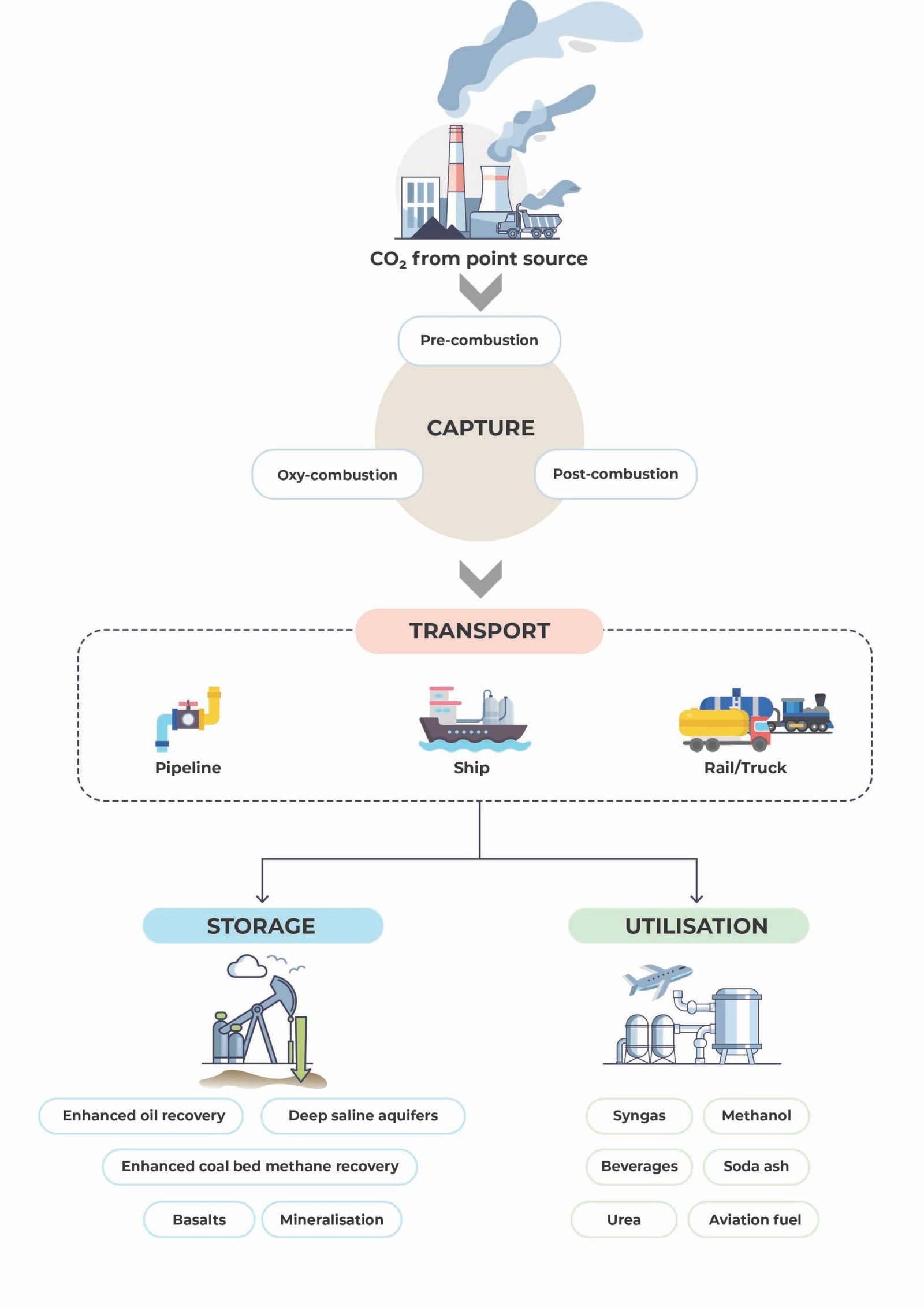
CCUS refers to a group of technologies used to capture carbon dioxide emissions from fossil fuel-based power plants and industrial facilities, or even directly from the air. The captured CO2 is then transported, usually through pipelines, shipping, rail or trucks, for utilisation in industrial applications or permanently stored underground.
Read our detailed explainer on CCUS here.
India’s CCUS push began earlier than most realised
While many viewed the announcement as abrupt, India’s efforts to explore and encourage the CCUS sector had begun much earlier.
On 29 November 2022, a study titled Carbon Capture, Utilization, and Storage Policy Framework and its Deployment Mechanism in India was released by NITI Aayog. The report explored the importance of CCUS as an emissions reduction strategy for achieving deep decarbonisation in hard-to-abate sectors. It also outlined broad policy interventions needed across industries for large-scale deployment.
The study argued that India’s updated climate commitments, including sourcing 50% of installed electricity capacity from non-fossil fuels and reducing emission intensity by 45% by 2030, would require solutions beyond renewable energy alone.
According to the report: “Since India has updated its Nationally Determined Contributions targets, for achieving 50% of its total installed capacity from non-fossil-based energy sources, 45% reduction in emission intensity by 2030 and taking steps towards achieving Net Zero by 2070, the role of CCUS becomes important as a reduction strategy to achieve decarbonization from the hard-to-abate sectors.”
The reasoning behind the push is straightforward. Sectors such as steel, cement, chemicals and coal-based power continue to depend heavily on fossil fuels and cannot transition away from them overnight. That is where policymakers believe CCUS could bridge the gap between industrial growth and emissions reduction.
Explaining this logic, Suman Bery, former vice-chairperson of Niti Aayog (May 2022-April 2026), had said: “CCUS can enable the production of clean products while still utilising our rich endowments of coal, reducing imports and thus leading to an Atmanirbhar Indian economy.” Implementation of CCUS technology, he added, could become an important step in decarbonising hard-to-abate sectors.
Potential beyond carbon reduction
Apart from carbon reduction, policymakers also see economic and industrial opportunities in CCUS.
According to the NITI Aayog report, CCUS projects could generate significant employment: capturing around 750 Million tonnes per annum (MTPA) of carbon by 2050 – or as much carbon as produced by over 600 million cars in a year – and creating 8 to 10 million full-time equivalent jobs, in a phased manner.
The report also acknowledged a difficult reality: India’s dependence on fossil fuel-based energy resources is unlikely to disappear anytime soon. That makes a dedicated CCUS policy important in the Indian context, V.K. Saraswat, Member, NITI Aayog and Chancellor, Jawaharlal Nehru University said.
Carbon utilisation has application in other industrial processes: CO2 can be converted into value-added products such as green urea, food and beverage inputs, building materials, methanol, ethanol, polymers and bio-plastics, while also supporting enhanced oil recovery applications.
Together, the report argued, these applications could contribute to India’s broader circular economy ambitions.
The coal question
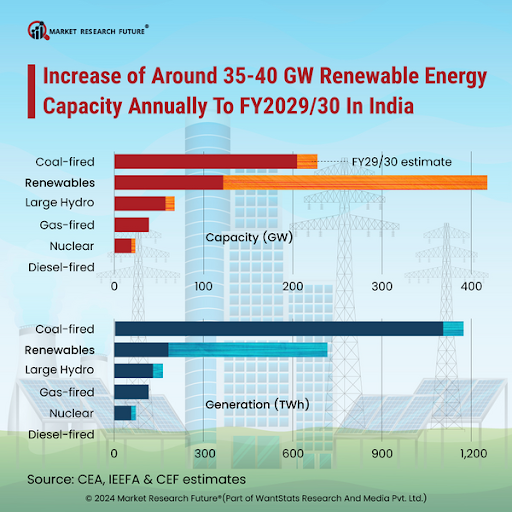
CCUS also has a potentially significant role in decarbonising India’s power sector, given the country’s continued dependence on coal for over 70% of its electricity generation to power key industries like steel and cement.
In fact, during 2022-23, coal and lignite-based capacity contributed an overwhelming 73% of the country’s electricity generation. By 2031-32, it is still expected to contribute around 50% of the electricity generation and will remain the most dominant source, with solar PV coming in a distant second at 25% of the total electricity generation. Thus, it is clear that coal-based power generation will be with us for a long time, at least for the next couple of decades, if not more.
The NITI Aayog report noted that even if India substantially greens its grid and achieves the target of 500 GW renewable capacity by 2030, fossil fuels, most likely coal, would still be needed to meet baseload demand because of the intermittent and non-dispatchable nature of solar and wind power.
That reality is one reason industry experts tracking the sector believe the government’s growing emphasis on CCUS was inevitable.
Infographic by CSTEP
Where should taxpayers money be spent: Renewables or CCUS?
Calling it “a welcome step”, Anjan Ray, Investment Partner, Navam Capital and former Director, CSIR-Indian Institute of Petroleum, described the allocation as a small but important beginning towards institutionally backed decarbonisation efforts nationwide.
“Apart from meeting India’s global climate commitments, it is critical to do this as we have a large population vulnerable to extreme weather events and long-term climate-related issues such as rising sea levels and increasing water stress,” he told Climate Action Live.
Others argue that the debate should not be framed as renewable energy versus CCUS, but rather as a question of building multiple pathways towards decarbonisation.
Debajit Palit, Centre Head, Centre for Climate Change & Energy Transition, Chintan Research Foundation, said renewable energy alone could not solve India’s energy transition challenges. “RE has its own limitations such as variability, therefore it’s given that coal is here to stay. Furthermore, India has abundant coal which is a versatile commodity that can produce both electricity as well as other value-added chemicals. In this light, CCUS sector is significant as it be coupled with coal usage or in hard-to-abate sectors. This would make us more energy secure rather than putting all eggs in one basket in the form of RE,” he added.
The government’s allocation is also being seen as an attempt to create an early market for the technology.
Yaksana S.V, one of the authors of a recent report on CCUS, said the ₹20,000 crore allocation targeting iron and steel, cement, coal-based power, refineries and chemicals signals “a decisive initial push” towards industrial decarbonisation.
The outlay, she explained, would enable pilot projects across the CCUS ecosystem and help stakeholders identify and resolve technical and economic barriers. “Moreover, it will support the development of viable business models to reduce capital and operational costs, accelerating India’s progress towards net-zero through early deployment and learning-by-doing,” she added.
Industry observers also believe the move sends a message beyond domestic climate policy. According to Anaxee, an organisation that gathers data and intelligence, the allocation signals that “India sees decarbonisation not just as a renewable energy story, but also as an industrial competitiveness story.” That is important for investors and international climate finance because CCUS projects can unlock cross-border financing and technology partnerships, it adds.
Why CCUS matters globally
According to the International Energy Agency, CCUS technologies can be retrofitted to power and industrial plants that may otherwise cumulatively emit around 8 billion tonnes of CO2 in 2050, roughly a quarter of today’s annual energy-sector emissions.
The technology is considered particularly important for sectors such as cement, steel, chemicals and long-distance transport fuels.
CCUS can also support the production of low-carbon hydrogen from fossil fuels and potentially remove CO2 directly from the atmosphere when combined with bioenergy or direct air capture systems.
The biggest concern: Cost
Despite growing interest in CCUS, questions over cost-effectiveness continue to dominate the debate.
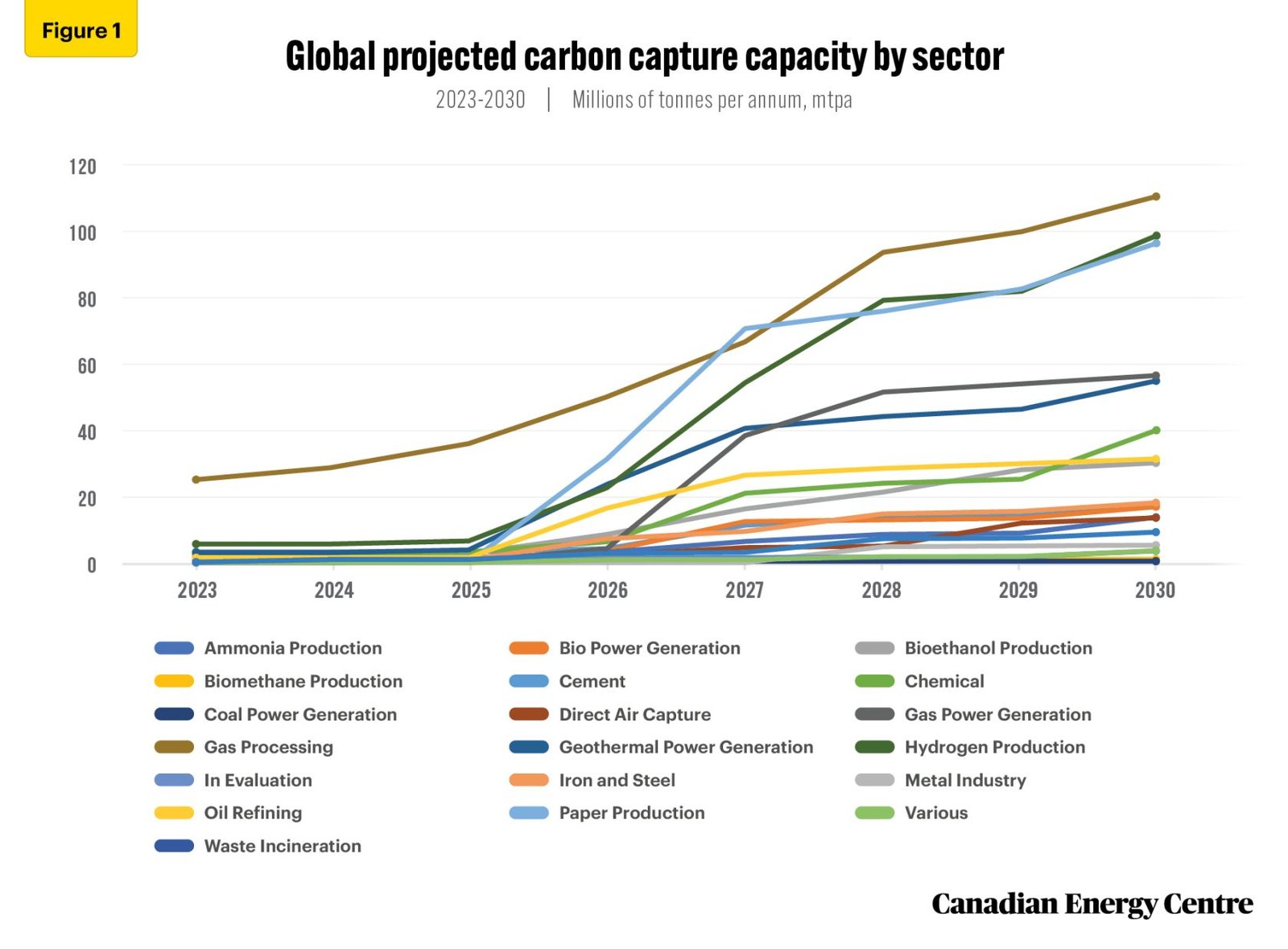
According to the IEA, deployment has remained slow globally, with only around 20 commercial CCUS operations worldwide. More than 30 additional facilities have been announced in recent years and governments and industries committed over $4.5 billion to CCUS projects in 2020 despite the Covid-19 crisis.
Still, high costs remain one of the biggest barriers.
As per the IEA’s World Energy Outlook 2025, CCUS faces high investment and operating costs, bespoke project designs, and inflation-sensitive components and materials, which make it economically uncompetitive compared to renewable energy and storage technologies.
“The costs of CCUS contrast sharply with those of RE and storage technologies. Proponents have been discussing the potential for significant CCUS deployments for decades, arguing that future additions will increase scale and, eventually, reduce costs. However, projects have been delayed, canceled, or failed to materialize, often due to unfavorable economics. CCUS faces two major challenges that keep costs high: the bespoke nature of project design and the high exposure to inflation in equipment and material inputs,” the report adds.
CCUS does not benefit from the same level of technological innovation and learning curve savings that have characterized the sharp decline in prices for solar photovoltaic (PV) and battery storage systems, it explains further.
Critics argue that CCUS investment struggles to compete with solar and wind energy, whose costs have fallen spectacularly over the past decade. Many also question whether reducing emissions at source is ultimately more cost effective than capturing carbon later. Climate policies, including carbon pricing mechanisms, are also not yet strong enough in many countries to make CCUS commercially viable.
But supporters of the technology argue that cost alone should not determine its future.
Palit believes CCUS deserves further exploration, particularly for sectors where alternatives remain limited. “If we can develop it in a cost-effective manner, it can assist in decarbonisation and help in our journey towards making India Net Zero by 2070. However, more research needs to be undertaken to make it cost-effective,” he says.
At the same time, concerns around implementation remain significant.
Anaxee notes that CCUS implementation remains expensive, energy-intensive and technically complex: “Without a clear regulatory framework for transport, storage liability, and long-term monitoring, public money could prop up technologies that never become economically sustainable.”
The organisation also notes that NGOs and climate campaigners remain cautious because supporting CCUS alongside coal-related infrastructure risks locking India into long-term fossil fuel dependence while diverting resources away from cheaper renewable and efficiency solutions.
However, the IEA argues that dismissing CCUS purely on cost grounds would ignore its unique strengths and its potential role in sectors where few alternatives exist.
What comes next?
India’s CCUS push appears to reflect a pragmatic, industry-first decarbonisation strategy. But whether it succeeds as a credible climate solution will depend on execution and breakthroughs both in technology and costs.
How funding is disbursed, what performance conditions are attached, whether pilot projects scale successfully, and how regulations governing storage and monitoring evolve will ultimately determine whether CCUS becomes a transformational climate technology or an expensive fossil fuel extension.
This is the first part of Climate Action Live’s series on CCUS. The next set of articles will unpack each stage of the CCUS chain, beginning with carbon capture itself.
An independent writer, Sapna Gopal has been covering the renewable energy and environment sector since 2009.
Inspired to Take Action?
Tl;dr: A summary for the busy, the curious, and the done-for-today
India has allocated ?20,000 crore for CCUS, signalling a major new pillar in its decarbonisation strategy alongside renewables.
The government argues CCUS is essential for “hard-to-abate” sectors like steel, cement, chemicals and coal power where emissions are difficult to eliminate quickly.
Policymakers and industry backers say CCUS could preserve industrial growth, reduce import dependence and create up to 8-10 million jobs by 2050.
Critics warn the technology remains expensive, energy-intensive and commercially unproven at scale, with fears it could lock India into long-term coal dependence.
The success or failure of India’s CCUS push will depend on whether pilot projects can become affordable, scalable and genuinely climate effective.