
As oil prices swing with every Middle East escalation and as heatwaves intensify across the globe, dozens of countries quietly gathered last month to discuss something many consider politically impossible: how to move away from fossil fuels altogether. India was not among them, despite its decarbonisation goals and renewables successes.
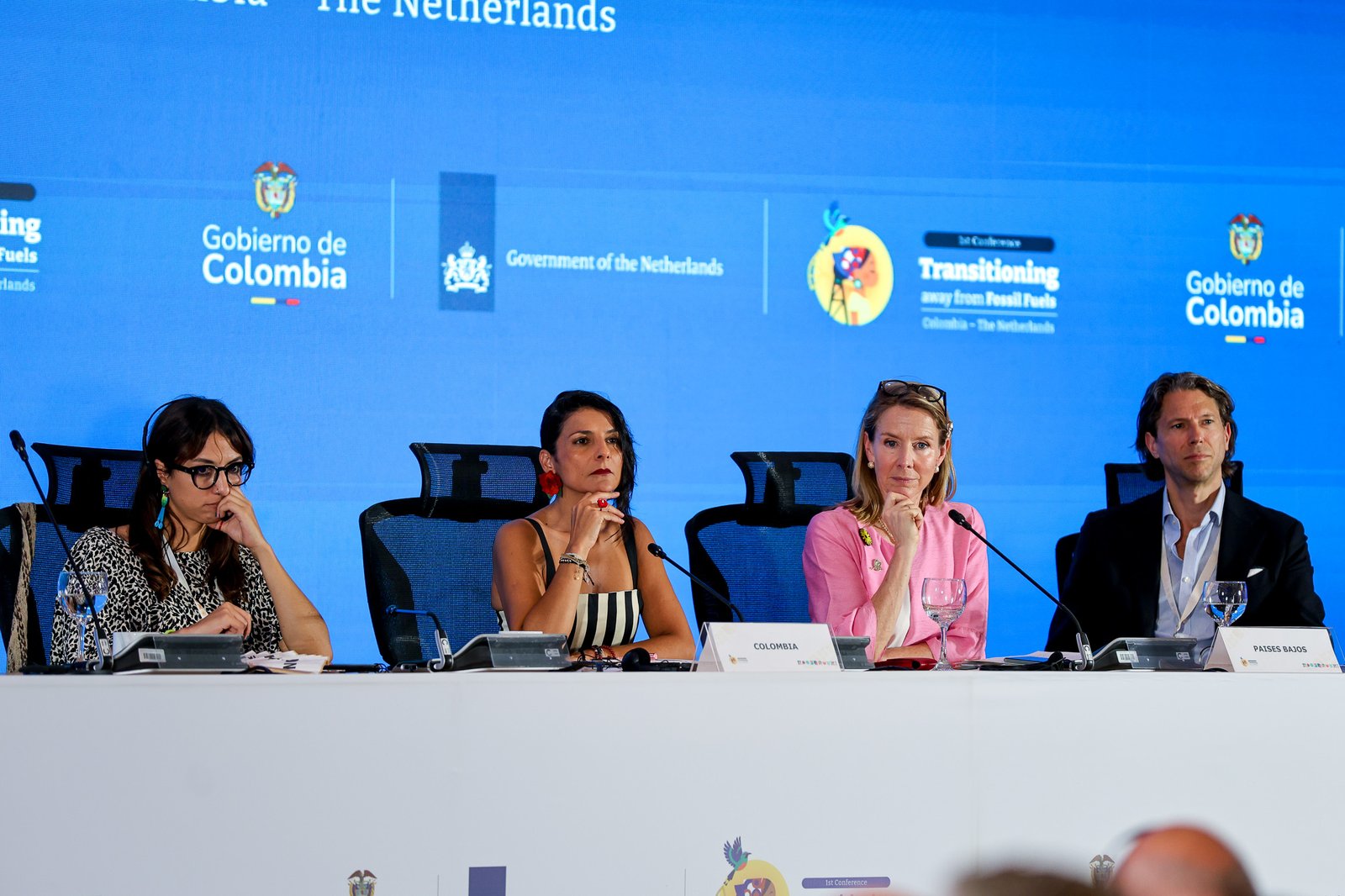
Fifty-seven countries, representing one-third of the global economy, participated in the first international conference on “transitioning away from fossil fuels” in Santa Marta, Colombia. Colombia is the world’s 13th largest exporter of coal.
“It is essential to keep our planet liveable, to safeguard energy security and to build economic resilience to volatile fossil fuel markets,” read the closing statement of the conference, co-hosted by Colombia and the Netherlands.
One of the clearest outcomes of the conference was creating a political space outside the consensus-driven United Nations climate process, especially as oil producers including Australia, Norway, Canada, Nigeria and Ghana participated. Although the majority of participants pushed for a legally-binding international framework to phase out fossil fuels in an equitable and planned manner, the conference did not produce binding commitments.
The irony was not lost on some participants, who warned that if this parallel track remains a forum for dialogue, it risks becoming another annual event in an already cluttered and largely ineffectual space.
Breaking the climate stalemate
Held against the backdrop of the war in the Middle East, the second major geopolitical crisis in the last five years to disrupt global fossil fuel supply chains and send fuel, fertilizers and food spiking, the meeting focused as much on economic resilience and energy security as on climate change.
Co-hosted by the Netherlands and Colombia, the talks were widely seen as an attempt to move beyond the slow and often paralysed negotiations under the United Nations Framework Convention on Climate Change (UNFCCC).
“The science has been clear that we need to stop [using] fossil fuels to restrict climate change. But for 30 years, the negotiations under the United Nations Framework Convention on Climate Change (UNFCCC) avoided it as oil economies derailed the process. At Santa Marta, it was powerful to see countries collect with a common goal discussing how to do it rather than debating on whether to do it or not,” said Neil Tangri, Science and Policy director at Global Alliance for Incinerator Alternatives (GAIA), who attended the conference.
Fossil fuels – coal, oil and gas – are the largest contributors to global climate change, accounting for 68% of global greenhouse gas emissions and 90% of all carbon dioxide emissions. The scientific consensus and the aim of the Paris Agreement is to halt global warming at 1.5 degrees Celsius, but current fossil fuel expansion plans would push the world past 3 degrees of warming.
The idea of transitioning away from fossil fuels, or TAFF, originated in December 2024 during conversations among countries participating in discussions on a fossil fuel treaty. Frustrated that the presidential roadmap at COP30 in Brazil did not contain any text on TAFF, countries came together to sign the Belem Declaration. Aimed at building political momentum around phasing out fossil fuels, the declaration was eventually endorsed by 80 countries.
“The aim was to bring together interested parties and that’s why it’s called a ‘coalition of doers’. This of course affected the representation of some of the large polluters but we need to understand the way COPs have been infested with fossil fuel lobbies, it did not allow any meaningful conversation to happen in that fora,” said Harjeet Singh, climate activist and founder of Satat Sampada Climate Foundation, who participated in the conference.
What Santa Marta actually achieved
The participation of large oil producing countries, including Australia, Norway, Canada, Nigeria and Ghana, lent heft to the event, enabling it to create a meaningful political space outside the consensus-driven UN climate process.
Participating countries discussed reducing economic dependence on fossil fuels, transforming energy demand and supply, and increasing international cooperation.
“The conference shifted the focus of international climate discussions – at least among a group of states – from emissions to fossil fuel production. Second, it established a political space that is not constrained by consensus (that the UNFCCC/COP process follows),” said Magnus Lovold, an expert on multilateral processes and international law at Lex International Fund, Geneva. “By bringing together a group of “willing” countries in an invite-only format, the organisers created conditions where more ambitious conversations could actually take place.”
With 75% of the world dependent on fossil fuel imports, the current conflict in the Middle East reinforced the urgency of moving towards more stable energy systems, according to the co-hosts’ takeaway document.
While recognising that modern economies are deeply linked to fossil fuels, the talks also emphasised “the fiscal dependency, debt and subsidy traps that keep countries locked in and how the entire international finance architecture is presently designed around fossil fuels,” Tangri said. While most oil-producing countries want to extract their fossil fuel resources while they can, “The conference saw the intent to transition,” Tangri said, adding, “For instance, Nigeria, whose entire economy is dependent on crude oil export, spoke on how they want to ‘phase down’ and sought support.”
France released what it called the “first national roadmap” by a developed country to phase out fossil fuels. The roadmap proposed removing coal from the national electricity grid by 2027, ending oil consumption by 2045 and gas by 2050.
“The phase out plan that France announced, though, is about its national territory. It’s easy for a small country like them that has 80% of its electricity coming from nuclear. The catch is they are not talking about their private companies like Total who are going around investing in pipelines and fossil fuel extraction projects in countries like Uganda,” said Singh.
The conference also set up a Science Panel on Global Energy Transition, headed by Johan Rockstrom, director of the Potsdam Institute for Climate Impact Research in Germany, to help countries develop transition roadmaps aligned with the 1.5°C target.
Discussions also focused on labour transitions, decentralised renewable systems, clean cooking and community-centred energy access.
“On the demand side, developing countries emphasised energy access. The issue is not just about making energy sources green but also inclusive, affordable, decentralized and [conducive to] people-centred access. Some of those things came out in the deliberations,” said Singh.
Countries also discussed international legal mechanisms favouring fossil fuel industries, including the Investor-State Dispute Settlement system, through which foreign investors can challenge government decisions. “In the global south, claims have been made to the tune of 80 billion USD, making ISDS a major impediment to [stopping] fossil fuel projects [early] in the interest of people’s health and environment,” said Singh.
What the talks could not resolve
For all its political signalling, Santa Marta stopped short of producing binding commitments.
More than 80% of the sectors that engaged with the process, including academics, indigenous communities, NGOs, and peasant and women’s groups, called for a fossil fuel treaty, a legally binding international framework to phase out fossil fuels in an equitable and planned manner.
“It has become increasingly true in Santa Marta that the transition is a shared global challenge and no country can do it alone,” Cedric Dzelu, Technical Director from the office of the Minister for Climate Change and Sustainability, Ghana, said in the closing plenary. “In Ghana, I must admit fossil fuels remain deeply tied to government revenues that fund essential public services and our broader energy systems. To genuinely end fossil fuel dependence and build fossil free economies, we need a Fossil Fuel Treaty that creates the necessary architecture for a just transition.”
The co-hosts’ takeaway document, however, did not mention a treaty. Instead, it emphasised national roadmaps similar to the Nationally Determined Contributions under the UNFCCC process, something climate activists saw as a softer position than the conference’s original framing.
“Gone from their summary is any talk of coalitions of the willing or how the conference participants could use their collective consumer power strategically to shape global fossil fuel markets,” said Lovold.
Fossil fuels are a classic collective action problem, he said, where without some form of common rules – whether treaty-based or otherwise – there are strong incentives to free-ride. That’s the structural limitation of relying purely on voluntary, nationally determined approaches, he said, adding, “If Santa Marta remains a forum for dialogue, it risks becoming another annual event, adding to an already crowded landscape. If it is used more strategically – if countries begin to align around concrete measures, timelines, and eventually legal frameworks – then it could start to reshape the broader system, including the UNFCCC.”
Tangri also warned that even as transport and electricity begin shifting towards renewables, fossil fuel industries are increasingly shifting their focus towards petrochemicals, plastics and fertilizers. “The way alternatives have been found for electricity and transport in renewables, the same shift needs to happen with fertilizers and plastics and we cannot take decades to make that transition,” Tangri said.
The road to Tuvalu
A second TAFF conference will be held in the Pacific island nation of Tuvalu in 2027, co-hosted by Ireland.
Lying at the frontlines of climate change, people from Tuvalu have already begun migrating to Australia because of sea-level rise.
“The announcement of a follow-up conference means this is not a one-off. In multilateral politics, that matters. A single meeting can be ignored; a sequence of meetings starts to signal intent. So the success is not what Santa Marta concluded, but that it moved the conversation – and potentially the process – onto a different track,” Lovold said.
The announcement also signalled growing cooperation between developed and developing countries, said Singh. Three work streams were identified to carry the process forward before the Tuvalu conference: helping countries develop phase-out roadmaps with the support of the Science Panel, addressing macroeconomic dependence and financial architecture, and increasing international cooperation around fossil fuel-free trade systems.
Asia’s absence, India’s questions
Asia was conspicuously absent from the conference despite accounting for much of the world’s future energy demand.
“Countries like Norway, Canada and [the] United Kingdom are expanding their oil explorations but still participated and were seen as leaders. Even the Science Panel is dominated by white male scientists. We need more space for other sectors including youth, indigenous people and developing countries,” said Singh.
The lack of representation and leadership for the Global South was not because of a lack of resources, Singh said, “We have some very strong institutions in the global south. But the global North tends to claim a lot more power. I think they need to start letting go now.”
India’s absence drew particular attention because of its rapidly expanding renewable energy sector and its vulnerability to climate-linked extreme weather.
“India had all the right reasons to be at the conference,” said Tangri. “It is a country extremely vulnerable to climate change-led extreme events like heatwaves, glacial melting and flooding. [It] is a net importer of fossil fuels and on the positive side, has the potential to be a manufacturer in renewables, a position that could have been leveraged.”
Even though China and India remain major coal consumers, both countries have rapidly expanded renewable energy capacity.
China has enabled the global renewable energy revolution and is constantly replacing its use of fossil fuels with renewable energy, much faster than any other country, Singh said. “All of us have benefited from Chinese investments in renewable energy. Similarly, India also set for itself very ambitious targets with trillions of domestic investment in renewables. We are doing great when it comes to international equity. So I feel these countries should have been invited,” said Singh.
“A lot of international talks are going on right now like the BRICS summit but we will hold a discussion to identify the reasons after some time,” an official who has been part of Indian delegations at climate negotiations confirmed to Climate Action Live.
Some participants speculated that India’s interest in protecting its refinery and petrochemical interests, which are dominated by a handful of large conglomerates, was a reason for its absence. “India has not engaged in this conversation in the UNFCCC as well. It has always given confusing signals when it comes to fossil fuel conversation,” said a participant on conditions of anonymity.
Ravleen Kaur is a freelance journalist working at the intersection of environment and the ongoing polycrisis.
Inspired to Take Action?
Tl;dr: A summary for the busy, the curious, and the done-for-today
57 countries met in Colombia for the first international conference on transitioning away from fossil fuels.
It reflected growing concern that fossil fuel dependence is not only driving climate change but also exposing countries to economic shocks and energy insecurity, especially after repeated geopolitical crises.
Participants included major oil producers like Norway, Canada and Nigeria, who discussed reducing dependence on fossil fuels, reforming financial systems that lock countries into oil and gas, and supporting fair labour and energy transitions. France unveiled a national fossil fuel phase-out roadmap.
Despite calls for a legally binding Fossil Fuel Treaty, the conference stopped short of binding commitments. Critics warned that without timelines, collective measures or legal frameworks, the process risks becoming another symbolic annual climate gathering.
The talks nevertheless marked a significant political shift by moving global climate discussions from emissions targets to fossil fuel production itself. A follow-up conference in Tuvalu in 2027 and the creation of a new Science Panel on Global Energy Transition signalled efforts to keep momentum alive.