Looking back, I do not think my journey into climate work began with one defining moment. Instead, it was shaped by a series of experiences that stayed with me over the years, long before I understood what a “climate career” even meant.
Some of my earliest memories of engaging with environmental themes come from school. I remember being part of a production of The Little Mermaid, where conversations around oceans, marine ecosystems and pollution formed an important part of the storytelling. At the time, it simply felt like another school production filled with rehearsals, costumes and performances. Only years later did I realise how deeply those ideas had stayed with me.
Another such memory is participating in something called the “Parliament of Trees” in school. Students represented different trees and spoke from their perspective, discussing urbanisation, survival and ecological loss. It may have seemed like a simple educational exercise then, but I realise now that it introduced me very early to the emotional and human side of environmental issues.
Around the same period, I was introduced to the East Kolkata Wetlands through environmental projects and discussions in school. Growing up in Kolkata, I had heard about the wetlands before. But learning that this ecosystem naturally filtered much of the city’s wastewater while supporting thousands of livelihoods changed the way I viewed the relationship between people and nature.
It was one of the first times I understood that environmental systems are not distant concepts existing separately from cities and everyday life. They are quietly sustaining the lives we live every day.
At that stage, however, I still did not imagine myself working in climate or sustainability. Like many students, I was simply trying to understand my interests and where I fit in.
The turning point: Discovering climate through leadership and entrepreneurship
When I entered college to study economics, my interests expanded into journalism, research, media, entrepreneurship and leadership. I enjoyed understanding systems and communicating ideas. I spent much of my time working on student initiatives, creating content, leading teams and exploring storytelling as a tool for impact.
Yet despite being deeply engaged in all these spaces, I often felt like I was searching for work that felt meaningful in a larger sense.
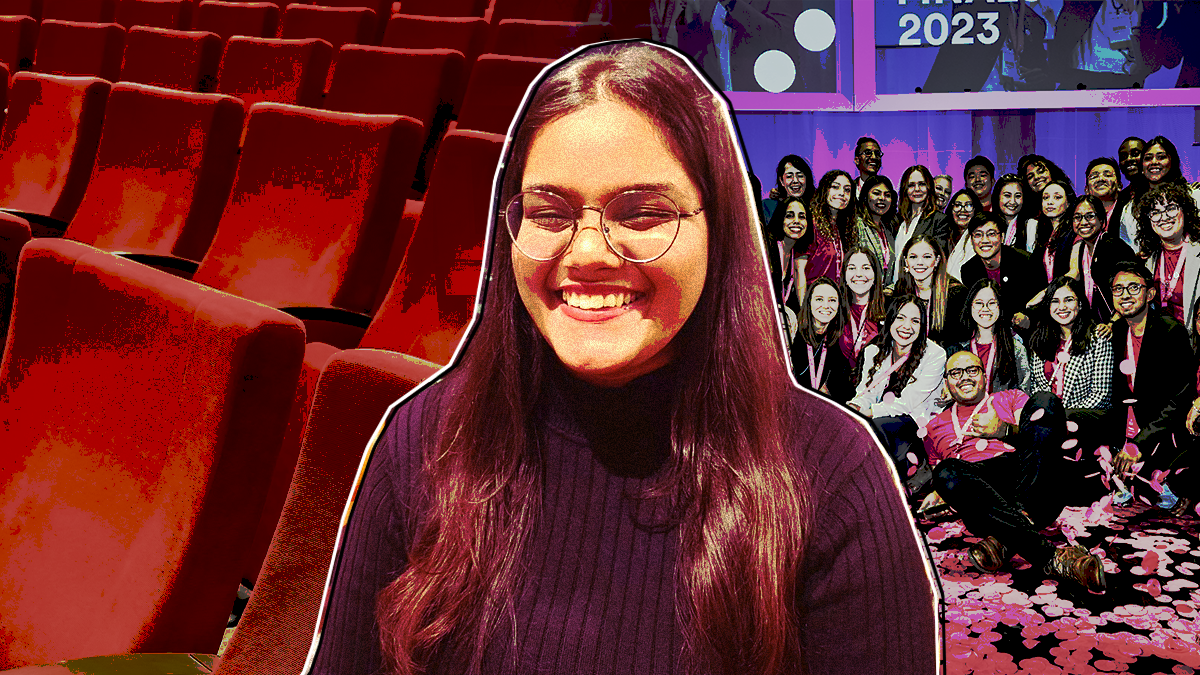
A major turning point came through my involvement with the Hult Prize ecosystem in college. For the first time, I found myself surrounded by students attempting to solve social and environmental challenges through innovation and entrepreneurship.
The conversations I encountered there fundamentally shifted how I viewed sustainability. Climate action no longer felt like a distant field reserved only for scientists or policymakers. It began to feel interconnected with business, economics, communication, technology and culture, and more importantly, everyday life.
That realisation slowly changed the direction of my work.
Entering climate work through events, storytelling and community
I became increasingly interested in sustainability, ESG communication and the growing disconnect between climate conversations and the everyday realities of young people. Much of my early work focused on researching greenwashing practices and understanding how organisations framed their environmental commitments, particularly in industries that shape public culture and behaviour at scale.
Over time, I found myself drawn towards climate communities, fellowships and youth-led initiatives that were reimagining how sustainability could be communicated and experienced more meaningfully. I became especially interested in the role of individual consumption, public events and cultural experiences in shaping how people engage with climate issues in their daily lives.
Last year, this curiosity evolved into working at Greenlit, a full-stack sustainability platform focused on decarbonising live events and concerts through end-to-end sustainability solutions. Through decarbonisation solutions, research, on-ground sustainability initiatives, communication and reporting, I explored how concerts, festivals, sports events and entertainment spaces can integrate concern for the environment in their operations.
What continues to drive me is the belief that climate communication and climate action become far more powerful when they are embedded into the spaces, industries and experiences people already care about.
What my climate career transition actually looked like
The transition into climate work was not linear.
A large part of it involved learning in public, applying for opportunities before feeling fully ready and navigating spaces where I sometimes questioned whether I belonged because I did not come from a traditional environmental background.
But over time, I realised that climate work needs people from diverse disciplines and experiences. Some of the most meaningful contributions to this space come from individuals willing to bridge gaps between sectors, communities and ideas.
Life in climate work today
Today, my work sits at the intersection of personal consumption, climate storytelling, sustainability education, youth engagement and systems thinking.
What motivates me most is the belief that climate communication needs to become more human, more interdisciplinary and more rooted in everyday experiences.
Through fellowships, volunteering, community initiatives, storytelling projects and sustainability platforms, I have had the opportunity to work with people across different parts of the climate ecosystem, from young advocates and entrepreneurs to researchers and educators.
What continues to inspire me most is seeing how many people want to engage with climate issues once those conversations feel relatable, accessible and grounded in real life.
I have become particularly interested in exploring how climate change influences the systems and spaces we interact with every day, including media, sports, cities, culture and business.
Much of my work now focuses on helping people understand that climate is not a separate issue existing in isolation. It is deeply connected to the way we live, work, consume and imagine the future.
Advice for those looking to transition into climate careers
You do not need a traditional sustainability background to enter climate work. Skills in communication, economics, research, design, business and community-building are all deeply valuable in this space.
Small experiences matter more than you think. A school project, a conversation or a volunteer experience can shape the way you see the world years later.
Ask questions and reach out to people. One thing I have learned in this space is that many people are surprisingly open to conversations, advice and guidance if you are genuinely curious and willing to learn.
Start before you feel fully prepared. Much of climate work involves learning continuously and adapting along the way.
Find the intersection between what you care about and what you are good at. Climate touches every sector, which means there is space for many different pathways into the field.
For me, climate work ultimately became the point where all my interests converged. Economics helped me understand systems. Journalism taught me how to communicate complex ideas. Community-building taught me how to bring people together. Sustainability gave those skills a sense of direction and urgency.
In many ways, I think the foundations for that journey had been quietly forming long before I recognised it myself, in school classrooms, theatre productions and environmental conversations that stayed with me far longer than I could have imagined.
Aashi Agarwal is an award-winning sustainability professional, previously the Brand Partnerships Lead at Greenlit, where she facilitated partnerships that integrate decarbonisation strategies and circular solutions into large-scale events. She also serves as a Youth Advisory Council Member for World Ocean Day, a Max Thabiso Edkins Ambassador, and is a Fellow at Climate Cardinals, Plastic Free July and EDF Climate Corps, contributing to global corporate sustainability and climate initiatives.