“What if we all changed?” I asked.
“What if we all evolved?” The light replied.
I remember how it felt to be humbled by a tree. Roots grounded so firmly. Branches asserting themselves in the sky with every cloud they stretched towards. Leaves, hardly on leave, working hard to provide for this assertive and yet grounded system – probably older than my know-it-all uncle, who would often say, “The world is your oyster. Find the pearls.” But never once did he realise how the world was hurting in his pursuit of the pearl.
I promised myself I’d never be him. Little did I know that the journey was paved with toxic gases. Little did I know the vast ocean of endless possibilities that we were quietly polluting.
The comfort trap
In 2012, I finished tenth grade and was told what I would be doing for the rest of my life. After years of being promised freedom after exams, I was steered into science – PCMC – because I scored well in Math, Computer Science, and Physics. They quietly ignored my good grades in Environmental Education.
What followed were four years of learning how computers spoke to each other through code, packets and networks. By the time VTU was done with me, I was a full stack developer at Oracle working on FinTech – only to realise I’d spent half my life listening to what others expected of me.
That realisation hits especially hard when you’re around nature. With no distractions or ads to shield your human, interconnected feelings, the mind wanders and then becomes one with its surroundings. I could hear the birds auditioning, the shore playing tag… the clouds looked happier there.
The moment everything shifted
A trip to Goa. A documentary called Dominion. Facts. Data. Stories. The knowledge we’re trying to replace with convenience. The philosophy we’re trying to replace with influence. The truth we’re trying to replace with marketing.
That was my world-shattering moment.
I also carry with me the memory of growing up connected to the Kodava community – a people who worship nature, who honour the river Cauvery as a goddess, who are tucked into the serene Western Ghats, what many call the Scotland of India. I was proud to belong to a community that cares for the planet through worship. But I was born and raised in Bangalore. The concrete jungle gave me my verbiage, but I didn’t know how to grow my cabbage.
That was my first sign. The disconnect. You start noticing it through ironies – playing with soil means getting your hands dirty, but emptying the Windows 7 recycle bin felt more urgent than real waste management. The comfort always felt shallow compared to the lush jungles of Coorg I visited as a kid. The water from the pond felt better than any RO+ water I’ve had. The freedom I felt surrounded by trees was slowly replaced by textbooks and deadlines, and I went from wanting to be Mowgli to being pressured into becoming the next Steve Jobs.
The transition
In September 2019, I put in my papers. The very next day I returned from Goa.
With dreams and a little bit of money, I sought to change the world for the better. I took social innovation and sustainability courses on Coursera. I worked with startups in managed farmlands and sustainable architecture. I contributed to lake rejuvenation efforts and clean-up drives in Bangalore. I built my network slowly, with commitment and intent.
Then, in early 2022, I enrolled in the Climate For Action fellowship by Terra.do – and it was the greatest decision I ever made.
It gave me the framework to understand climate science the way it was never taught to us. The onus, the victims, the data — all startling, all pointing to one place: less than 100 companies are responsible for around 80% of global emissions. The trifecta that could hold them accountable? ESG — Environment, Social, and Governance. An ROI very different from what most economists address when talking about value.
One global framework, IFRS, describes value as a company’s ability to create, preserve, or erode value across financial, manufactured, intellectual, human, social and natural capital. This meant, for the first time, we had standards to hold companies accountable for their full ecological and social impact.
That gave me hope. And purpose.
Where I am now
From Terra.do, I landed a part-time role as an ESG writer. From there, I moved up through connections and intent, eventually landing my dream role at EY as a sustainability consultant. Today, I work with IBM on their sustainability software portfolio as a product manager – so I suppose my engineering degree helped a bit after all.
But more than the job, my life has changed. I’m conscious of small things – littering, wasting water, the packaging and ingredients of the brands I buy from. I write and contribute to community events focused on environmental development. Professionally, I help companies manage ESG data: emissions reduction initiatives, geospatial analysis, scenario modelling.
The most rewarding part is the community, and the optimism I’m greeted with by clients who genuinely want to help their organisations respond to both internal and external pressures.
Why I keep going
I got into climate action for the voiceless.
When I watch the news and wonder if there’s hope, I remember a line from Star Wars: “Rebellions are built on hope.”
So I ground myself – deep breaths, petting some cats, hugging some trees. I continue with work, side projects and emerging strategies to make this planet habitable and profitable for all – but especially for the biodiversity we’ve managed to ignore thus far.
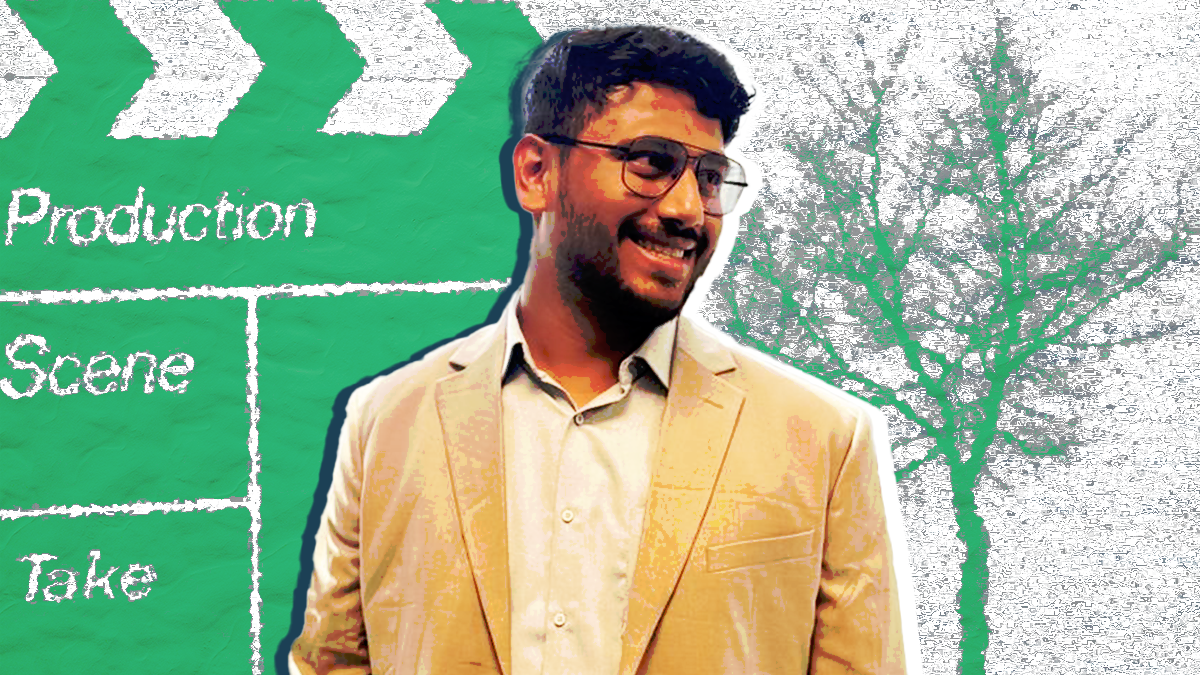
I’m Appanna Prakash – environmentalist, poet, product manager, full stack developer, Spotify playlist curator, cat dad, among many things. To limit oneself is the greatest identity crisis, according to nature.
You should be angry about not getting clean air. You should be angry about one company trying to own all the water in the world. But I hope you leave this world a better place than you were born into – and I hope you put intersectional climate justice at the core of every issue, political or socio-economic.
It starts with one decision. Mine started with a tree.