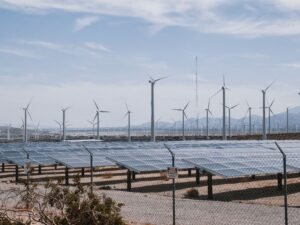
A month ago, during an informal discussion among a group of sustainability optimists, I raised a simple question: if India’s solar adoption is accelerating so rapidly, why does solar still contribute less than 10% of total electricity generation?
That question opened up a discussion deeper and wider than expected.
On the surface, India’s renewable energy story looks very strong. Solar capacity has expanded rapidly. Rooftop solar is gaining visibility. Corporate renewable procurement has matured. Domestic solar manufacturing is scaling. Government schemes such as PM Surya Ghar Muft Bijli Yojana are making distributed solar more mainstream.
Yet, when we look at actual electricity generation, the picture is more nuanced.
Capacity growth and generation are not the same thing
As per global energy think tank Ember’s India electricity data, solar supplied around 9.4% of India’s electricity demand in 2025, while wind and solar together accounted for around 14% of the electricity mix. Solar also overtook hydro to become India’s largest source of clean electricity.
This is a major milestone. But it also shows the distance still to travel.
India has already crossed important clean energy thresholds. Government data states that India achieved 50% of cumulative installed electric power capacity from non-fossil fuel sources in June 2025, five years ahead of its 2030 NDC target. The same government update states that non-fossil fuels contributed 29.2% of total power generation in 2025-26 up to March 2026, amounting to 538.97 billion units (BU) out of total generation of 1,845.921 BU. (One “unit” is one kilowatt-hour (kWh), the amount used by a 1,000-watt appliance (microwave oven, hair dryer, etc) running for one hour.)
So India is not stuck at the starting line. In fact, the country has moved faster than many expected. The real issue is that installed capacity and actual generation are different things.
A solar panel may be installed, but it generates only when sunlight is available. A wind turbine may be installed, but its output depends on wind patterns. Hydro depends on water availability. Coal, despite its environmental burden, still provides dispatchable power that can be called upon when needed.
This distinction is critical.
The first phase of the transition is largely complete
For years, India’s renewable energy discussion was dominated by one question: can we build enough renewable capacity?
That question has largely been answered. India has shown that solar and wind can scale. The ecosystem of developers, financiers, engineering, procurement & construction (EPC) players, manufacturers, regulators and large corporate buyers is now far more mature than it was a decade ago.
The harder question now is this: can the electricity system absorb, balance and dispatch renewable power efficiently?
Phase 1 was about capacity addition.
Phase 2 now is about system intelligence.
In other words, the challenge is shifting from building renewable assets to orchestrating an increasingly complex energy system. Success will be measured not only by how many gigawatts India installs, but by how effectively those gigawatts can be integrated into everyday electricity demand.
This second phase is more complex. It involves transmission, storage, pricing signals, demand flexibility, DISCOM economics, renewable procurement, grid intelligence, EV charging behaviour, flexible coal operations and domestic manufacturing depth.
The grid is not weak, but timing is tricky
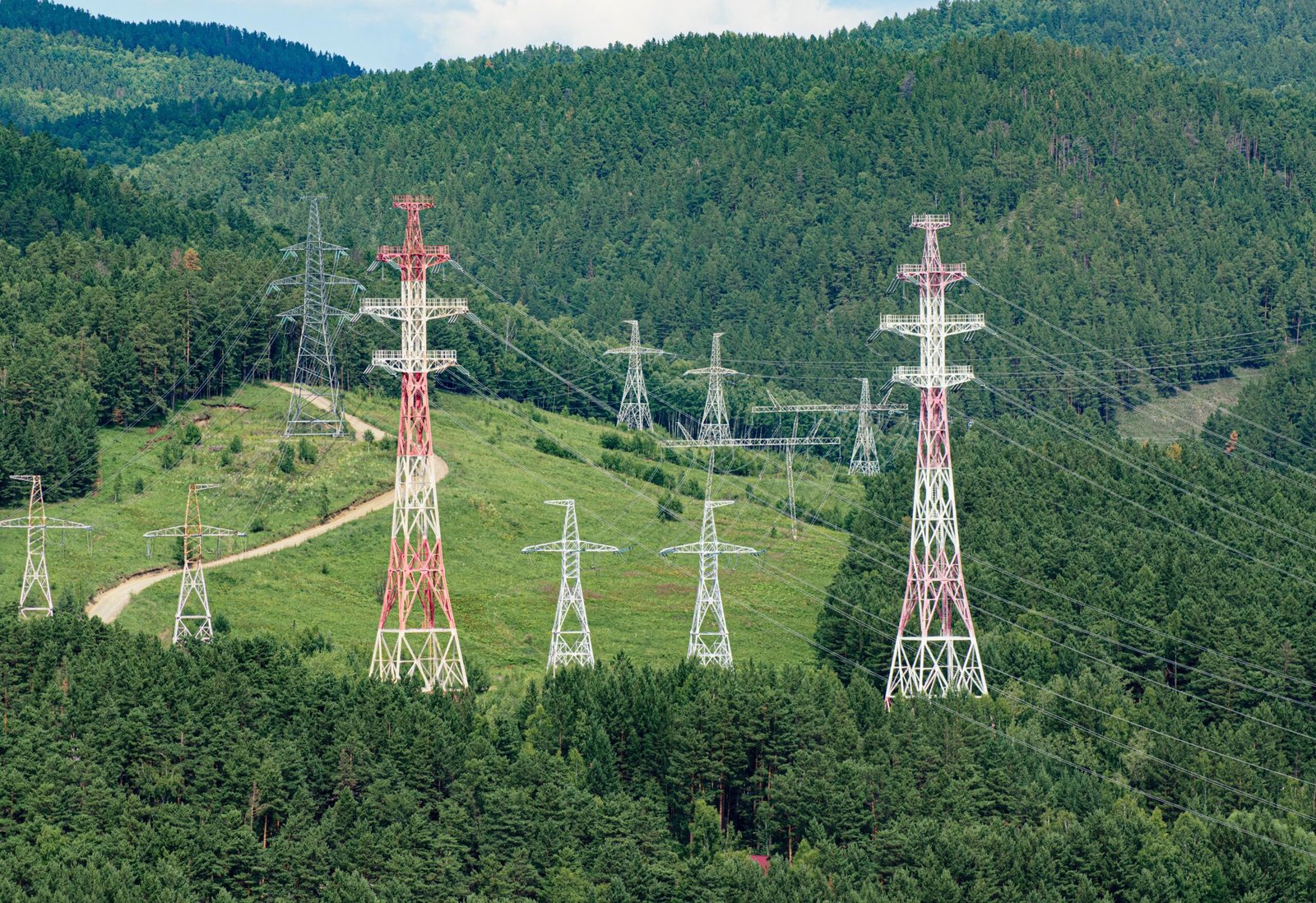
In our group discussion, one useful correction came from an expert who pointed out that India’s grid should not be casually described as “weak”. At the national transmission and system-operation level, India has built one of the world’s largest synchronous grids – a major achievement for a country of India’s size and demand diversity. This gives India an advantage over more fragmented systems such as the United States, though Europe and China remain ahead in several areas such as cross-border market integration, ultra high-voltage buildout, dynamic pricing and advanced grid flexibility. So the issue is not that India’s grid is primitive. The more accurate challenge is that generation and demand are increasingly out of sync.
Solar generation peaks roughly between 12 p.m. and 3 p.m. But India’s urban demand increasingly peaks in the evening, when people return home, switch on air conditioners, cook, use appliances and, in the near future, will plug in electric vehicles.
This mismatch cannot be solved by installing solar panels alone. The grid must plan not only for peak renewable generation, but also for demand matching, reserve capacity, ramping, balancing and system flexibility.
This is where the discussion becomes technical but important.
Why curtailment matters
Curtailment is one example. Ember estimated that India lost about 2.3 TWh of solar generation during May-December 2025 due to grid security concerns, concentrated largely in the second half of the year. Curtailment means renewable electricity that could have been generated is deliberately reduced or not used because the grid cannot absorb it safely at that moment.
At first glance, curtailment looks like waste. But in renewable-heavy systems, some curtailment is not always a failure. Solar and wind systems are often intentionally overbuilt so they can generate enough power even during weaker days. On very good generation days, some surplus becomes unavoidable.
The real problem is not curtailment itself, rather uncertain curtailment.
If partial curtailment is clearly built into solar and wind PPAs, developers can price that risk. But unpredictable curtailment destroys project value and weakens investor confidence.
This suggests India needs more mature renewable PPA structures, including hybrid renewable-storage contracts, firm and dispatchable renewable energy products, partial curtailment clauses, ancillary service markets and more sophisticated dispatch structures. It also strengthens the case for battery storage, pumped hydro, improved renewable forecasting, real-time grid visibility and better demand-side planning, so that surplus solar and wind can be absorbed, shifted or managed more efficiently instead of being curtailed unpredictably.
The uncomfortable reality of coal in a renewable future
Coal remains part of this conversation, whether we like it or not.
India still depends heavily on coal for electricity reliability. But coal’s role must change. It cannot remain an inflexible, always-on baseload source if solar and wind are to grow meaningfully. It must increasingly become a flexible balancing resource. (Adjusting the power output of a coal-fired power plant is both difficult and time-consuming. Coal plants were originally designed to run constantly as “baseload” at a steady rate. They cannot be powered up and down without straining equipment and wasting significant amounts of energy.)
The Central Electricity Authority (CEA) wants coal power plants to become more flexible and to operate at lower output levels when needed, sometimes as low as 55% of their capacity, creating room for the grid to absorb more solar or wind power. In India’s transition to a cleaner energy system, flexible coal plants are essential – counterintuitive as that may sound.
The bottleneck has shifted
India’s solar transition is not stuck because we lack ambition, or because solar is too expensive, or that the grid is weak in a simplistic sense.
The bottleneck is system design.
To move solar from around 9% today to 18-20% of electricity generation by 2030-31 appears realistic if current momentum continues. But moving beyond 20% will require a different kind of work.
It will require India to make renewable energy reliable, dispatchable, predictable, financeable and system-friendly.
In Part 2 of this series, we’ll answer the “how” of Phase 2, including storage, pricing signals, flexible demand, grid expansion, EV integration and targeted batteries.
Sainath Gurav is an entrepreneur and strategic advisor with 25 years of experience across 10 countries and four continents. His work spans sustainability, infrastructure, mobility, energy transition and business transformation. He has worked with groups operating coal-based power assets and with global infrastructure funds investing in India’s renewable energy, highways, mobility and infrastructure initiatives.
This is the first of a three-part series examining India’s solar transition – why the challenge has moved beyond capacity addition, how storage, pricing and flexible demand can unlock the next phase, and why energy sovereignty, DISCOM reform and execution discipline will determine whether India continues to ramp up solar power generation and utilisation.
Inspired to Take Action?
Tl;dr: A summary for the busy, the curious, and the done-for-today
India has achieved 50% non-fossil installed power capacity ahead of schedule, but solar still generates less than 10% of the country's electricity.
The first phase of the energy transition, building renewable capacity at scale, is largely complete.
The real challenge now is integrating renewable energy into a system where electricity demand and renewable generation often occur at different times.
Curtailment, storage, grid flexibility, pricing signals and smarter power markets are becoming more important than simply adding more solar panels.
India's energy bottleneck has shifted from renewable deployment to system design, making Phase 2 of the transition far more complex and consequential.