I didn’t enter the climate space with a big pivot or a bold decision. It began with an uneasy feeling – an anxiety I couldn’t explain. I was living in Delhi, where, as AQI meters spiked higher every day, I felt a little more trapped indoors, a little more on edge. I began wondering if others felt it too.
I’ve always worked in the impact sector, and at that time, I was working in adolescent and adult mental health. But I noticed something in myself: disrupted food patterns, a need to restrict movement outdoors for days together, and a growing sense of dread. It didn’t fit the patterns I’d studied. Then I came across the term eco-anxiety. It’s not yet officially classified as a psychological disorder, but it gave shape to what I was feeling. And talking to friends, I learned that I wasn’t the only one. In fact, many studies have since come out about climate anxiety, especially schoolchildren. The Oxford dictionary added the term back in 2021, and the notion has made it to films.
The question was: what could I do about it?
Before climate: Busy, curious, but bothered
I’d spent over a decade working across education, livelihoods, gender and mental health. From designing programmes to heading operations, I thrived in the messy, creative process of solving real problems.
But even as we built these systems, all around us were headlines about flash floods, heatwaves, unseasonal rains. Climate was clearly becoming the context for everything. Yet, most development conversations still treated climate as an afterthought.
There was growing interest in accessing climate-related funding, but few programmes were designed to address climate change and its all-encompassing nature.
The turning point
Around Diwali 2023, as pollution levels in Delhi skyrocketed again, I decided to do what I always do when stuck: I returned to learning. I enrolled in an Environment Management course at the Indian Institute of Science in Bangalore.
Through this hybrid course, I binge-learned concepts pertaining to ecology, circularity and sustainability, and was energized at finally having a direction. For my dissertation, I explored how behavioural and environmental literacy shape health-seeking behaviour in polluted urban areas.
The research helped me connect dots I hadn’t seen before. It showed that health isn’t only about services – it is about stress, awareness, trust in institutions and how communities interpret their environment. It reminded me that behaviour change isn’t persuasion. It’s design. And it’s systemic.
The transition
Alongside, I took up freelance work that linked climate with communication and community behaviour. I worked on waste segregation campaigns, supported behaviour change toolkits, and contributed to monitoring and evaluation frameworks for local waste systems.
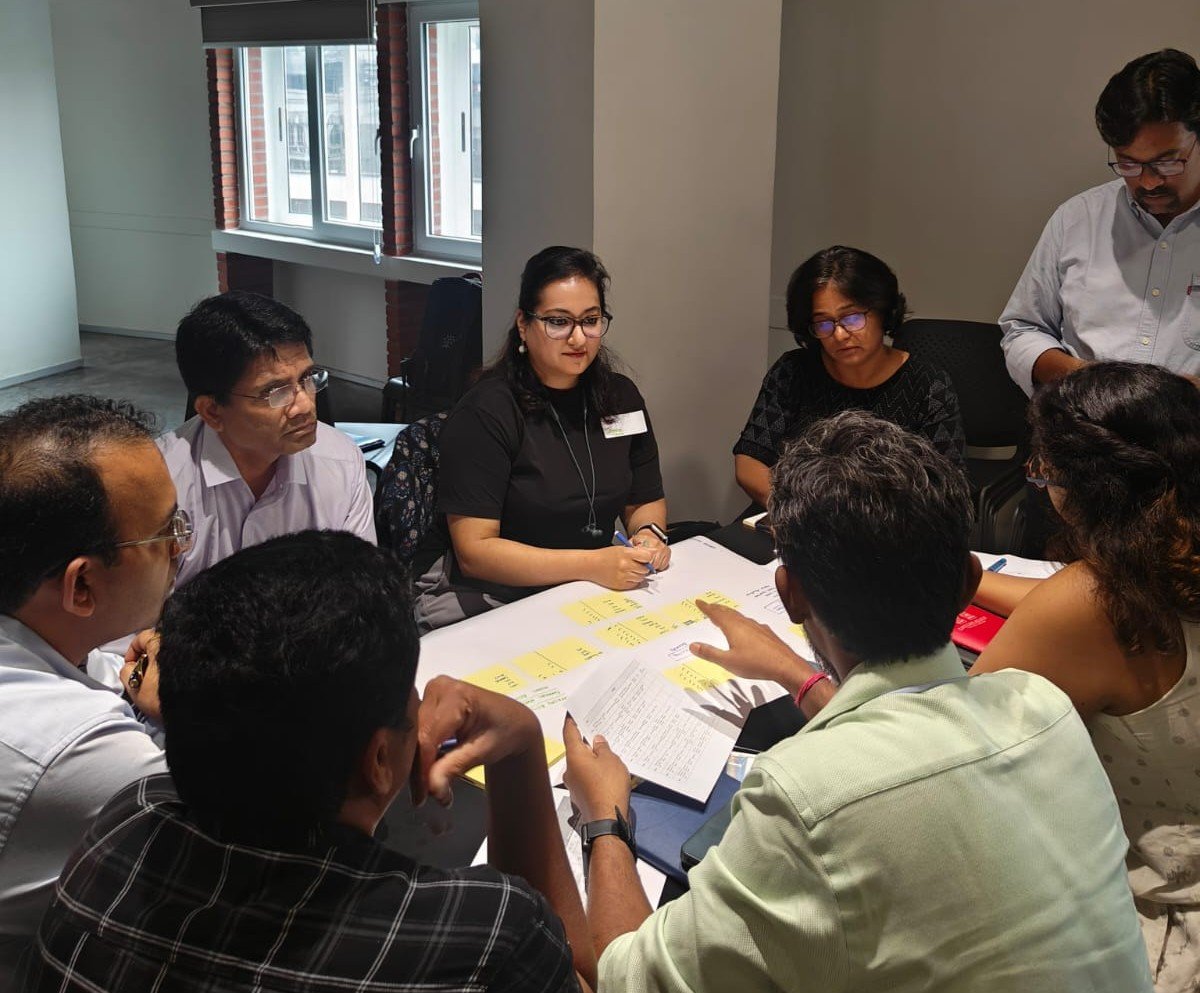
If this sounds glamorous, it was anything but. I found myself standing in landfills, sitting in tense review meetings and even arguing about bin liners with my house help. (A quick tip: If you don’t want your kitchen bin to smell, just add a layer of cocopete (coco peat, available online and in plant nurseries) at the bottom and sprinkle some in between your waste. It soaks up the moisture and keeps the odors away. Simple and handy!)
Life in climate now
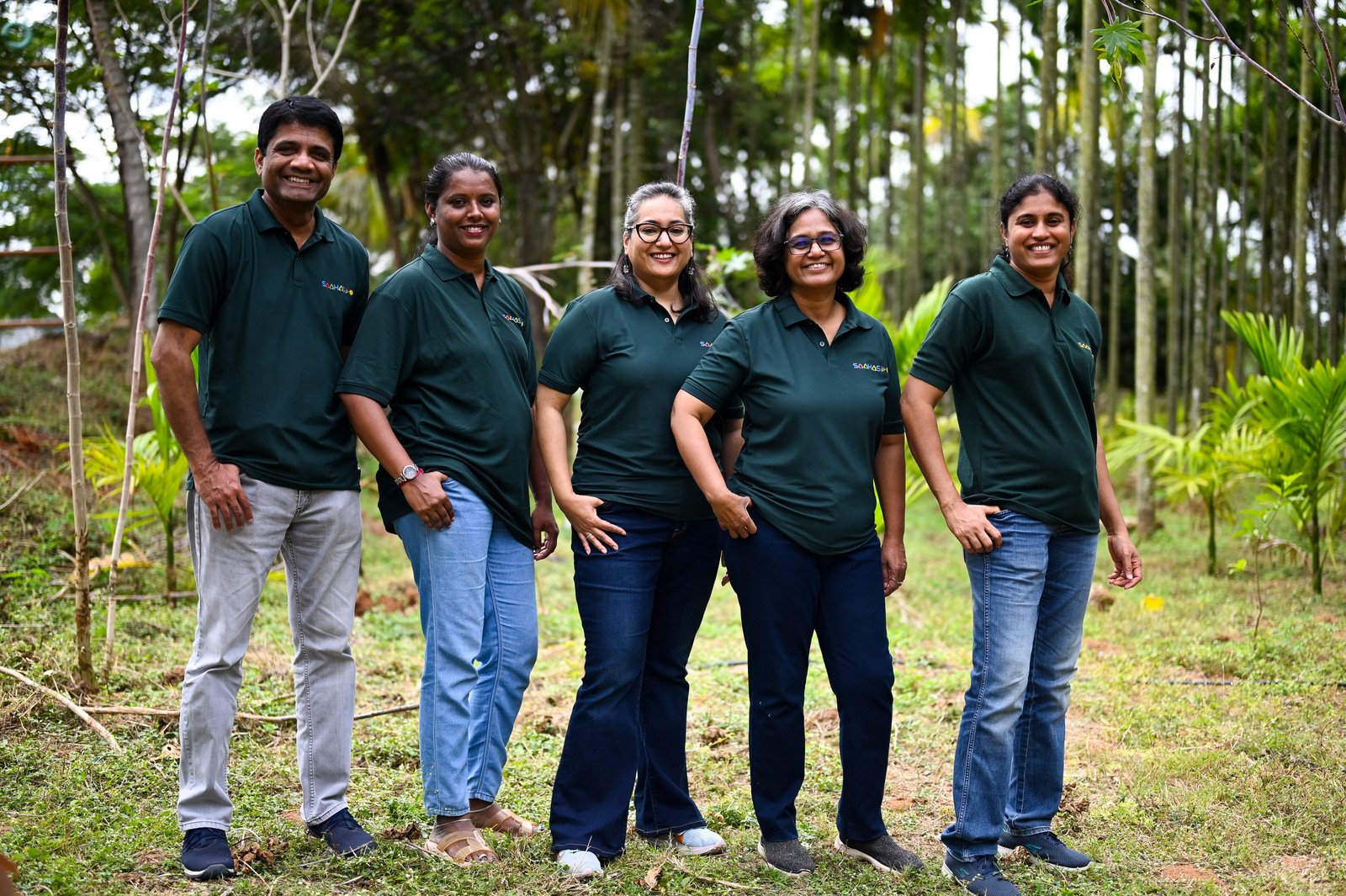
I now work at Saahas in Bangalore. Saahas is a well-regarded NGO building circular economy solutions through partnerships with communities and local governments. We work to cut waste, boost recycling, track data better, create value from recycling, and share hands-on knowledge.
I’ve joined at a critical moment. The organization is scaling, and I’m setting up our Monitoring, Evaluation and Learning (MEL) vertical. My role involves documenting how change unfolds across layers – through community outreach, waste sorting, infrastructure, service delivery and working with government bodies.
A significant part of our work supports urban local bodies to strengthen solid waste systems. The part that excites me the most is delving into how to make service delivery more consistent, garbage pickup routes more efficient, the infrastructure more inclusive, and frontline workers better supported.
Most of my week is spent understanding how these systems function on the ground and improving them – through both legwork, and data. Data captures which streets got skipped on which day, where bins are overfilled, when complaints have gone ignored – so that systems can be improved. But it also shows small wins, and those put the biggest smiles on our faces.
For example, in Belluguppa, a village in Anantapur in Andhra Pradesh, our logical framework analysis (LFA) indicators showed that one self-help group (SHG) went from struggling with composting to processing nearly 80% of their wet waste on-site within a few months.
In another village, a simple route correction cut down missed collections by half. These may look like small wins, but they matter — they boost confidence in the system and show communities what is possible. And when such wins accumulate across villages, they translate into a bigger outcome: less waste burdening landfills, stronger local ownership and measurable progress towards sustainability.
Need inspiration?
Start from where you are.
You don’t need to pivot your life overnight. Climate work needs designers, facilitators, operations folks, financial thinkers, storytellers. Whatever your craft, there’s a place for it. Search with an open mind, and reach out – the climate action community is incredibly open and generous.
Here are some resources that helped me
- Books: Wasteland by Oliver Franklin-Wallis and Wasted by Ankur Bisen.
- Online resources: Ellen MacArthur Foundation’s introduction to the circular economy
Mahek Singh is the Lead, Monitoring, Evaluation and Learning, at Saahas.