
India’s continuing renewables growth curve will not be determined only by how many panels get installed, but on how intelligently demand, storage, pricing, transmission and dispatch are managed.
The country can generate more clean power during sunny hours, but the grid must still serve homes, industries and cities when demand rises later in the day. This second part of our series explaining Energy Transition 2.0 looks at the less visible but decisive tools that can close that gap – not as isolated fixes, but as parts of one operating system. The task ahead is complex: installing and utilising batteries, tariffs, EV charging, transmission and flexible demand in the right sequence, for the right consumers, without creating new costs or political shocks.
The battery question
Given that rooftop solar installation has picked up, and that batteries can reduce evening peak demand, why is PM Surya Ghar not subsidising battery storage?
A rooftop solar system without a battery generates power during the day. The household consumes some of it, exports surplus power to the grid and then draws electricity back in the evening.
For the consumer, this works well under net metering. But for the grid, the balancing problem remains.
If millions of households export power at noon and draw from the grid in the evening, the system still has to manage the solar-demand mismatch.
A battery changes this equation.
It stores daytime solar and supplies it during the evening peak. It can reduce local transformer stress, reduce distribution losses, improve resilience during outages and reduce the need for some centralised grid-scale storage investments.
So why not subsidise batteries immediately?
The answer is economics and sequencing.
Solar panels have become relatively affordable. Batteries are becoming cheaper, but are still expensive for residential systems. For many households, rooftop solar alone offers an acceptable payback period. But solar plus battery becomes prohibitively expensive upfront, and with the payback stretched considerably, residential consumers already receiving subsidised electricity find the economics doesn’t work.
The second issue is that net metering currently makes the grid behave like a virtual battery for households. Consumers export power during the day and import power at night. From the household’s perspective, this is simpler and cheaper than buying a physical battery.
But from the system’s perspective, this model cannot scale indefinitely as solar penetration rises.
This is why the answer should not be universal battery subsidies from day one. A better approach is targeted distributed storage, enabled through concessional finance, utility-led aggregation, demand-response payments, regulatory incentives and selective viability support where clear grid value is demonstrated.
India could first prioritise batteries in locations that deliver the greatest system benefit: commercial buildings, hospitals, schools, critical infrastructure, solar-heavy feeders and outage-prone regions. For high-consumption homes, premium housing societies and EV-integrated households, the focus need not be direct subsidy. It can be structured through ToD-linked savings, low-cost loans, group procurement, faster approvals or incentives for making stored energy available during peak hours.
This reduces evening peak stress without creating the perception of subsidising affluent users, while still encouraging distributed storage where it genuinely helps the grid.
Distributed storage versus grid-scale storage
At the same time, grid-scale storage is essential.
The Government of India is already supporting Battery Energy Storage Systems (BESS) through viability gap funding (VGF). In March 2026, the government stated that it was implementing two VGF schemes to support approximately 43 GWh of battery energy storage systems.
This signals that storage is moving from pilot-stage thinking to core infrastructure planning.
But the debate should not be framed as distributed batteries versus grid-scale storage. India needs both.
Grid-scale storage helps system operators balance large renewable flows. Distributed batteries help local networks, housing societies, commercial buildings and high-consumption users manage peak demand closer to the point of consumption.
Why pricing matters
Storage alone is not an adequate solution. The second major lever is pricing.
Several countries already use time-of-day (ToD) pricing to shift consumption behaviour. In the UK, many households use cheaper off-peak windows for washing machines, dishwashers, water heating and EV charging. Similar models exist across Europe, North America, Australia and parts of Asia.
India has already started moving in this direction.
India has already created the regulatory basis for time-of-day pricing: commercial and industrial users above 10 kW are to be covered first, followed by other non-agricultural consumers, with smart meters enabling wider rollout. The policy logic is simple – cheaper solar-hour tariffs can shift consumption towards periods when renewable power is abundant, while peak-hour pricing can reduce evening stress on the grid.
This may be one of the most important reforms for renewable integration.
If electricity costs the same at 2 p.m. and 8 p.m., consumers have no reason to shift demand to solar-rich hours. But if daytime solar-hour tariffs are cheaper and evening peak tariffs are higher, behaviour will gradually change.
Industries may shift flexible loads. EV users may charge during solar-rich periods. Households may schedule appliances differently.
Over time, this can reduce peak stress without forcing people to consume less electricity overall.
But India’s social context must be respected
Farmers, low-income households and many middle-class consumers cannot be exposed to sudden tariff shocks. Therefore, ToD pricing should be phased and segmented.
The most practical pathway is to begin with commercial and industrial consumers. They already have larger loads, better metering and greater flexibility. After that, ToD tariffs can be gradually introduced for high-consumption urban residential households above a certain monthly unit threshold.
Cities such as Mumbai already have progressive tariff slabs where higher consumption attracts higher charges. The same principle can be applied to ToD pricing.
Low-income and middle-class households can remain protected. High-consumption households can be nudged to shift EV charging, air-conditioning, water heating and appliance use away from evening peaks.
This makes tariff reform politically more acceptable and technically more useful.
Demand management
The third major lever is flexible demand. India’s future power system cannot be built only around supply – it must also shape demand.
Electric vehicles are a good example.
Without pricing signals, EV charging may become a serious evening peak challenge. Imagine millions of urban EV owners returning home at 7 p.m., switching on air conditioners and plugging in vehicles at the same time – exactly when solar generation is falling.
That behaviour will stress the grid. But with smart charging and ToD tariffs, EVs can become part of the solution. Vehicles can charge during solar-rich hours at workplaces, commercial hubs, public parking lots or through scheduled home charging.
In the longer term, vehicle-to-grid systems may allow EV batteries to provide grid support.
The transmission challenge
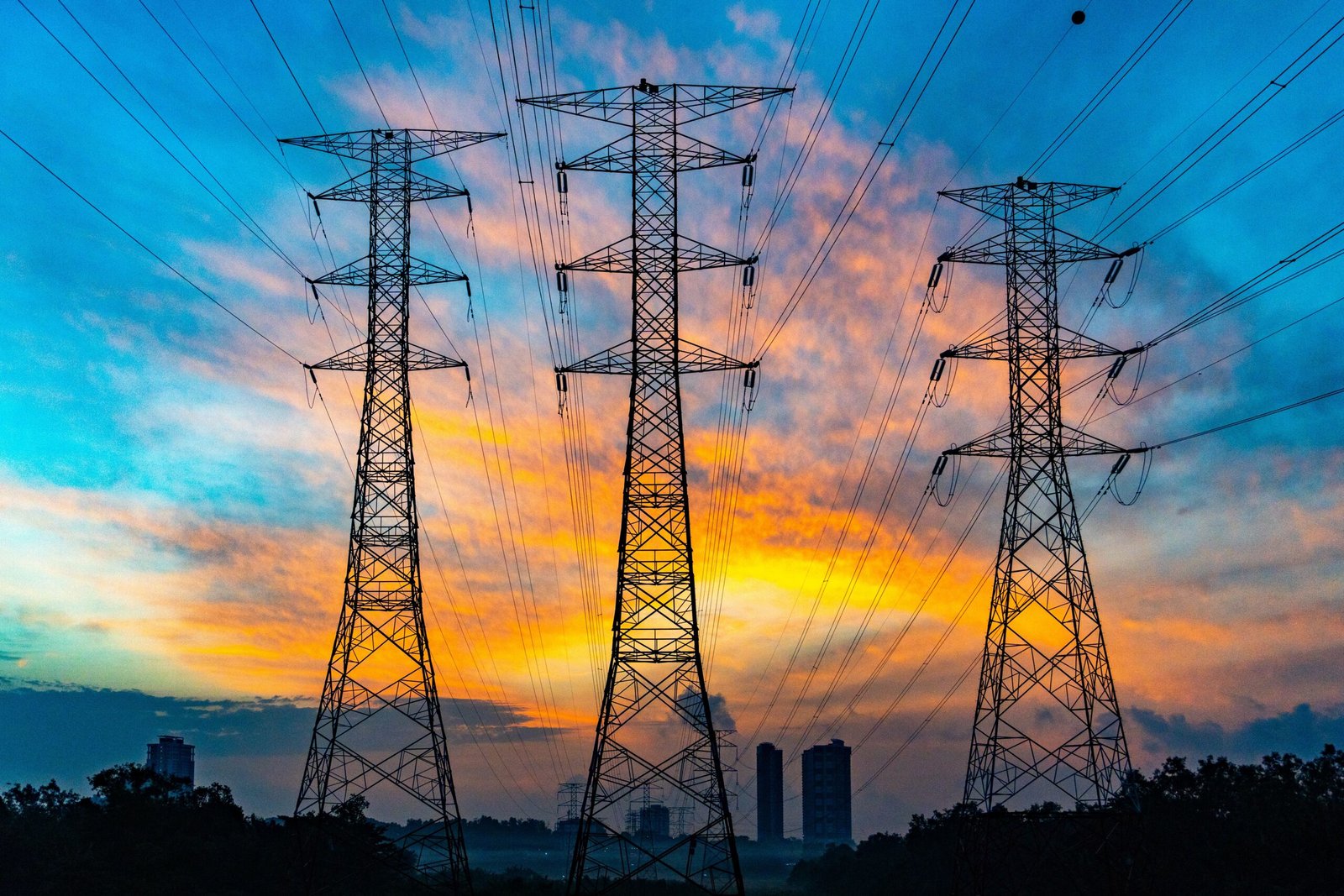
The fourth major lever is transmission. India’s Green Energy Corridor projects are becoming critical infrastructure.
India’s Green Energy Corridor programme is already creating large interstate renewable evacuation infrastructure. One Cabinet-approved Ladakh project, for instance, is planned to connect a 13 GW renewable energy zone through about 713 km of transmission lines, two 5 GW HVDC terminals and integration with the national grid by FY 2029-30.
This matters because renewable generation is geographically uneven. Solar-rich regions such as Rajasthan and Gujarat will not always be the largest demand centres. Power must move efficiently from generation zones to consumption zones.
But transmission projects require land, approvals, interstate coordination and long execution cycles.
Transmission expansion is essential, but not sufficient. Even if power can be moved, the system still needs demand flexibility and storage to absorb it at the right time.
No silver bullet
This brings us back to the central point. India should not approach Phase 2 as a single-solution problem.
Batteries help, but they do not replace pricing reform. ToD tariffs help, but they do not replace storage. Transmission helps, but it does not replace flexible demand. Rooftop solar helps, but it does not replace DISCOM reform.
None of these interventions works particularly well in isolation. Batteries without pricing signals leave flexibility untapped. Transmission without storage simply moves variability from one place to another. Smart tariffs without digital infrastructure are difficult to implement.
The “how” of Phase 2 is a portfolio. This portfolio is not exhaustive, and the relative importance of each intervention will vary by state, consumer category, grid condition and stage of renewable penetration. But it captures the main building blocks India will need:
- Targeted distributed batteries.
- Grid-scale storage.
- Time-of-day pricing.
- Flexible industrial loads.
- Smart EV charging.
- Green Energy Corridors.
- Flexible coal operation.
- Better renewable PPAs.
- Smarter DISCOM incentives.
- Digital grid intelligence.
They are not as visible as a new solar park or a new manufacturing plant. But they will determine whether solar remains stuck near 10% of generation or becomes a genuinely dominant source of electricity. This is how solar can move from 9% to 20% of India’s electricity generation.
But if India wants to move beyond 20%, the question becomes larger than technology. It becomes a question of energy sovereignty, domestic manufacturing depth, DISCOM reform and institutional execution.
That will be the focus of Part 3.
Sainath Gurav is an entrepreneur and strategic advisor with 25 years of experience across 10 countries and four continents. His work spans sustainability, infrastructure, mobility, energy transition and business transformation. He has worked with groups operating coal-based power assets and with global infrastructure funds investing in India’s renewable energy, highways, mobility and infrastructure initiatives.
This is the second of a three-part series examining India’s solar transition – why the challenge has moved beyond capacity addition, how storage, pricing and flexible demand can unlock the next phase, and why energy sovereignty, DISCOM reform and execution discipline will determine whether India continues to ramp up solar power generation and utilisation. The first part is available here.
Inspired to Take Action?
Tl;dr: A summary for the busy, the curious, and the done-for-today
Storage is essential, but battery subsidies need to be targeted
India needs both distributed and grid-scale batteries
Time-of-day electricity pricing can shift demand
Flexible demand and smart EV charging will become critical
Transmission and smarter systems will determine whether solar scales beyond 20%