India’s climate startup ecosystem has no shortage of incubators, investors and accelerators. So why did a group of founders decide to create yet another network? The answer, says The Sustainability Mafia co-founder Ganesh Shankar, was that founders were still building largely in isolation.
Today, the Bengaluru-based network brings together founders working across sectors including clean energy, water, circular economy and air quality. Its annual gathering, SusCrunch, is still very young but has become one of the country’s best-known climate entrepreneurship events. Behind the conference, however, sits a broader effort to connect founders with customers, investors, talent and collaborators.
“Every founder needs access to business, capital and talent. No founder can build all three alone,” says Shankar. And this is where The Sustainability Mafia, or SusMafia, aims to intervene.
How SusMafia works
“It’s an ecosystem of ecosystems,” says Shankar. Rather than building separate networks, members share introductions, partnerships and business opportunities through the community.
Shankar argues that traditional startup ecosystems often revolve around investors, government programmes or industry bodies. SusMafia, he says, was designed to put founders themselves at the centre.
The organisation operates under the Sustainability Engine Foundation, a non-profit established in 2020. The founder community calls itself the Mafiosos. Climate Ninja is a talent development and climate careers programme. Corporados connects climate founders with businesses looking to accelerate their sustainability efforts. SusVentures supports early-stage startups. SusVentures helps founders prepare a pitch for customers, pilots or investors, depending on their goal, then helps them stress-test it repeatedly, before making warm introductions to incubation centres, government schemes and climate networks. Beyond the programme itself, members get ongoing access to grants, fellowships, exhibitions and discounted passes to SusMafia events.
The numbers behind these initiatives are still modest but growing. SusMafia currently counts 84 active founders as Mafiosos and 115 SusVentures overall. Climate Ninja has reached over 700 participants.
More than a conference
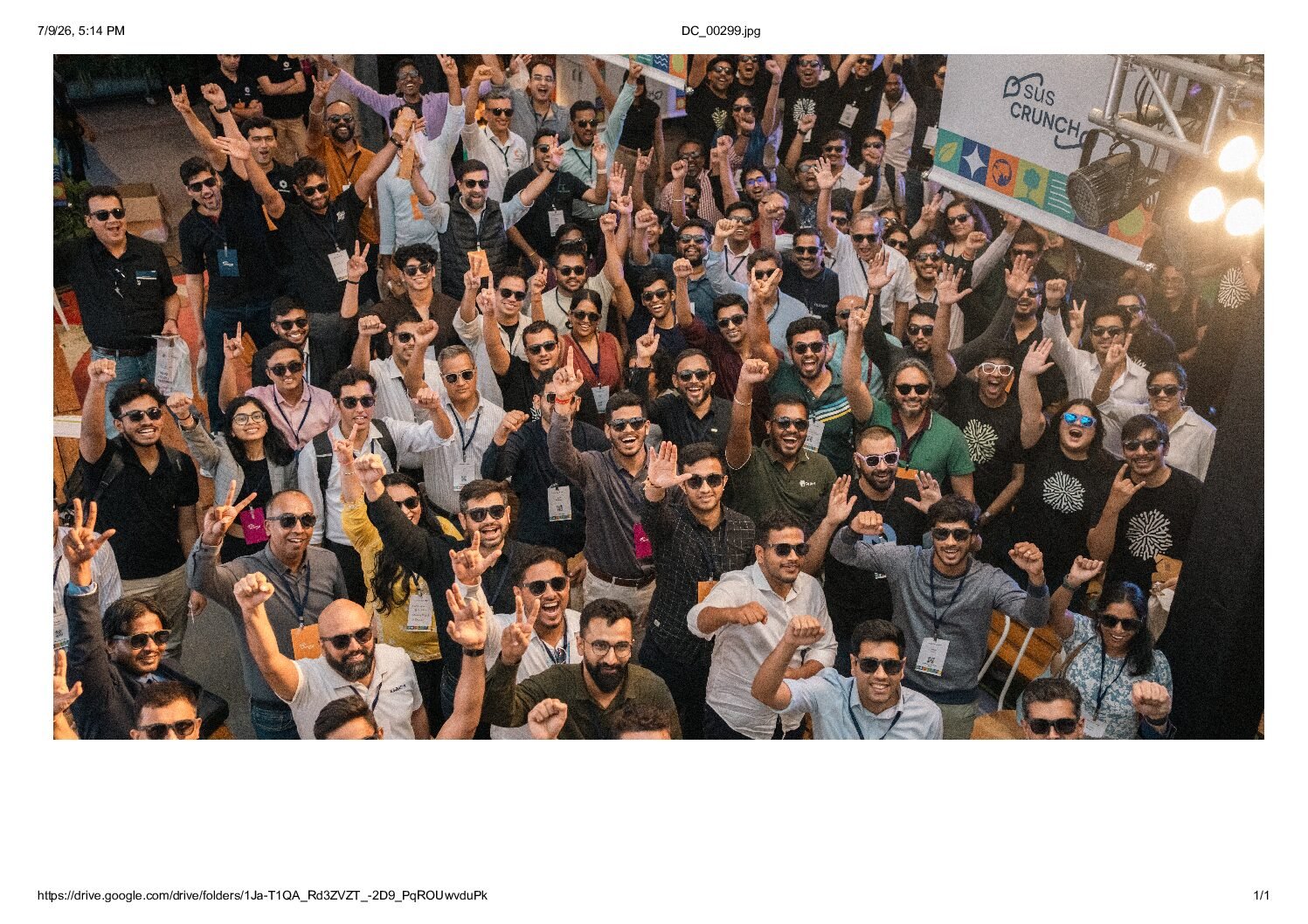
SusMafia’s most visible initiative is SusCrunch, an annual gathering that combines networking, product showcases and business matchmaking. This year’s edition will be held in Bengaluru on 18 July.
The event grew out of TEDxSusMafia, an earlier experiment centred on talks and storytelling. According to Shankar, participants valued the opportunities to meet potential collaborators as much as the sessions themselves, prompting the team to build a more interactive format.
Shankar points to several outcomes from previous SusCrunch editions, including product demonstrations by startups such as Ambiator and GreenJams, investment conversations that later resulted in funding, and hires made through connections forged at the event. He says FluxGen’s own Chief Operating Officer first connected with the company through SusCrunch.
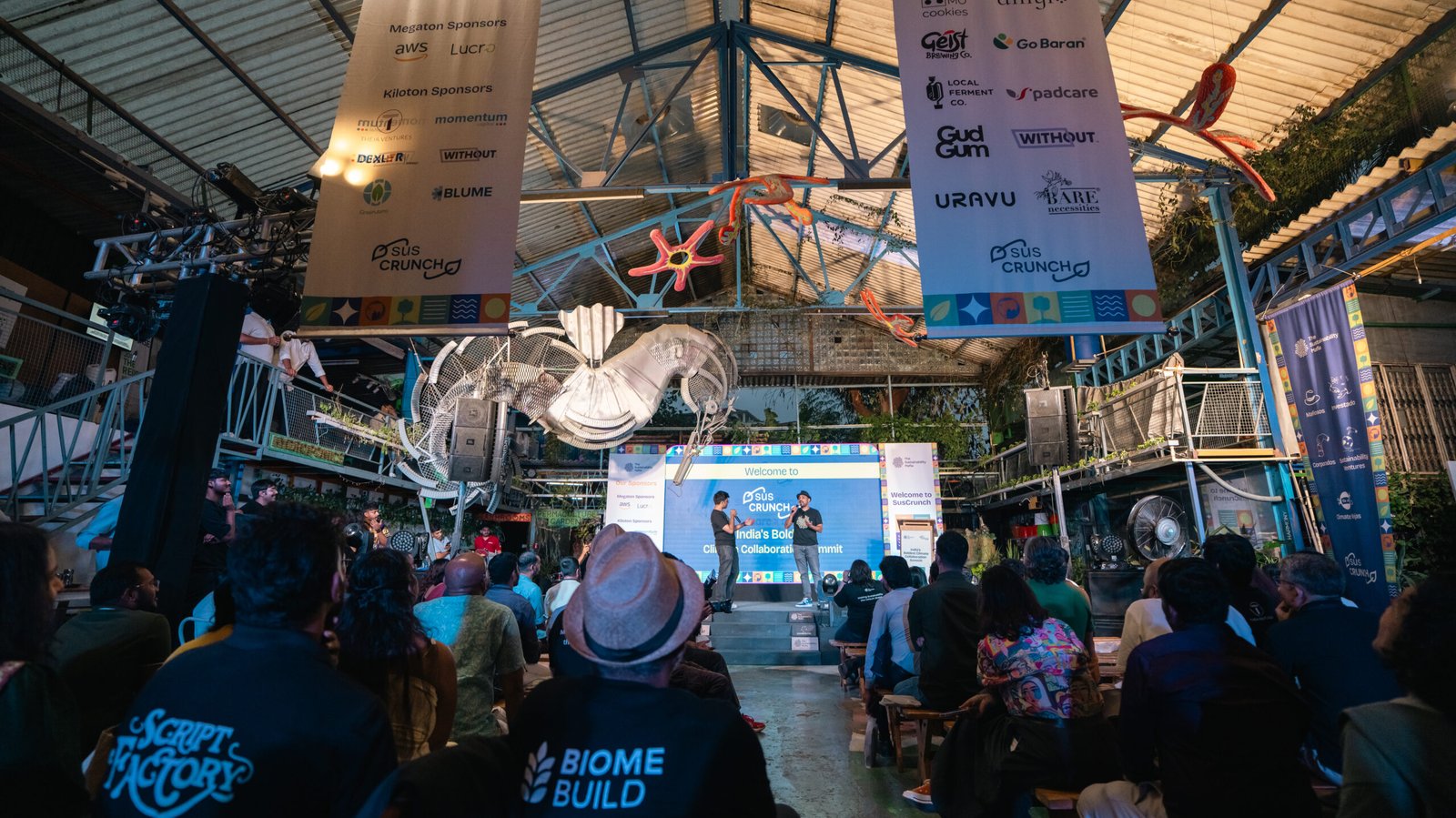
SusCrunch at Bangalore Creative Circus. Photo courtesy The Sustainability Mafia
Attendance has grown each year: roughly 200 people attended the first SusCrunch in 2024, rising to over 350 in 2025, and the team expect a similar turnout of 350-plus for the 2026 edition on 18 July.
This year’s edition will also host the BigPi Grant, a ₹31.4 lakh catalytic grant co-sponsored by PIEDS, BITS Pilani, which culminates in a live pitch finale at the event.
Can a community deliver business outcomes?
Networking groups often measure success by the number of members or events they host. Shankar says SusMafia is trying to track more meaningful outcomes, including customer introductions, hiring and investments facilitated through the community. One such outcome comes from Aalok Deshmukh, founder of Superhuman Race, a consultancy for social impact organisations, who has been teaching masterclasses as part of the Climate Ninja programme. He describes it as a “pool of highly qualified talent” and says his company has hired more than five employees through the initiative.
Arjun Gupta of SmartJoules, an energy efficiency solutions provider, points to something similar: a fellow member introduced him to an investor at SusCrunch 2025, a conversation that led to a $10 million raise last December. Other founders describe similarly varied outcomes. Sumeet Popli, founder of Biome Sustainability Ventures, which transforms agricultural waste into next-generation sustainable materials, says he has found six clients through the SusMafia network over the years.
Not every outcome is as easy to measure as a hire or an investment, though. Ronak Sutaria, founder of Respirer Living Sciences, an air quality measurement company, says he values the chance to regularly interact with other climate founders, understand the challenges they face and the business models they are building.
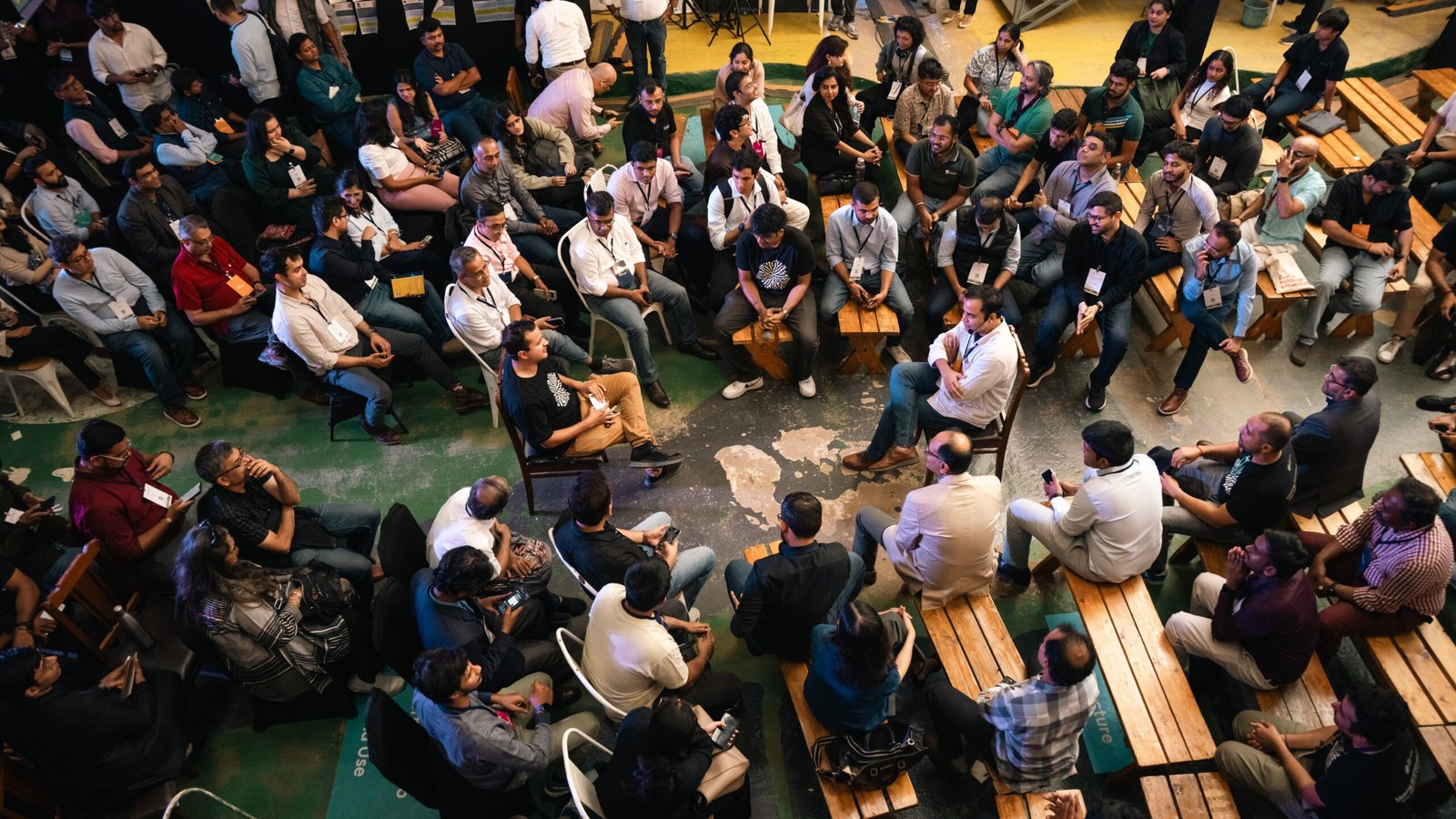
An unconference format at a previous SusCrunch edition. Photo courtesy The Sustainability Mafia
Gagan Agarwal, founder of Planet Material Labs, points to discussions with fellow founders on financing capital expenditure at last year’s SusCrunch, introductions to suppliers for hardware components, and opportunities such as attending the Indo-French Sustainability Conclave through SusMafia’s partnership with the event.
According to SusMafia’s estimates, companies within the network collectively generate more than Rs 2,100 crore in annual revenue, have raised over $350 million in funding and employ more than 3,000 people. It also estimates that member companies help avoid or remove around 1.56 million tonnes of carbon dioxide equivalent annually and divert more than 363,000 tonnes of waste from landfill each year.
Building the next generation of climate talent
While SusMafia began as a founder community, Shankar believes its biggest opportunity lies elsewhere: talent creation.
Climate Ninja was initially created to help startups recruit talent. Today, he sees it as a way to build a broader climate-literate workforce and customer base.
“The goal is to build a billion Climate Ninjas,” he says, referring not only to future entrepreneurs but also to professionals, decision-makers and consumers who understand climate solutions.
The programme has already built academic partnerships with Ashoka University, IIT BHU, and BITS Pilani, Hyderabad and Goa, enrolling more than 100 students across these tie-ups so far, on top of the 700-plus participants it has reached overall.
Who can join?
Membership is deliberately selective, Shankar says. Membership is by application, not open enrollment. To qualify, founders need a growth-stage company already in the market with paying customers, operating in the climate or sustainability space, and headquartered or primarily active in India. Nomination by an existing member carries real weight in the selection process, and shortlisted applicants go through a two-stage interview, first with the SusMafia team, then with a Director assessed as much on intent to contribute as on the strength of the business. Membership is paid and renews annually. Just as important, Shankar says, is a willingness to help other members through introductions, mentoring and collaboration.
From a WhatsApp group to a national network
The idea for SusMafia dates back to 2018, when a small group of founders began discussing the challenges of building climate businesses in India. The conversations evolved into a WhatsApp group of around 20 founders before growing to roughly 60 members by the end of 2019. In 2020, the group formalised itself as the Sustainability Engine Foundation, which continues to house SusMafia today.
Shankar says the name was partly inspired by repeated viewings of The Godfather, although he envisioned a collaborative rather than coercive network.
Looking ahead
Asked what governments could do to better support climate startups, Shankar points not to policy intent but to procurement.
He argues that long payment cycles and slow procurement processes make it difficult for young companies to work with the public sector. Faster decision-making and procurement models closer to those used by private companies, he says, would make it easier for climate startups to scale.
For now, SusMafia’s focus remains on expanding the community around founders while building a larger ecosystem of talent, customers and collaborators. As SusCrunch returns this month, the organisation’s ambitions extend well beyond hosting an annual gathering.
The vision is to make sustainability the default choice – not just for entrepreneurs, but for businesses and consumers as well.
Sonam Raina is a Bengaluru-based journalist who covers sustainability in business.