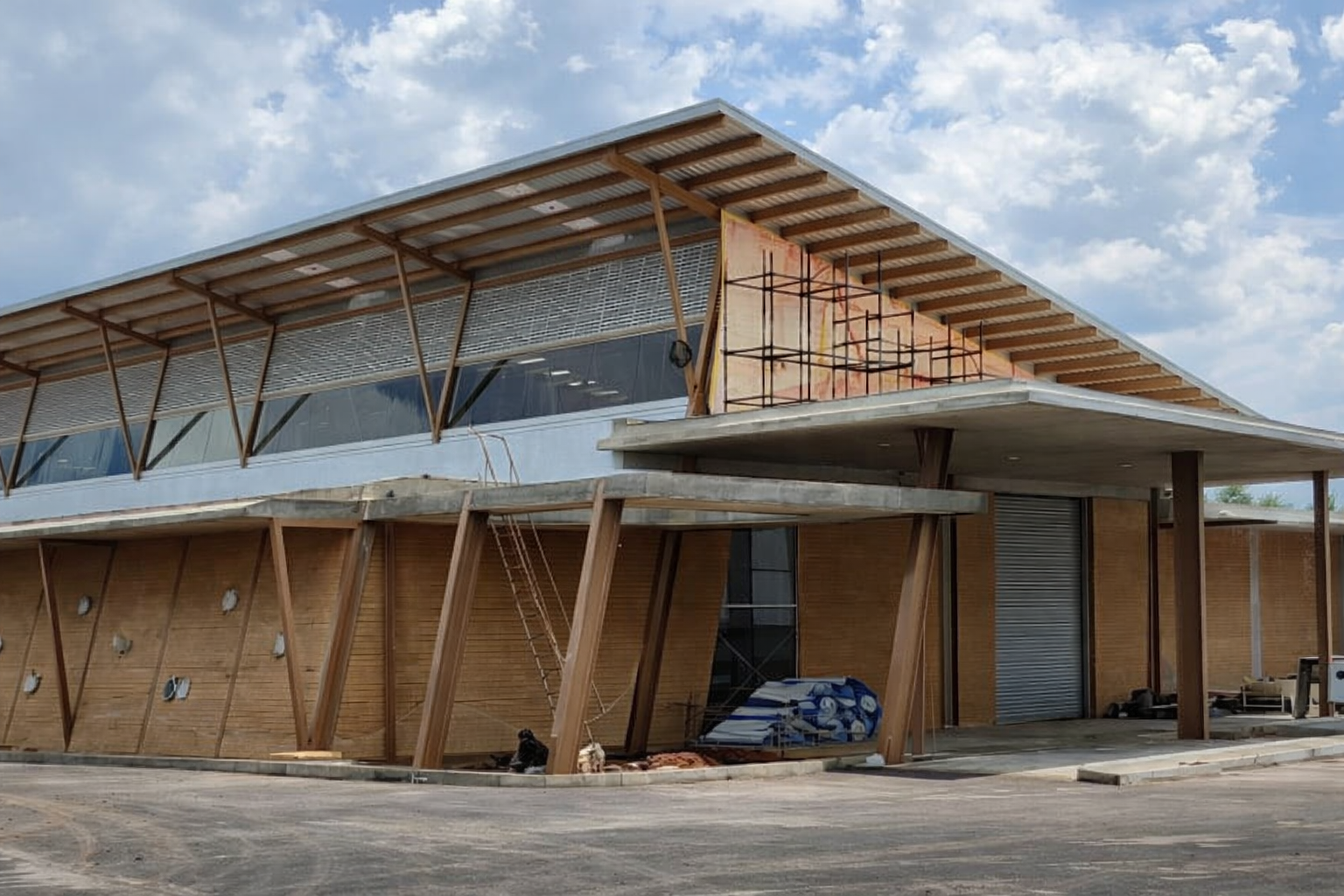
Even as India races to meet its housing and infrastructure needs, a quiet revolution is taking shape in its kilns and factories. Across the country, engineers and entrepreneurs are turning crop residue, fly ash and even discarded plastic into high-performance, climate-friendly bricks. These upcycled alternatives not only cut pollution and emissions, but are also commercially viable and currently in use.
India is the second largest producer of baked clay bricks in the world. It produces around 250 billion bricks annually, with 100,000 micro and small enterprises involved in brick manufacturing employing more than 10 million workers, as per a 2022 report by the Bureau of Energy Efficiency.
As a matter of fact, brick manufacturing is one of the largest energy consumers in the micro, small and medium enterprises (MSME) sector. It is estimated that every year, 35 to 45 million tonnes of coal and biomass fuels are used for firing bricks. The brick industry is therefore a major polluter, posing a health hazard.
“Bricks, as a primary building material, continue to play a key role in shaping India’s construction landscape,” says Divya Davis, a climate, environment and sustainability analyst at CSTEP, a Bangalore-based think-tank. Given how polluting and energy-intensive brick-making is, India’s expanding building stock – growing by millions of units every year to cater to growing demand – is a sustainability concern.
“India produces over 300 billion bricks every year, emitting nearly 72 million tonnes of CO? annually – that’s more than the total emissions of some small countries,” says Tarun Jami, co-founder, Green Jams, which creates building materials from agricultural biomass and hemp blocks. “Traditional fired-clay bricks also destroy fertile topsoil, consume huge quantities of water and coal, and release fine particulate matter that causes severe respiratory illnesses in communities near kilns,” he adds.
India’s kilns consume over 350 million tons of fertile soil and emit nearly 9% of national greenhouse gas emissions, says Kunjpreet Arora, co-founder of Angirus. “With rapid urbanization and millions of homes being built each year, alternatives are urgently needed,” she adds.
Now, let’s look at the low-carbon alternatives – affordable and high-performance, available at industrial scale, and where to find them.
Eco-friendly bricks
Ever heard of autoclaved aerated concrete (AAC) blocks, compressed stabilized earth blocks (CSEBs), fly ash bricks, hollow cement concrete blocks, and efficient alternative walling materials?
Most of these rely on using less material, thereby saving both cost and carbon. These bricks are already commercially viable and currently in use. And, the latest technologies are creating bricks that are cost-competitive with regular bricks.
Not only do these bricks require less carbon to make, thereby having lower “embodied emissions”, spaces made with them offer more pleasant indoor climate (so less cooling or heating needed), which makes for lower “operational emissions” too.
| Table 1. Alternatives to fired-clay brick already in use | ||
|---|---|---|
| Type | How it’s different | Where to get them |
| Autoclaved aerated concrete (AAC) blocks | Precast concrete slabs with locked air pockets, which makes them significantly lighter than usual concrete, increasing energy efficiency of production and reducing carbon footprint thanks to lesser use of concrete. They are being used for high-rises across India. | |
| Compressed stabilized earth blocks | Made from soil and 6% to 7% cement, often at the construction site itself, they reduce carbon footprint and the cost of construction substantially. However, they are not suitable for high-rises, but are widely used in projects such as Freagles of India. The Earth Blocks help maintain a cooler temperature, creating a soothing atmosphere for the animals. Yet another project that has used these bricks is the Malhar Eco project in Kengeri, Bangalore. | |
| Fly-ash bricks | It is mandatory for all government buildings in India to use fly ash bricks instead of traditional clay bricks. The Fly Ash Notification, dated 14.09.1999, that was amended in 2016 and again in 2003, by the Ministry of Environment, Forest and Climate Change (MoEFCC) mandates the use of fly ash bricks in construction within a 300 km radius of coal or lignite-based thermal power plants. Furthermore, the National Green Tribunal (NGT) and the Central Pollution Control Board (CPCB) have strict guidelines to promote the use of fly ash. | |
| Hollow cement concrete blocks | Essentially, a hollow concrete block is a concrete brick with hollow spaces within the structure. Hollow cement bricks are used in load-bearing and non-load-bearing walls be it residential, commercial or industrial buildings. These bricks, when filled with concrete and reinforced steel bars (RCC) in the pores of the block, can be used in retaining walls. Since they provide good thermal insulation, they are suitable for all types of weather conditions. Owing to their load-bearing capacity and water resistance, they are suitable for low-level or underground structures. | |
“With rising temperatures due to global warming, materials that provide thermal comfort can greatly reduce dependence on active cooling measures like air conditioners, thereby building resilience,” Davis says.
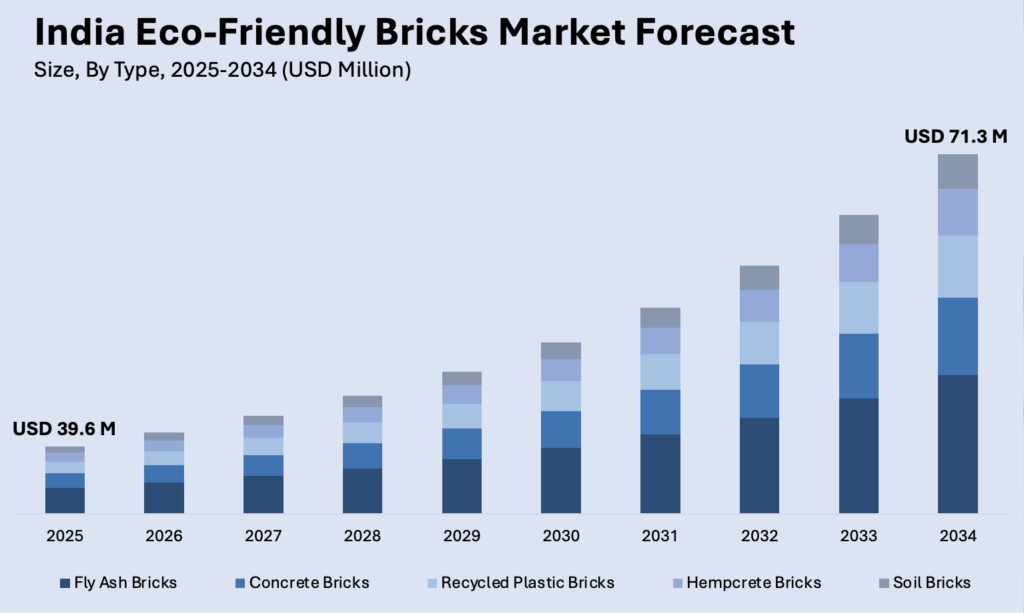
Encouragingly, the market size for eco-friendly bricks in India reached US$37.1 million in 2024, and is likely to reach US$67.2 million by 2033, a healthy CAGR of 6.82% during 2025-2033.
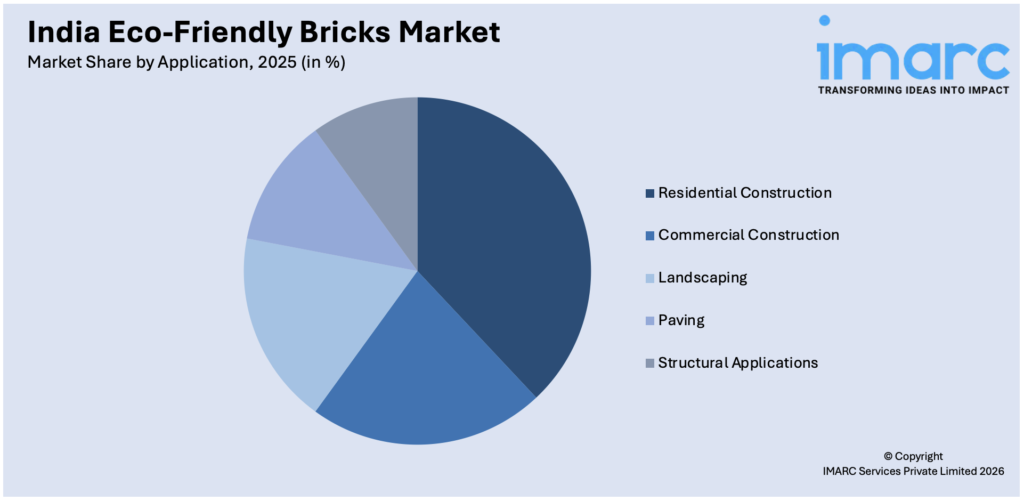
Source: IMARC
Arora believes the growth reflects a rising awareness about climate change, greater government push for green buildings and demand from real estate developers to meet ESG (environment, social and governance) and certification standards. Eco-friendly bricks also deliver performance and cost benefits, such as lower maintenance and 75% better insulation. “With India targeting net-zero by 2070 and the construction boom continuing, the market will scale rapidly – likely crossing multiple billions as sustainable materials move from niche to mainstream adoption,” she adds.
According to Jami, this is just the beginning of a much larger transformation. Three factors are driving this shift, he says:
Policy: Government mandates promoting green building certifications and circular-economy principles such as “waste to wealth.”
Performance: New-age materials now outperform clay bricks in strength, insulation and durability.
Perception: Builders and consumers increasingly recognise that sustainability adds tangible value through energy savings and brand differentiation.
With India’s construction sector growing at over 8% annually, the market for sustainable masonry could grow five-to ten-fold in the next decade, becoming a mainstream material category rather than a niche offering, he says.
Praveen Kumar Soma, Principal Counsellor, CII Green Building Council, says rising environmental concerns have created a strong demand for green construction materials in both public and private sectors. Government incentives are promoting the use of sustainable bricks – encouraging the use of industrial waste products such as fly ash, slag and plastic as raw material – helping projects achieve green certifications, and reap cost and resource benefits.
In a win for brick-makers, this also reduces raw material costs.
Furthermore, rapid urbanization and large-scale affordable housing initiatives, such as the Pradhan Mantri Awas Yojana have fueled demand for modular, efficient and sustainable building materials, Soma added.
Technology fixes
Technological advancements are driving the production of high-performance, cost-effective and sustainable building materials. Innovations such as 3D printing and modular brick systems, which are enhancing strength and insulation, are also reducing manufacturing costs and resource consumption – and boosting market growth.
| Table 2. New innovations entering the mainstream | |||
|---|---|---|---|
| Type | How it’s different | Manufacturers | Users |
| 3D printing and modular bricks | A rapid 3D Concrete Printing (3DCP) technology enables printing large concrete structures in record time, at remote locations. 3D printed bunkers are designed for the most difficult terrains—from mountain peaks to deserts. Modular bricks are designed to be easily stacked and assembled, often without the need for traditional mortar. They come in various shapes, sizes, and materials, making them adaptable for a wide range of construction projects. | MiCob | Indian Army |
| Cretebots | Schools, cottages, office in Pune | ||
| Brick and Bolt
Kailash Bricks, Haryana Jindal Bricks, New Delhi |
Residences, private developers | ||
| Agrocrete® | Agrocrete® is carbon-negative, thermally insulating, and structurally superior. | Green Jams | Green Jams case studies |
| Hempcrete | Hempcrete is a bio-composite material created by blending the woody core of the hemp plant with a lime-based binder. | Gohemp | Himalayan Hemp Eco Stays |
| Wricks | Wricks are damp-proof bricks made of 100% recycled waste material, are damp proof and provide 76% more thermal insulation than clay bricks. | Angirus | G+2 projects (ground plus two floors): Architects, green builders, organisations seeking sustainable infrastructure solutions. |
Source: IMARC
Consider the journey from energy-intensive fired bricks to cold-bonded, alkali-activated materials like Agrocrete that require minimal energy and no topsoil. “These innovations harness agricultural residues, industrial waste and mineral-binding chemistry to create carbon-negative products,” Jami says.
Furthermore, emerging technologies such as AI-based quality control, process automation and digital performance modeling are ensuring consistency and scalability. The result is a class of high-performance, cost-effective materials that are redefining how sustainability is engineered – no longer an afterthought, but a technological advantage, Jami adds.
Arora says new technologies allow the integration of plastic and industrial waste into construction-grade bricks. “Advances in materials science and automation have made eco-bricks stronger, lighter, water-resistant and thermally efficient, while reducing emissions by 70-90%. These innovations bridge the gap between sustainability and performance, making green bricks cost-competitive with traditional clay bricks”, she explains.
The development of 3D printing and modular brick systems enables precise brick fabrication, reduces wastage of material and allows customization of brick sizes and shapes, Soma adds. Interlocking brick designs mean construction takes less time, uses less mortar and gains structural stability.
New technologies are also making it possible to use waste materials such as plastic powder, glass powder, rice husk ash, and construction and demolition debris – while it prevents waste from clogging landfills, it also improves the bricks’ thermal insulation and strength.
The development of 3D printing and modular brick systems enables precise brick fabrication, reduces wastage of material and allows customization of brick sizes and shapes, Soma adds. Interlocking brick designs mean construction takes less time, uses less mortar and gains structural stability.
New technologies are also making it possible to use waste materials such as plastic powder, glass powder, rice husk ash, and construction and demolition debris – while it prevents waste from clogging landfills, it also improves the bricks’ thermal insulation and strength.
Material fixes
Wricks are damp-proof bricks made of 100% recycled waste material. Greenjams makes building materials using bio-concrete masonry. These are just two examples of building materials from plastic and agricultural waste – which not only provide sustainable building blocks but also solve for waste management.
Although composite materials combining agricultural waste with cement or lime binders, such as Agrocrete and hempcrete, have emerged as innovative options, they are yet to enter the mainstream construction material market.
All of the alternatives in this story are more environmentally friendly than fired-clay bricks, but none is a perfect solution – at least not yet.
| Table 3. Eco-friendly brick alternatives: Pros and cons at a glance | ||||
|---|---|---|---|---|
| Material | Key eco benefit | Main drawback | Performance & practical issues | Adoption/market status |
| Autoclaved aerated concrete (AAC) | Lightweight, energy-saving in use | Energy-intensive production | Brittle; limited load-bearing | Moderate – used in cities, not rural markets |
| Compressed Stabilized Earth Blocks (CSEB) | Made from local soil; very low embodied energy | Vulnerable to moisture if poorly made | Needs skilled labour, quality control | Low – small projects, eco-builders |
| Fly Ash Bricks | Uses industrial waste; reduces clay use | Toxicity and supply dependence (coal ash) | Needs nearby power plants; uneven quality | High – widely used, especially near thermal plants |
| Hollow Concrete Blocks (HCB) | Reduces material use; faster construction | High cement content, high CO? footprint | Poor thermal insulation; heavy transport load | High – common in commercial projects |
| Upcycled Plastic Bricks | Recycles waste plastic; waterproof | Fire safety and microplastic concerns | Limited structural strength; poor insulation | Low – early-stage innovation |
| Agrocrete (Crop Waste Bricks) | Reuses farm residue; potentially carbon-negative | Company claims 4-hour fire rating, less than 10% water absorption and resistance to termites and pests | Needs reliable waste supply and new methods | Early commercial adoption |
| Hempcrete | Carbon-sequestering, breathable, fire-safe | Not load-bearing; costly; slow curing | Needs hemp supply chain, trained masons | Very low – niche, experimental builds |
Experts say awareness about these alternatives and their availability is limited. As many of these alternatives are new, more work is needed to build understanding and trust in them. Such work is already underway:
- Bureau of Indian Standards, Indian Green Building Council and Council of Scientific and Industrial Research and Central Building Research Institute on standardization of material quality.
- Building Materials and Technology Promotion Council, Ministry of Housing and Urban Development, Auroville Earth Institute, Development Alternatives, and some startups on pilot projects.
- Auroville Earth Institute and DA run trainings; TERI, IGBC and BMTPC on guidance and outreach.
The flip side
Despite the advantages that eco-friendly bricks offer, there’s a flip side to them as well. For one, they may not be suitable for all construction projects, as they are more suited for smaller structures. Larger projects entail the use of traditional building materials.
Moreover, producing eco-friendly bricks can be a resource-intensive process; for instance, it needs considerable time and effort to collect, sort and pack plastics into bottles. The process may not be feasible for everyone and could potentially detract from other essential environmental efforts.
Then, there’s also a risk of inadequate compaction, which may result in unstable bricks and ultimately undermine their utility as construction material, leading to safety issues in the long run.
Furthermore, there are health concerns related to working with plastic waste, especially when it involves handling potentially toxic or contaminated materials. This emphasizes the importance of proper safety measures and waste segregation when creating ecobricks, underscoring the need for education and awareness regarding health precautions.
| Table 4. Environmental impact comparison | ||||
|---|---|---|---|---|
| Type | Energy Use | Emissions | Resource Impact | Eco-friendliness vs. clay |
| Fired Clay Brick | High | High | Depletes topsoil | Baseline |
| Fly Ash Brick | Low | Low | Depends on ash quality | Better |
| AAC Block | Medium-low | Medium-low | Cement use | Better |
| CSEB | Very low | Very low | Local soil | Better |
| Hollow Concrete Block | Medium | Medium | Cement-heavy | Partial |
| Waste-based Bricks | Low | Low | Recycled input | Better/Recycled |
An independent journalist, Sapna Gopal has been covering the renewable energy and environment sector since 2009.
The infographics have been prepared by Anil Kumar, a BBA student at Rishihood University.
Inspired to Take Action?
Tl;dr: A summary for the busy, the curious, and the done-for-today
India produces hundreds of billions of bricks annually, but traditional fired-clay bricks consume large amounts of coal, water and fertile soil – contributing to air pollution and emissions.
Alternatives like fly ash bricks, AAC blocks, CSEBs and waste-based bricks (using crop residue, plastic and industrial waste) are emerging as low-carbon, commercially viable substitutes already in use.
These alternatives reduce “embodied emissions” during production and improve thermal insulation, lowering cooling needs and operational emissions – often outperforming traditional bricks.
Policy support, green building demand, ESG goals and technologies such as 3D printing, AI-driven quality control and modular construction are accelerating adoption and making sustainable bricks cost-competitive.
To scale, this sector must counter limited awareness, suitability constraints for large projects, resource-intensive production processes and safety/quality concerns.