
Earthline
Discover all stories in this collection.
Earthline

What India Can Learn from Brazil’s Long Ethanol Journey
At Posto Dallas, a fuel station in northern Brazil’s Belém city, a car pulls in. The driver checks the price board, then picks a fuel. The 27-year-old station attendant, John, sees this happen all day. “Mostly flex-fuel vehicles come here,” he said. “People see the price and ask us to fill the fuel in their […]
View details
Scientists Test Turning Aquatic Weeds into Liquid Fertilisers
The uncontrolled growth of aquatic plants has become a major environmental challenge in Dal lake, an important freshwater lake in the Kashmir Himalaya. A new study has tested a way to convert these excess plants into fermented liquid fertilisers, offering a potential solution to manage weed overgrowth while producing a useful agricultural input. Dal, a culturally and […]
View details
Dholavira’s Water Wisdom: What a 4,500-Year-Old City Teaches Modern India about Managing Scarcity
Standing atop the massive citadel of Dholavira, a 4500-year-old city, in the arid expanse of Gujarat’s Rann of Kachchh, it is difficult not to be struck by a paradox. This was a city built in one of the most water-scarce landscapes of the Indian subcontinent, yet it flourished for nearly a millennium. Looking down from […]
View details
India Needs More Scrap to Boost Green Steelmaking. But Where Is the Scrap?
Steel scrap has become an increasingly strategic resource for countries and their steelmakers as a key input for emissions reductions. India, the world’s second largest steel producer, has set ambitious targets to double the share of scrap use in its total steel output in the coming decades. The question is: where is the scrap? Scrap […]
View details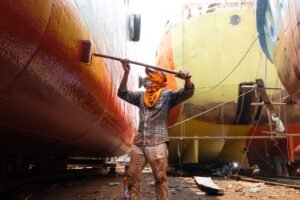
The Floating Answer to the Green Steel Challenge
Rushi Kanakiya recycles ships from a 50-metre beachside plot overlooking the sea in Alang, India. Since 1985 his family enterprise, Triveni Shipbreakers, has been receiving and dismantling old vessels here, in the world’s largest ship-breaking yard. Triveni is capable of processing some 2,000 metric tonnes of steel every month. There is a mind-boggling amount of […]
View details
Financing the Green Shift: What are Steel MSMEs Getting Right?
Nearly a decade after independence, one of India’s first public sector steel plants was established in Bhilai, Durg district, Chhattisgarh — a region rich in iron ore, coal and other natural resources. In the ensuing decades, several scattered steel units, dominated by micro, small, and medium-enterprises (MSMEs), began to mushroom some 40 km away in Raipur, helping […]
View details Maharashtra
Village documents 600 species through a community-led survey
Kiraksal, a small village in Maan taluka, Satara district of Maharashtra, is known for its dense scrublands. According to the village elders, this area was once a thriving grasslands ecosystem, home to blackbucks and chinkaras. After the 1950s, ungulate species gradually became locally extinct in this area; the Indian grey wolves, striped hyena, golden jackals, […]
View details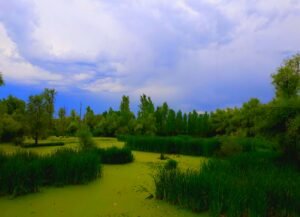
Kashmir’s children are turning wetland loss into community action
For many, Kashmir’s lakes exist first as spectacle, captured through Instagram reels and travel vlogs of the famed Kashmir Great Lakes Trek, where alpine waters like Vishansar and Gangbal appear impossibly blue against snow-lined mountains. These images travel widely, shaping an idea of Kashmir as untouched and pristine. But the experience on the ground tells […]
View details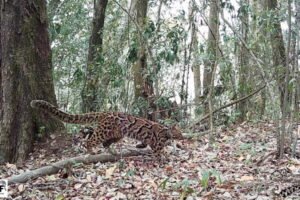
Eastern Himalayan Communities Rally to Conserve ‘Near Threatened’ Marbled Cat
Conservationists and several communities in Arunachal Pradesh and Nagaland gathered on March 1 to mark the first-ever International Marbled Cat Day, drawing attention to one of Asia’s most elusive and least understood wild felids. Conceptualised by the Eastern Himalayas Marbled Cat Project (EHMCP), in collaboration with state forest departments, the Day focused on engaging local […]
View details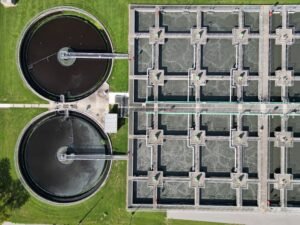
New Rule Requires Fish Survival Test for Caustic Soda Industry Wastewater
Wastewater from caustic soda plants using membrane cell technology will now have to pass a laboratory-based fish survival test under new environmental standards notified by the Union government. The Environment (Protection) Second Amendment Rules, 2025, state that at least 90 per cent of fish must survive after 96 hours in 100 per cent wastewater during […]
View details