It began with a question.
As architects, we’re trained to notice what’s built, not what’s discarded. We admire the finished building, the polished stone floor and the carefully crafted detail. We rarely pay attention to the thin layer of dust left behind after the cutting and polishing are done.
Yet wherever we went – construction sites, stone-processing units or fabrication workshops – we encountered the same scene. Workers would sweep away piles of fine stone dust almost absent-mindedly before asking, “Sir, is powder ka kya karein?” What do we do with this powder?
Across India’s stone industry, millions of tonnes of fine dust and slurry are generated every year. Larger stone fragments often find a second life as aggregates, but this finer waste is much harder to recover and reuse, creating environmental and health challenges in stone-processing regions.
We couldn’t shake the feeling that we were looking at the problem the wrong way. Instead of asking how to dispose of this material, what if we asked whether it had been misclassified as waste in the first place?
That question became the starting point for Re-Kota.
The next section should establish that the authors weren’t materials scientists and had to rethink everything they knew. It should read like a journey of discovery rather than a catalogue of experiments.
Learning a new language
Neither of us came from a background in materials science or chemistry. We understood materials as architects do. We appreciated how they looked, how they felt and how they shaped spaces. What we didn’t fully understand was why they behaved the way they did.
Almost overnight, our vocabulary changed.
Instead of talking about form and finish, we found ourselves reading about particle size, hydration, shrinkage, curing and natural binders. We traded design magazines for research papers and spent hours talking to scientists, fabricators and manufacturers. In many ways, we became students again.
Instead of sketching products, we found ourselves reading research papers and conducting naïve experiments. We became students again.
Could stone dust simply be mixed with water? Would cement bind it?
Could paper pulp work? What about fly ash? Clay? Sawdust? Natural proteins?
Eventually our material explorations expanded to combinations of Kota stone dust, marble dust, Ground Granulated Blast Furnace Slag (GGBS), paper pulp, lime, dolomite and natural binders such as casein.
Most experiments failed.
Some cracked while drying. Others never cured.
Some appeared successful until they broke days later.
Looking back, we remember the failures more clearly than the successes. Every failed batch quietly corrected another assumption.
Over time, we realised the material was educating us.
Innovation wasn’t a single breakthrough. It was hundreds of experiments gradually eliminating everything that didn’t work.
Innovation, we discovered, rarely arrives as a single breakthrough. More often, it emerges through hundreds of small experiments that quietly reveal what doesn’t work before showing what does.
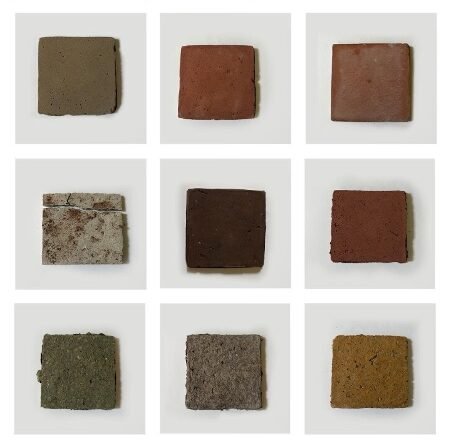
Re-Kota experiments with different material combinations such as Kota stone dust with fly ash, clay and other binders.
Standing on the shoulders of (research) giants
One of the most important lessons came from looking beyond our own workshop.
As we immersed ourselves in the literature, we realised we were far from the first people to explore the potential of stone waste. Researchers across India had already demonstrated that materials such as Kota stone dust could be incorporated into paver blocks, floor tiles and lightweight building products. Institutions including CSIR-Central Building Research Institute (CSIR-CBRI) had shown that industrial stone waste could be transformed into technically viable construction materials.
That discovery was both reassuring and humbling.
We weren’t trying to prove that stone waste could be reused. Others had already done that.
The more interesting question, at least for us, was different.
If the science already existed, why hadn’t these materials entered everyday life?
Perhaps the biggest barrier was not technical? A material may perform well in a laboratory, but people still need to trust it before they are willing to live with it, work with it or specify it in their homes and buildings.
That insight would go on to shape every decision we made.
Why we chose furniture instead of buildings
One question followed us almost everywhere. “If your material works, why not make bricks?”
Or wall panels. Or paving blocks.
At first, those seemed like the obvious directions. After all, that’s where most research on stone waste had been focused. But the more we understood the responsibility that comes with introducing a new material into buildings, the more cautious we became.
Buildings demand certainty. Every material used in them carries decades of responsibility. Before becoming part of architecture, a material must go through structural testing, certification, durability studies and regulatory approvals. We weren’t there yet.
So we stopped asking where Re-Kota could be used and started asking where we could honestly trust it. Not buildings. Furniture.
Furniture allows people to experience a material before they depend on it. They can touch it, move it, live with it and see how it changes over time. If something needs improving, the consequences are far smaller than they would be in a building.
Looking back, we weren’t simply making stools and tables.
We were building confidence, one object at a time.
Furniture became our laboratory, not just for testing the material, but for understanding how people responded to it.
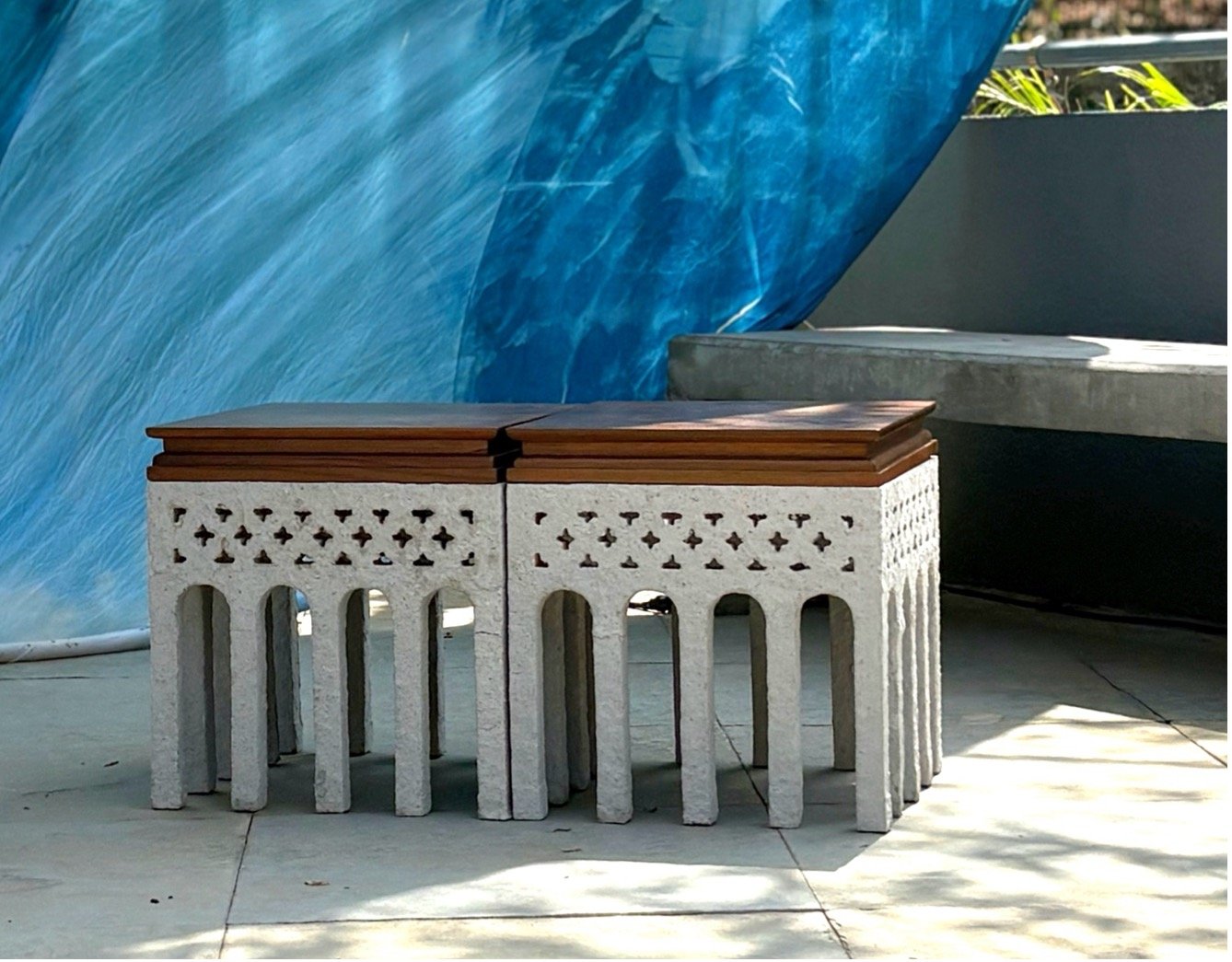
Modular stool made using Re-Kota and Burma teak.
The real test outside the workshop
It’s tempting to think research ends when a prototype works.
For us, that’s when the real research began.
Today, each Re-Kota object incorporates around 6 to 7 kilograms of industrial waste that would otherwise remain part of the waste stream. Through repeated everyday use, our furniture has consistently supported loads exceeding 100 kilograms. We’ve studied curing behaviour, observed how pieces respond to impact and monitored how the material performs over time.
Some questions have encouraging answers. Others are still open.
Water absorption, for example, remains one of our biggest challenges. For now, we address it with protective surface coatings while continuing to improve the material itself. Our curing process, which currently takes two to three days, has also become more efficient with every iteration.
Just as important is recognising what we still don’t know. Long-term outdoor weathering. Fire performance. Comprehensive structural testing. Certification. Compliance.
We don’t see these as shortcomings. They’re simply the next chapters of the research.
One of the biggest misconceptions about innovation is that a successful prototype means the problem has been solved. Our experience has been the opposite: Every answer has revealed a new set of questions.
I think this is where the essay should become more personal. Up to this point, the authors have talked about the material. Now they should talk about people. The original has a lovely observation: people touched the material before asking what it was made from. That’s the heart of the essay. I’d build the next section around that.
Please Do Not Touch
We deliberately took Re-Kota out of the workshop long before we felt it was “ready”. Not because we believed we had perfected the material, but because there were questions no laboratory could answer.
How would people react? Would they hesitate to touch it? Would they see it as “waste”? Or would they simply see it as another object?
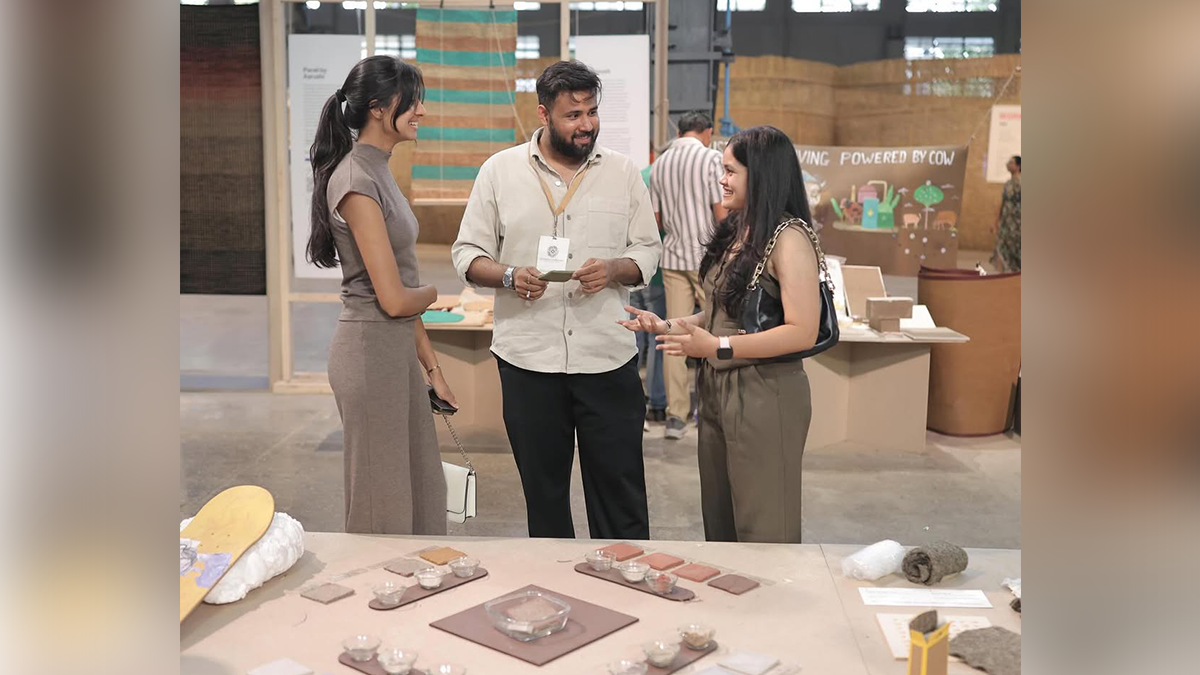
Over the past few years, our work has been exhibited at platforms including Godrej Conscious Collective in Mumbai and Elev8 in Bengaluru. Watching people interact with the material became a form of research in itself.
Almost everyone did the same thing. They reached out and touched it. They ran their fingers over the surface. They knocked on it. They lifted it. They tried to understand its weight and texture.
Only afterwards did they ask what it was made from.
When we told them it contained industrial stone waste, the reaction was usually surprise.
Those moments stayed with us because they challenged one of our own assumptions. We had spent years worrying about the technical performance of the material. Visitors reminded us that acceptance begins somewhere much simpler. People first decide whether something feels desirable. Only then do they begin asking questions about how it was made.
That experience reinforced something we now believe strongly. Circular materials don’t become mainstream simply because they perform well in a laboratory. They succeed when people are willing to welcome them into their homes and use them without hesitation.
Craftsmanship: The golden touch
People often ask us whether developing the material was the hardest part of the journey. It wasn’t.
Today, every Re-Kota object is still largely handcrafted. Mixing, casting, curing, finishing and surface treatment all depend on skilled hands. Over the years, our team has been joined not just by fabricators, but by friends, family members and even clients who wanted to experience the making process for themselves.
Ironically, the waste itself is not our biggest cost. Waste is abundant. Craftsmanship isn’t.
The manual nature of the process gives every piece its own character, but it also limits how quickly we can produce it. Scaling up isn’t simply about finding more stone dust. It’s about developing better manufacturing systems without losing the qualities that make the material distinctive.
We expect that to change over time. As production becomes more consistent and processes mature, lead times should reduce and costs become more accessible.
Like any new material, Re-Kota won’t become widely adopted because the raw material is cheap. It will become viable when the ecosystem around it matures.
What it takes
When we began, we thought we were trying to create a new material. Today, we think we were really trying to understand a much bigger system.
Waste collection, material science, manufacturing, testing, certification, supply chains, public perception, policy… None of these can evolve in isolation. A circular material is only as strong as the ecosystem that supports it.
Perhaps that’s why the journey has been so different from what we imagined. We started with stone dust. We ended up thinking about trust.
Trust that a waste material can perform. That it will last. That it belongs in our homes rather than in a landfill.
India doesn’t lack industrial waste. It doesn’t lack ideas either. What it often lacks are the systems that allow promising ideas to move from research into everyday life.
We still have questions that need answering. There are certifications to pursue, materials to refine and performance to improve. We don’t see that as unfinished work. We see it as the nature of research itself.
The question that first set us on this path was simple: What do we do with this powder?
Years later, we think the better question is this: How do we build the confidence to see waste as a resource?
Rishabh Jain and Gaurav Wadhwani are the co-founders of SHAPE, a Mumbai-based design studio working across furniture, spatial design and material innovation. Their work explores thoughtful forms, Indian craft narratives and new possibilities for industrial waste through their material initiative, REKOTA.